GPT Image 1.5 vs Nano Banana Pro: A Real-World Comparison of Leading AI Image Models
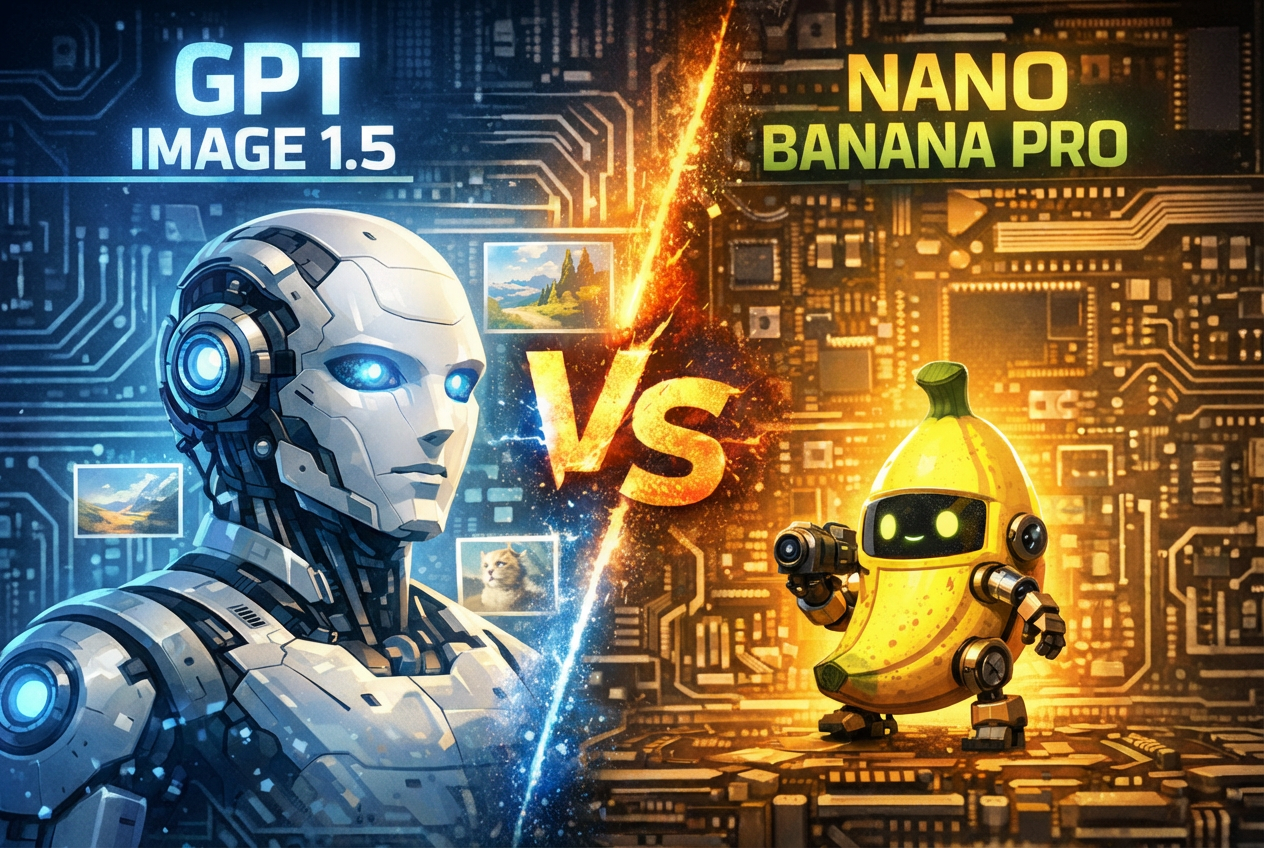
OpenAI has just released its latest AI image model, GPT Image 1.5, drawing significant attention not only for its own capabilities, but also for how it compares with Nano Banana Pro. This article examines how GPT Image 1.5 and Nano Banana Pro perform across real-world scenarios, where each model excels, and how creators can choose the right AI image generation tool based on practical needs.
On December 16, 2025, OpenAI officially introduced its latest AI image model, GPT Image 1.5, marking a major milestone in the rapid evolution of AI-powered visual generation. Shortly after its announcement, GPT Image 1.5 achieved top placement on the LMArena leaderboard, earning leading scores in both the text-to-image and image-to-image categories during pre-release evaluation.
According to LMArena, these scores are based on pre-release testing and reflect early performance under controlled prompt conditions.
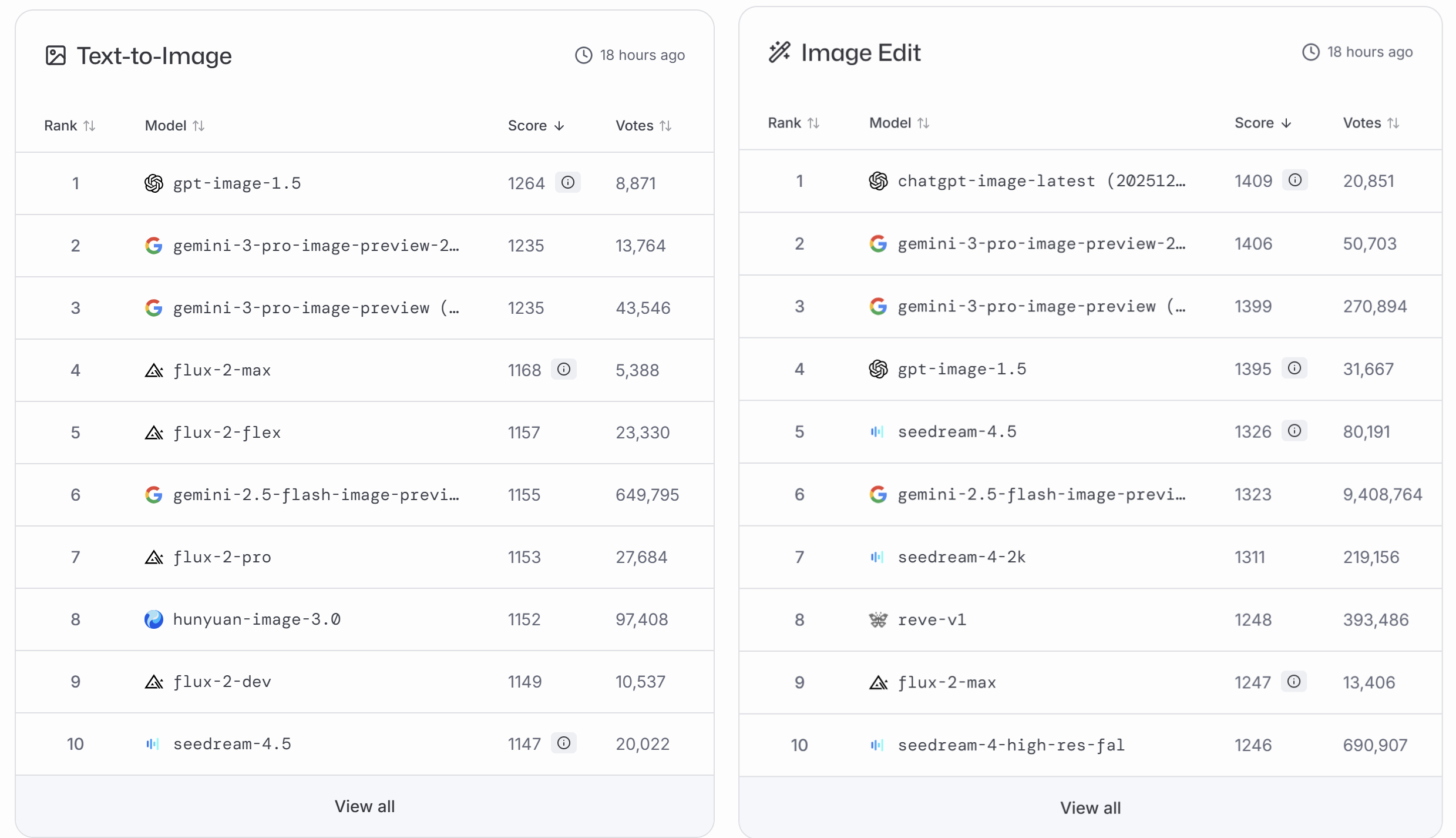
Close behind it stood Nano Banana Pro, Google’s flagship image model, which secured the second position across the same leaderboards. With both models occupying the top two spots, the competitive narrative around AI-generated images has become increasingly clear:
the current generation of AI image models is now dominated by OpenAI and Google.
GPT Image 1.5: Core Features and Model Capabilities
GPT Image 1.5 represents OpenAI’s most advanced approach to AI image generation to date. Instead of treating image generation as an isolated task, the model is designed as a multimodal AI image model deeply integrated with reasoning, language understanding, and contextual awareness.
1. Advanced Text-to-Image Reasoning
GPT Image 1.5 demonstrates a strong ability to interpret complex prompts involving multiple objects, relationships, and abstract concepts. Rather than generating visually pleasing but loosely related images, the model prioritizes semantic accuracy — ensuring that each element in the prompt is represented intentionally.
This makes GPT Image 1.5 AI model particularly effective for conceptual art, narrative scenes, and ideation workflows where meaning matters as much as aesthetics.
2. High-Fidelity Image to Image Transformation
In image to image tasks, GPT Image 1.5 AI model excels at context-aware editing. The model preserves the structural logic of the original image while applying stylistic or semantic changes. This allows users to iterate creatively without losing the core identity of the source image.
As an AI image generation tool, GPT Image 1.5 focuses on understanding why a change is requested, not just what change to apply.
3. Strong Prompt Adherence
One of the defining strengths of GPT Image 1.5 AI is prompt adherence. Multi-step instructions, conditional logic, and descriptive constraints are handled with notable consistency. This is especially valuable for professional users who rely on precise outputs rather than exploratory randomness.
4. Contextual World Knowledge
Because GPT Image 1.5 AI model is built on OpenAI’s broader multimodal framework, it benefits from deep world knowledge. Cultural references, symbolic objects, and real-world concepts are interpreted more reliably than in many earlier AI image models.
GPT Image 1.5 vs Nano Banana Pro: Feature Comparison
The discussion around Nano Banana vs GPT Image AI model often overlooks the fact that both models are optimized for different creative priorities. The table below highlights how each AI image model performs across key dimensions.
| Feature | GPT Image 1.5 | Nano Banana Pro |
|---|---|---|
| Text to Image | Strong conceptual reasoning and abstract interpretation | Highly polished, visually balanced outputs |
| Image to Image | Context-aware editing with semantic consistency | Precise structural preservation and controlled edits |
| Text Rendering | Good overall accuracy, improving with prompt clarity | Industry-leading text clarity and legibility |
| Prompt Adherence | Excellent multi-condition understanding | Very strong for design-focused prompts |
| Speed | Optimized for reasoning-heavy tasks | Fast and consistent for production workflows |
| Visual Consistency | High, especially in narrative sequences | Exceptional for branding and repeated characters |
This comparison illustrates that the competition is less about superiority and more about specialization within the AI image generation tool ecosystem.
Visual Output Comparison: Real-World Image Generation Results
To move beyond specifications, both AI image models were tested using identical prompts designed to highlight the features discussed above.
Text to Image
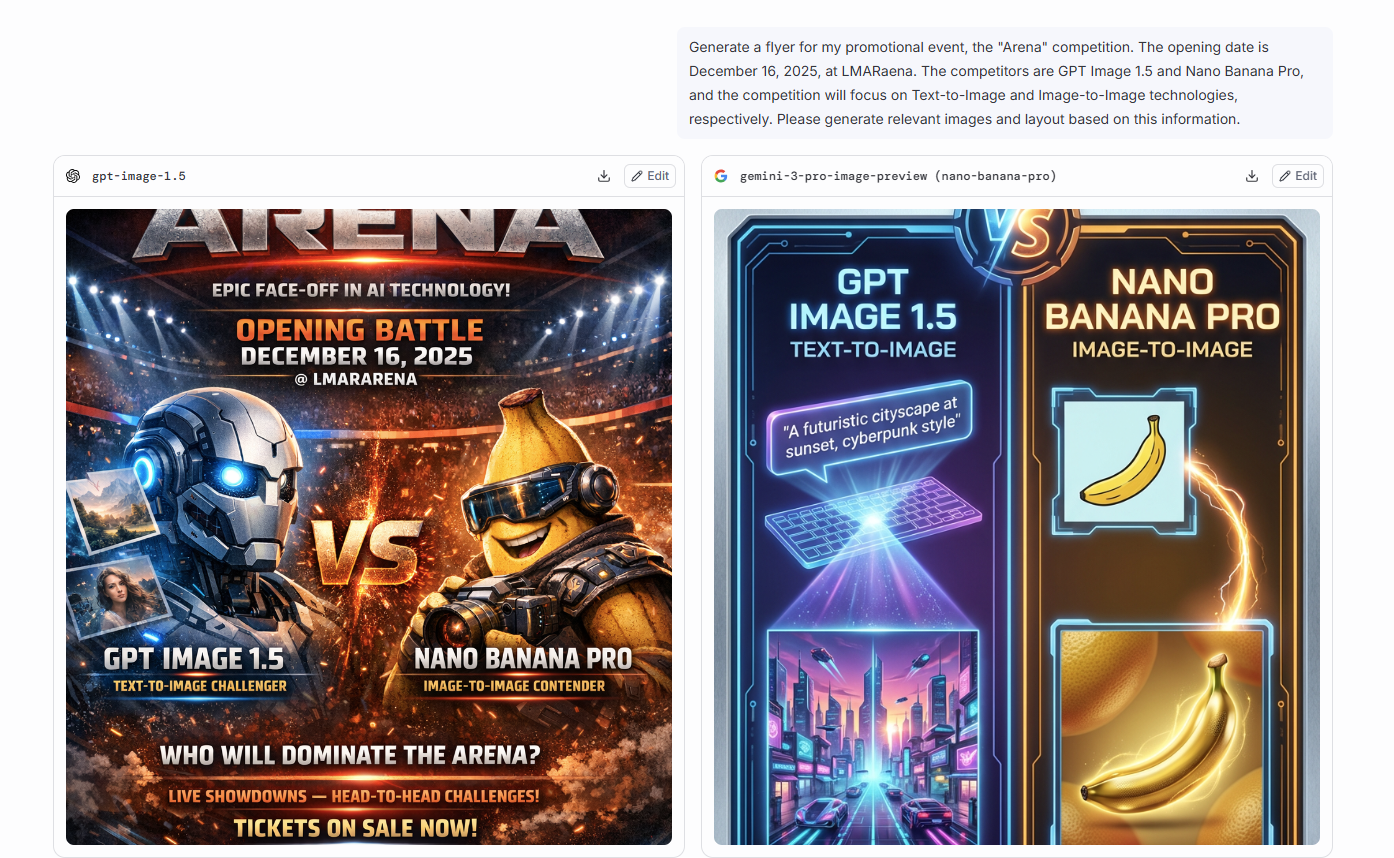
In the text to image test, GPT Image 1.5 demonstrates a stronger ability to translate competitive intent into a unified visual narrative.
Rather than treating the scene as a static layout, GPT Image 1.5 frames both sides within a single arena-style composition, using dramatic lighting, central “VS” alignment, and environmental elements to convey direct confrontation and momentum. This creates a clear sense of collision and rivalry, which aligns closely with the prompt’s competitive theme.
By comparison, Nano Banana Pro emphasizes structural clarity and segmented presentation, resulting in a cleaner but less dynamic expression of competition.
Image to Image
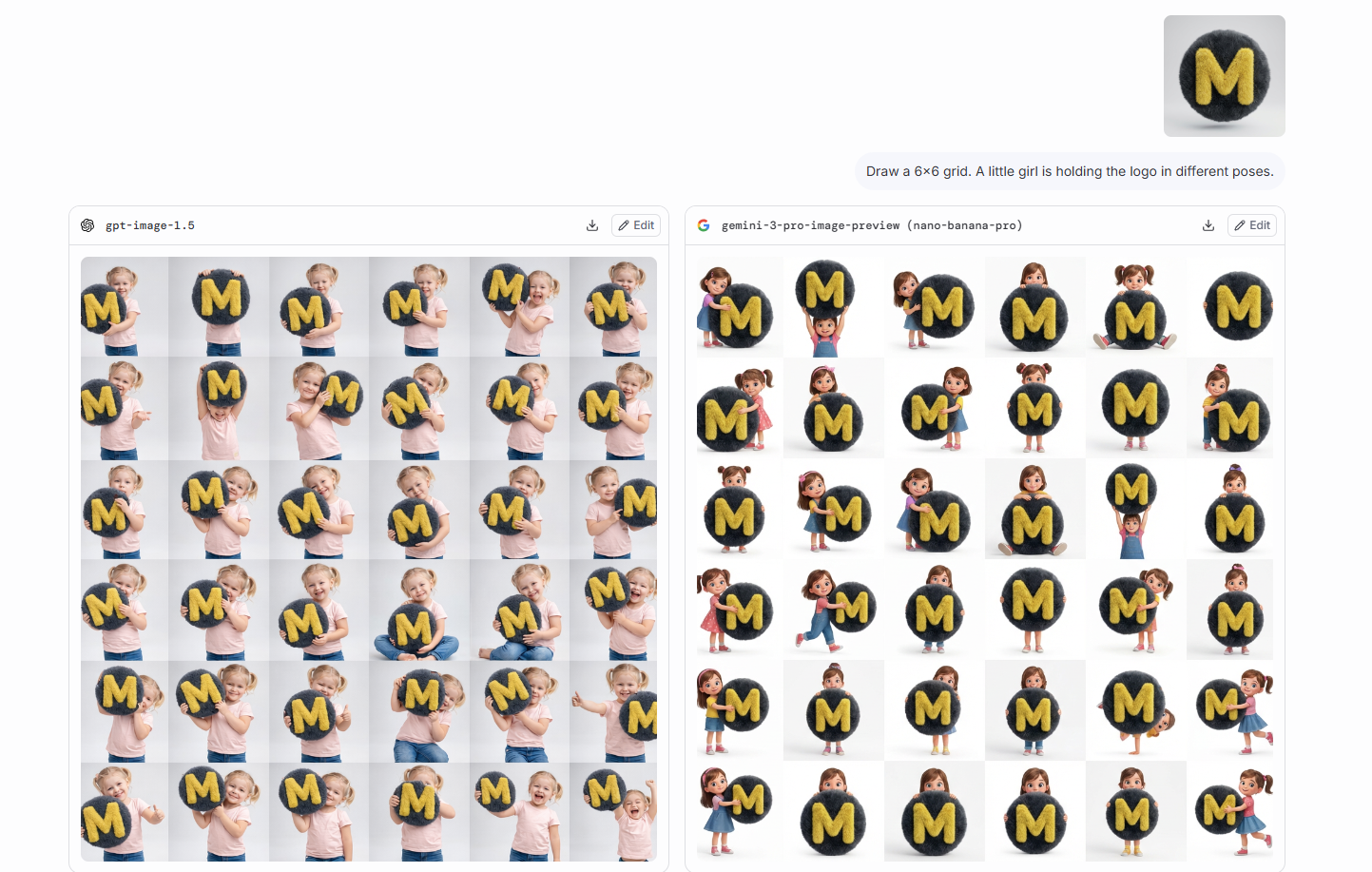
In the image to image comparison, GPT Image 1.5 shows stronger character consistency across multi-frame generation.
GPT Image 1.5 AI model maintains stable facial features, hairstyle, clothing, and overall character identity throughout the 6×6 grid, even as the girl’s pose and interaction with the logo change. This results in a coherent visual set suitable for brand assets or sequence-based content.
By contrast, Nano Banana Pro introduces noticeable variation in hairstyle and outfit between frames, which reduces character continuity and makes the output feel more like independent images rather than a unified series.
Prompt Adherence Test
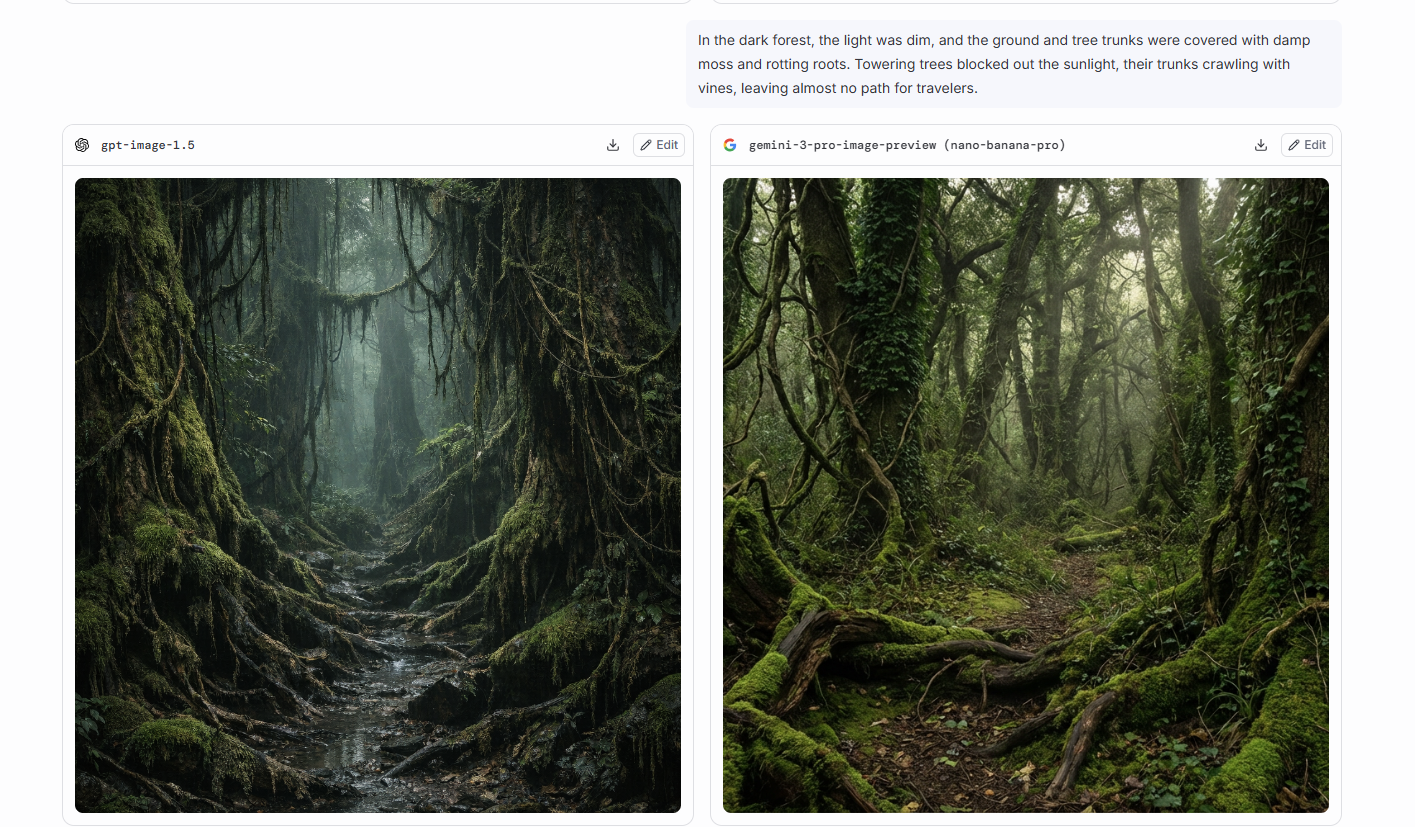
In the prompt adherence test, both GPT Image 1.5 and Nano Banana Pro deliver strong but distinct interpretations of the same scene description.
GPT Image 1.5 AI model closely follows the prompt’s emphasis on darkness, obstruction, and atmosphere, rendering a dense forest with limited light, heavy moss, and an almost impassable path that reinforces the sense of isolation and difficulty for travelers.
Nano Banana Pro, meanwhile, produces a more navigable forest scene with clearer depth and visibility, capturing environmental detail.
The results illustrate how each AI image model prioritizes different aspects of the same textual input—GPT Image 1.5 favoring narrative mood and constraint, while Nano Banana Pro emphasizes visual clarity and spatial openness.
Text Rendering Test
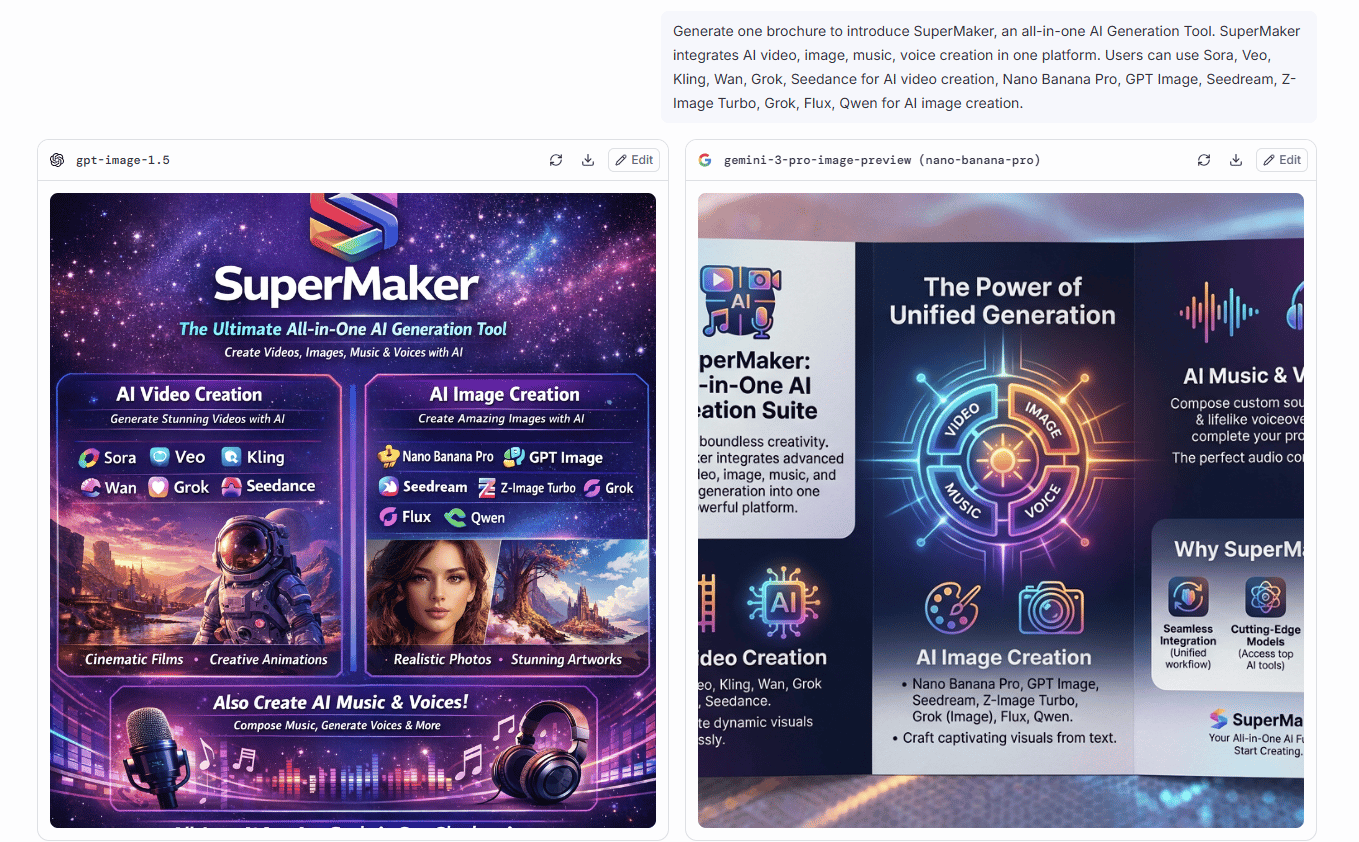
In the text rendering test, both GPT Image 1.5 and Nano Banana Pro produce usable brochure-style layouts, but with clear differences in emphasis and execution. However, in this test, both AI image models struggle with accurate brand logo rendering, revealing a shared limitation in precise logo reproduction.
GPT Image 1.5 allocates more visual space to the most important sections—particularly video and image creation—using stronger hierarchy, larger headings, and prompt-aligned imagery to guide attention, resulting in a more expressive and message-driven layout.
Nano Banana Pro presents a more conservative and evenly balanced composition that prioritizes structural order.
Overall, GPT Image 1.5 demonstrates stronger layout prioritization and semantic alignment, while Nano Banana Pro delivers a steadier but more restrained presentation.
Choosing the Right AI Image Model for Your Needs
Rather than asking which AI model is “better,” a more useful question is which AI image generation tool fits your workflow.
Choose GPT Image 1.5 if your work involves conceptual storytelling, complex prompts, or exploratory creative ideation where reasoning and context matter most.
Choose Nano Banana Pro if your priority is commercial design, accurate text rendering, brand consistency, and repeatable production quality.
This distinction explains why both models continue to dominate the AI image model rankings — they solve different problems at the highest level.
For creators who want to go deeper into practical applications, our guide on Nano Banana Pro prompt use cases offers ready-to-copy examples and workflow inspiration, while a separate breakdown of what’s new in Nano Banana Pro vs Nano Banana provides additional context on how Google’s image models continue to evolve.
Experience GPT Image 1.5 and Nano Banana Pro on SuperMaker
For creators who want flexibility without compromise, SuperMaker offers direct access to both GPT Image 1.5 and Nano Banana Pro within a single platform.
Instead of committing to one AI image model upfront, users can test the same prompt across multiple engines, compare outputs instantly, and choose the result that best matches their creative intent.
As the competition between OpenAI and Google continues to shape the next generation of AI image models, SuperMaker ensures you can experience the best of both — without limitations.