The Dawn of Generative Worlds: A Deep Dive into Project Genie and the Future of AI Interaction
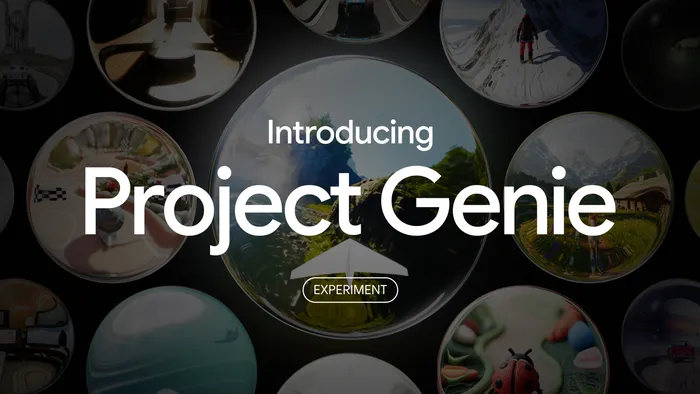
Project Genie represents the transition from Generative AI to Interactive AI—a platform where your imagination doesn't just produce a picture, but a living, breathing, and playable 3D universe.
In the history of artificial intelligence, we have witnessed several "watershed moments": the ability to generate human-like text, the creation of hyper-realistic images, and the recent surge in high-fidelity video synthesis. However, as we move through 2026, the frontier has shifted once again. We are no longer satisfied with just watching AI-generated content; we want to inhabit it.
This is the promise of Project Genie, a revolutionary "world model" developed by Google DeepMind. It represents the transition from Generative AI to Interactive AI—a platform where your imagination doesn't just produce a picture, but a living, breathing, and playable 3D universe.
1. Understanding Project Genie: What is a "World Model"?
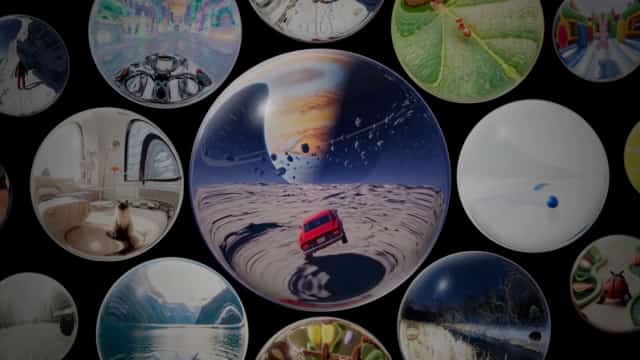
At its core, Project Genie is not a video game engine in the traditional sense. Unlike Unreal Engine or Unity, which rely on millions of lines of human-written code to define physics, lighting, and collision, Genie is a neural network. It has been trained on hundreds of thousands of hours of video data to learn the "laws of the universe" implicitly.
When you type a prompt into Project Genie, the model isn't searching for a pre-made asset. Instead, it is "hallucinating" a consistent 3D space in real-time. It understands that if you walk toward a building, it should get larger; if you jump off a ledge, gravity should pull you down. This capability is powered by the latest iteration of Genie 3, a foundation model that treats the entire world as a sequence of predictable actions and frames.
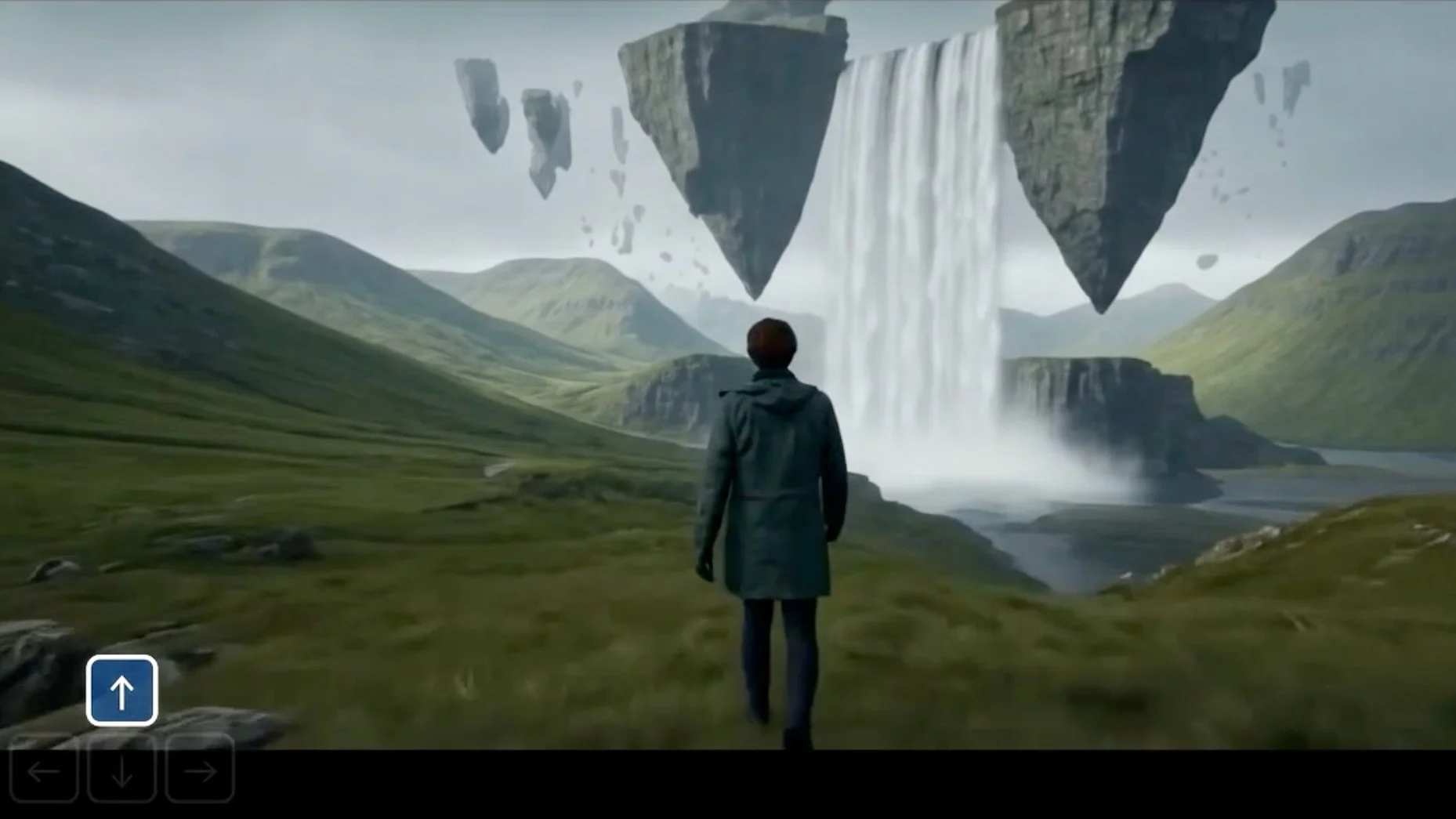
2. The Creative Pipeline: From Sketch to Reality
The workflow within the Project Genie platform is designed to be accessible to everyone, from professional developers to casual hobbyists. The process is divided into several sophisticated layers:
Phase 1: Conceptualization with Nano Banana
The journey begins with a concept. Users can upload a simple doodle, a photograph, or a text description. The platform utilizes a specialized visual conditioning model to translate these ideas into a 3D layout. For those looking to see how static imagery transforms into the backbone of a digital world, the Supermaker Nano Banana 2 interface provides the perfect entry point. It allows users to refine the "vibe" and aesthetic DNA of their world before the heavy simulation begins.
Phase 2: Action Controllability
The magic of Genie lies in its "latent action" space. The model has learned how to map user inputs (like pressing the 'W' key or moving a joystick) to visual changes in the environment. This means that as soon as your world is generated, it is immediately playable. You can explore your creation from a first-person perspective or a classic side-scrolling view, with the AI maintaining perspective and object permanence as you move.
Phase 3: High-Fidelity Refinement
Once the basic world structure is set, the platform uses advanced upscaling and temporal consistency algorithms to ensure the experience is smooth. By leveraging the power of Genie 3, the system ensures that the world remains stable even during fast-paced movement, reaching a consistent 24 frames per second at 720p resolution—a feat previously thought impossible for real-time generative models.
3. Technical Breakthroughs and Specifications
Why is Project Genie considered such a leap forward? It boils down to three technical pillars:
- Unsupervised Latent Actions: Most AIs need labeled data to know what "jumping" looks like. Genie learned how to move by watching videos without any labels, figuring out the relationship between frames on its own.
- Visual Cross-Attention: The model uses a transformer architecture that constantly references the "source" image or prompt. This ensures that if you start your journey at Supermaker Nano Banana 2, the resulting 3D world stays true to that original artistic vision without drifting into visual nonsense.
- Memory Buffers: One of the biggest challenges in AI video is "forgetting" what was behind the camera. Project Genie employs a sophisticated memory buffer that allows it to remember the geometry of locations you have already visited, creating a sense of a persistent, massive world.
4. The Impact on Industries
The implications of Project Genie extend far beyond just "making cool games." We are looking at a fundamental shift in several sectors:
- Gaming and Entertainment: Small indie developers can now generate entire levels, NPCs, and quest environments in minutes, drastically reducing the cost of "Triple-A" quality production.
- Robotics Training: One of Google DeepMind's primary goals is using Genie to train robots. By creating infinite simulated environments with realistic physics, robots can learn how to navigate obstacles without the risk of damaging expensive hardware in the real world.
- Education: Imagine a history student being able to generate a 3D reconstruction of Ancient Rome based on a single textbook paragraph, and then walking through the streets to see the architecture firsthand.
5. Challenges and the Road Ahead
Despite its brilliance, Project Genie is still in its "Ultra" research phase. Current sessions are often limited to 60-second bursts to manage the immense computational load on Google’s TPU (Tensor Processing Unit) clusters. Furthermore, complex physical interactions—like a character interacting with thousands of small particles—can still produce occasional visual artifacts.
However, the trajectory is clear. As the underlying models become more efficient, we can expect higher resolutions, longer session times, and even more complex world-building capabilities.
6. Conclusion: Your World, Your Rules
Project Genie is more than just a software platform; it is a preview of a future where the barrier between "creator" and "consumer" completely disappears. We are moving toward a "Post-Content" world where, instead of watching a movie or playing a game designed by others, we generate our own bespoke experiences on demand.
Whether you are a developer looking to prototype a new concept or a dreamer wanting to see your imagination come to life, the tools are finally here. Start your journey by exploring the foundational models, and get ready to step into the infinite sandbox of the AI era.