What We Can Expect from Kling 3.0 AIO Model: Why Unifying Video and Omni Models Changes Everything
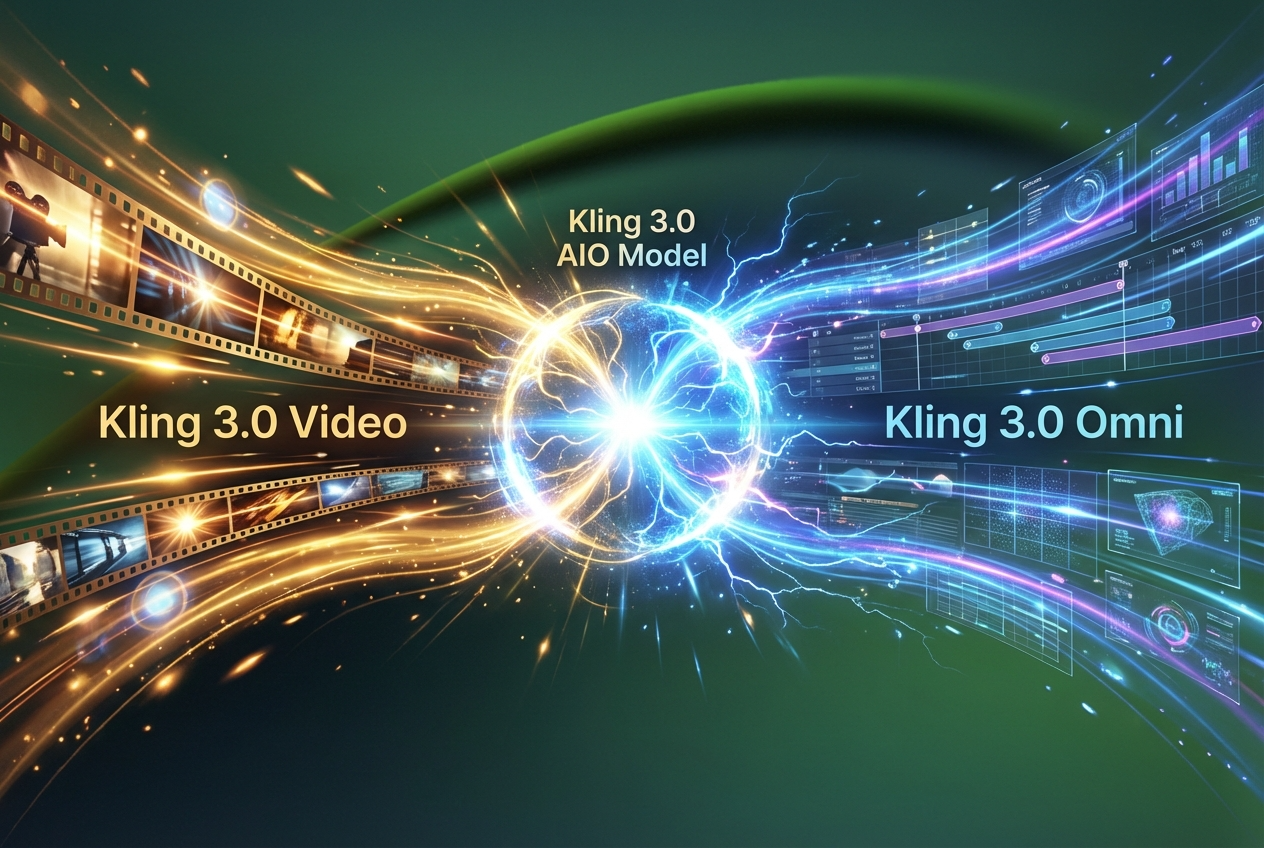
Kling has officially confirmed that Kling 3.0 All-In-One (AIO) model are on the way. While detailed specifications have not yet been fully disclosed, recent announcements strongly suggest a major shift in how Kling structures its video generation technology.
This article explores what the Kling 3.0 AIO model may represent, how it relates to previous Kling models, and what creators can reasonably expect next.
On Jan 31st, 2026, Kling has drawn significant attention from the AI video community with two closely related announcements: “Kling 3.0 Model is coming” and “Kling AIO model is coming — an All-In-One model.”
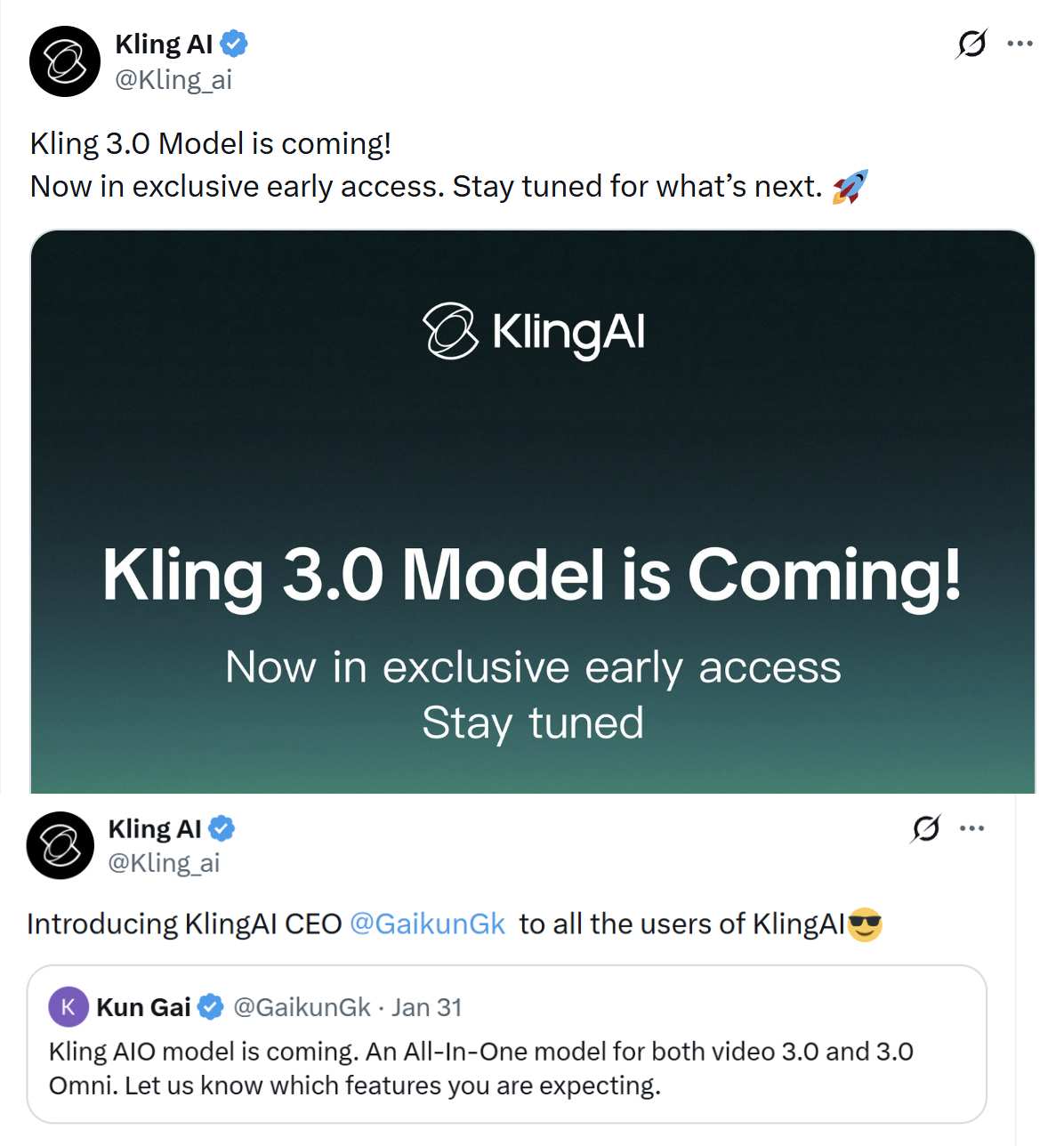 Although these messages are brief, they reveal an important direction—Kling 3.0 AI is moving beyond incremental upgrades and toward a more unified model architecture.
To understand why Kling 3.0 AIO model matters, it helps to look at Kling’s recent model history. Before the Kling 3.0 AI era, Kling followed a dual-track strategy. On one side, there were standard video generation models like Kling 2.6, focused on cinematic motion and audiovisual quality. On the other, there was the Omni line, represented by Kling O1, designed around multimodal control, consistency, and video editing logic.
The upcoming Kling 3.0 AIO model appears to signal a convergence of these two paths. Rather than treating video generation and video control as separate systems, Kling 3.0 seems poised to combine them into a single, integrated framework. By examining how Kling 2.6 and Kling O1 differ, we can better infer what Kling 3.0 AI is aiming to achieve.
What Does Kling 3.0 AIO Model Mean in the Context of Kling 3.0 AIVideo Model?
In the context of Kling, AIO (All-In-One) does not simply mean “more features in one place.” It implies a structural change in how the model handles video creation—from input understanding to generation, refinement, and consistency control.
In earlier versions, users often needed to choose between different models depending on their goal. Video-first models prioritized motion realism and visual polish, while Omni-style models focused on maintaining character identity, scene coherence, and flexible editing. Each model was powerful, but the workflow was fragmented.
The Kling 3.0 AIO model suggests a move toward a single, unified workflow where these capabilities coexist within one system. Instead of switching between generation and control layers, creators may interact with one consolidated model that understands context, maintains consistency, and produces high-quality video outputs in one pass.
This shift aligns with broader industry trends, where AI video platforms are increasingly prioritizing unified models over isolated tools. Kling 3.0 AI appears to follow this trajectory by redesigning how its core capabilities work together rather than expanding them separately.
The Better Understanding of Kling 2.6 and Kling O1
1. Kling 2.6: The Video Generation Foundation
Before Kling 3.0 AI video model, Kling 2.6 represented the most mature version of Kling’s traditional video generation line. Its design philosophy centered on producing visually compelling videos from text or image inputs with improved motion dynamics and cinematic realism.
Kling 2.6 emphasized:
- Smooth, physically plausible movement
- Strong visual continuity within a single clip
- Advanced handling of motion timing and camera dynamics
- Improvements related to audiovisual alignment compared to earlier versions
In essence, Kling 2.6 focused on the question: “How can AI generate a high-quality video sequence that looks and feels cinematic?”
It acted as a generation core, optimized for output quality rather than post-generation control or complex editing workflows.
This generation-first approach made Kling 2.6 well-suited for creators who primarily needed fresh video content rather than extensive manipulation of existing footage.
2. Kling O1: The Omni and Multi-modal Control Path
Running parallel to the 2.x video line was Kling O1, the first major expression of Kling Omni concept. Kling O1 was not designed to replace traditional video generation models but to address a different set of challenges.
Rather than focusing on raw video creation alone, Kling O1 emphasized:
- Multi-modal input understanding (text, images, and video combined)
- Character and scene consistency across multiple shots
- Language-driven editing and refinement
- Structural control over video content beyond a single generation step

Kling O1 tackled a different question: How can AI understand, control, and refine video content over time? As a result, it functioned more as a control and consistency layer than a pure generator.
This distinction is critical for understanding the Kling 3.0 AIO model. Kling O1 introduced many of the ideas—unified control, multimodal reasoning, editing logic—that an AIO system would need to scale.
Kling 2.6 vs Kling O1: Key Differences at a Glance
| Dimension | Kling 2.6 | Kling O1 |
|---|---|---|
| Core focus | Video generation quality | Multimodal control and consistency |
| Model philosophy | Generation-first | Understanding and editing-first |
| Input structure | Text/Image → Video | Text + Image + Video combined |
| Character consistency | Within a single scene | Across scenes and iterations |
| Editing capability | Limited | Built-in, language-guided |
| Primary role | Creating new videos | Refining and controlling videos |
| Contribution to AIO | Generation backbone | Control and coherence layer |
This comparison highlights why Kling 3.0 AI video model is unlikely to be a simple next version of either model. Instead, it suggests a synthesis.
How Kling 3.0 AIO Model Likely Brings These Paths Together
By examining the strengths of Kling 2.6 and Kling O1, the intended role of the Kling 3.0 AIO model becomes clearer. Rather than choosing between generation and control, Kling 3.0 AI is likely designed to combine both into a single operational framework.
Based on this evolution, the Kling 3.0 AIO model may enable:
- A unified input system for text, image, and video
- Higher-quality video generation built on the Kling 2.6 foundation
- Stronger character and scene consistency inspired by Kling O1
- Natural language-driven adjustments within the same workflow
- Reduced need to switch models during the creative process
It is important to emphasize that these are expectations derived from previous models, not confirmed feature lists. However, the convergence of Kling’s model lines strongly supports this interpretation.
What Kling 3.0 AI Could Mean for Creators
If the Kling 3.0 AIO model delivers on its implied design goals, it could significantly change how creators interact with AI video tools.
- For individual creators, a unified model means fewer technical decisions and a smoother creative flow.
- For marketers and content teams, stronger consistency and control could make multi-video campaigns easier to manage.
- For platforms integrating Kling 3.0 AI video model, an AIO architecture simplifies deployment and user experience.
Ultimately, the real value of Kling 3.0 AI video model may not lie in any single feature, but in how previously separate capabilities finally operate as one coherent system.
Conclusion
Kling’s move toward an All-In-One model marks a structural evolution rather than a routine upgrade. By unifying the video generation strengths of Kling 2.6 with the multimodal control philosophy of Kling O1, the Kling 3.0 AIO model represents a logical next step in Kling’s roadmap.
Understanding where Kling has been helps clarify where Kling 3.0 AI is likely headed. As more details emerge, this unified approach may redefine how creators think about AI video generation—not as separate tools, but as a single, integrated creative engine.