Why Kling 2.6 AI Video Model is More Important for Creators Than Motion Control Alone
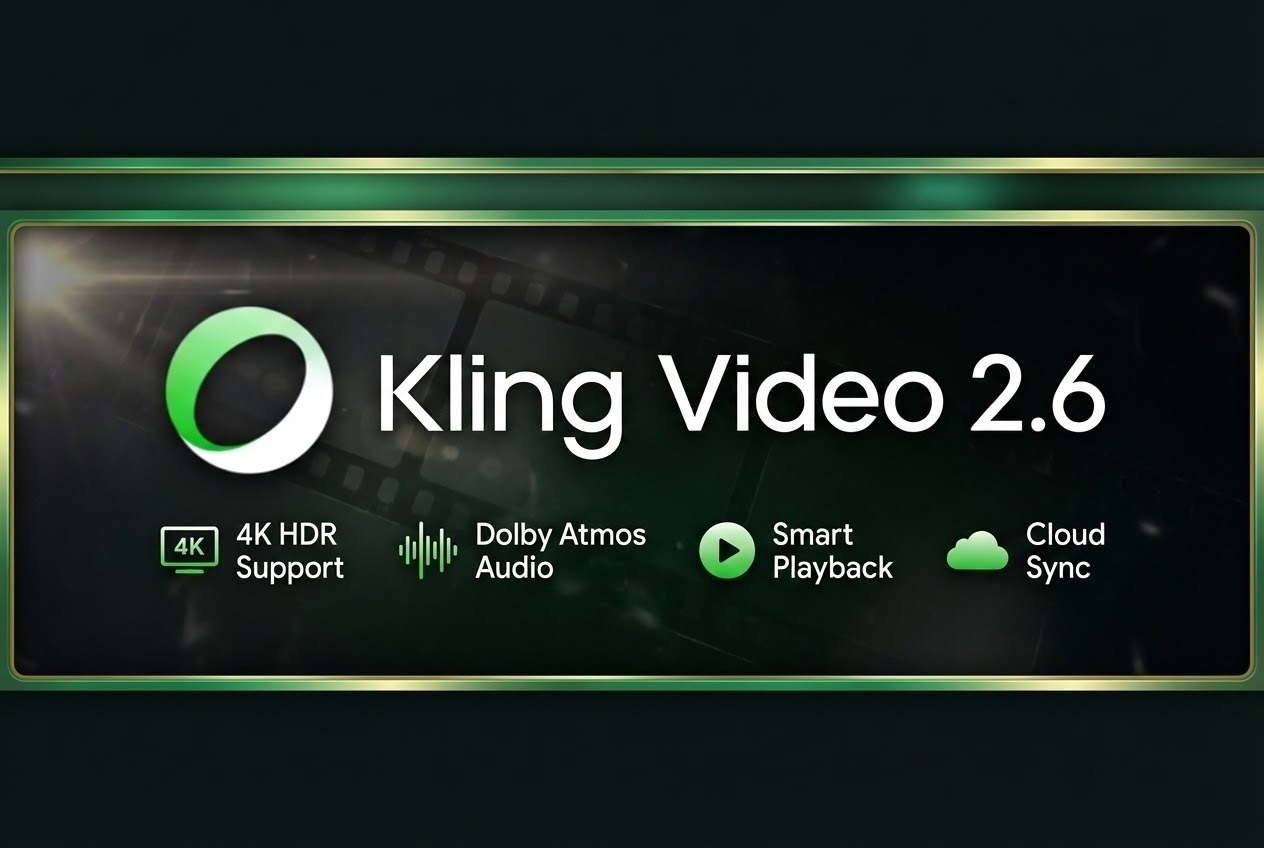
With the release of Kling 2.6 AI video model, the conversation has been dominated by one specific feature: Kling Motion Control AI. It’s flashy, it’s precise, and it has captured the imagination of creators everywhere. We are thrilled to announce the integration of the Kling 2.6 Video AI model and Kling Motion Control into our platform—focusing on the core features that deliver coherence, natural movement, and prompt-based cinematic value to every creator.
Kling 2.6 AI: Release Overview and Core Capabilities
The Kling 2.6 AI video model marks a shift toward more realistic and scene-aware video generation. Compared to Kling earlier versions, the Kling 2.6 AI video model demonstrates stronger understanding of motion, timing, and visual continuity—qualities that make AI videos feel closer to real filmed scenes rather than animated fragments.
Key highlights of the Kling 2.6 AI video model release include:
- Improved motion realism and stability
- More coherent temporal behavior across frames
- Native audio-visual generation, allowing sound and visuals to be produced together
- A prompt-driven workflow designed for fast iteration
These upgrades place Kling 2.6 firmly in the category of creation-oriented video models, aimed at helping creators move from idea to video with minimal setup.
Kling AI Video Model Comparison: 2.6 vs 2.5 Turbo vs Kling O1
To better understand where Kling 2.6 AI video fits, it helps to look at how it compares with earlier Kling video models, including Kling 2.5 Turbo and Kling O1.
| Feature | Kling 2.6 Video AI | Kling 2.5 Turbo | Kling O1 |
|---|---|---|---|
| Video Quality | Enhanced 1080p (Fine Texture) | 1080p | 1080p |
| Motion Quality | High | Medium | Basic |
| Audio-Visual Generation | Native "Single-Pass" Audio | Basic SFX (Ambient) | Silent / Post-edit |
| Temporal Consistency | Strong | Moderate | Basic |
| Prompt Control | High-level creative prompts | High-level prompts | Experimental |
| Key Strength | Audiovisual Harmony | High-Action Motion | Scene Consistency |
| Best For | Cinematic Realism & Lip-Sync | Speed & Viral Content | Narrative & Editing |
What Is Kling 2.6 Motion Control AI?
If you’ve seen viral clips of AI characters following exact motion, such as cat or dog dancing, you’re looking at Kling Motion Control AI.
Essentially, it is a precision toolset that allows users to:
- Draw Motion Paths: Manually define where an object moves.
You can preview Kling Motion Control AI detail here if you are interested in Kling AI Motion featrue.
Actually the real magic happens within the foundational Kling 2.6 AI video model, which automates the "feeling" of a blockbuster movie without the manual labor.
If you want to experience Kling Motion Control and Kling 2.6 in a efficient workflow at the same time, SuperMaker AI can give you a simple and straight-forward process.
What Kling 2.6 Video Model Already Does Well
While Kling Motion Control AI highlights how far character control can go, Kling 2.6 video AI focuses on producing complete, usable video scenes with minimal friction.
Here is why the Kling 2.6 AI model is a massive upgrade for Supermaker users:
1. The Era of "Native Audio"
Kling 2.6 AI can generate sound and visuals together as a single output. Dialogue timing, ambient sound, and on-screen action are aligned naturally, reducing the need for post-production steps.
This makes a significant difference for short-form and social video creation.
2. Stronger Temporal Consistency
Motion in Kling 2.6 AI video unfolds smoothly over time. Actions follow logical pacing, characters remain stable across frames, and camera movement feels intentional rather than erratic.
This temporal consistency is essential for storytelling and cinematic scenes, even at short durations.
3. Prompt-Driven Creation with Low Overhead
Creators interact with Kling 2.6 AI primarily through natural language prompts. Instead of managing technical parameters, they describe the scene, mood, and action.
The Kling 2.6 translates intent into motion, timing, and visual structure—making it well suited for rapid experimentation and iteration.
4. Built for Scalable Content Production
Kling 2.6 AI video favors stability and repeatability. Outputs are predictable enough to support batch generation, making the model practical for creators who need to produce multiple videos efficiently.
At its core, Kling 2.6 AI video model is about turning ideas into usable video—quickly and consistently.
Why SuperMaker Starts with Kling 2.6 AI and Kling Motion Control
At Supermaker, our mission is to make professional video creation accessible to everyone. We chose to prioritize the Kling 2.6 AI video model and Kling Motion Control at the same time because them provide the highest "Return on Creativity."
By focusing on the core Kling 2.6 and Kling Motion Control, we enable our users to:
- Generate Complete Scenes: No need for tedious editing; get sound and visuals in one go.
- Maintain Professional Quality: Benefit from the latest SOTA physics and texture rendering.
- Stay Efficient: Skip the complexity of manual motion drawing and let the AI’s "Director Brain" handle the heavy lifting.
- Stable Motion Control: Generate consistent motion video and keep the character's face stable.
Why Kling 2.6 Video AI Fits Real-World Creation
AI video trends often begin with impressive demonstrations. What ultimately matters is whether those advances translate into tools that creators can use repeatedly.
Kling 2.6 AI video model bridges that gap by combining improved motion understanding with a workflow that prioritizes accessibility, speed, and coherence.
As motion control continues to shape the future of AI video, Kling 2.6 AI already delivers what creators need today: practical, scene-ready video generation at scale.
Conclusion
The buzz around Kling Motion Control AI is well-deserved, but the silent hero is the Kling 2.6 AI video model that powers it. By bringing this foundational powerhouse to Supermaker, we are giving you the tools to create videos that don't just look real—they sound and feel real.
Ready to experience the Kling 2.6 revolution? Head over to Supermaker and start creating with the latest Kling 2.6 AI video model today.