20 Gemini AI Motorcycle Photo Prompts for Cinematic Rider Shots
Create motorcycle images with a distinct mood, from rainy city streets to sunlit mountain roads. Explore 20 ready-to-use prompts, learn how to adapt them to your own rider photo, and refine the lighting, framing, and bike details for a more convincing result.
How to Create an AI Motorcycle Photo
A good Gemini AI motorcycle photo prompt describes more than a bike. It gives the image generator a subject, a setting, a lighting direction, and a camera angle to work with. Start with one of the ideas below, then change the details to suit your motorcycle and the image you want to make.
- Open SuperMaker's Gemini image generator. Start with a text prompt or upload a clear reference photo if you want to transform an existing shot.
- Copy a prompt below and replace the bike type, clothing, location, or colors with your own choices. For a reference photo, specify which features should stay recognizable.
- Generate an image, inspect the rider, wheels, handlebars, and reflections, and revise the prompt if needed. Try a vertical 4:5 frame for social posts or a wide frame for a banner.
Reference images can guide a result, but exact facial features, logos, and motorcycle details may still change. Review each output before sharing it.
20 Gemini AI Motorcycle Photo Prompts to Copy
1. Rainy City Portrait
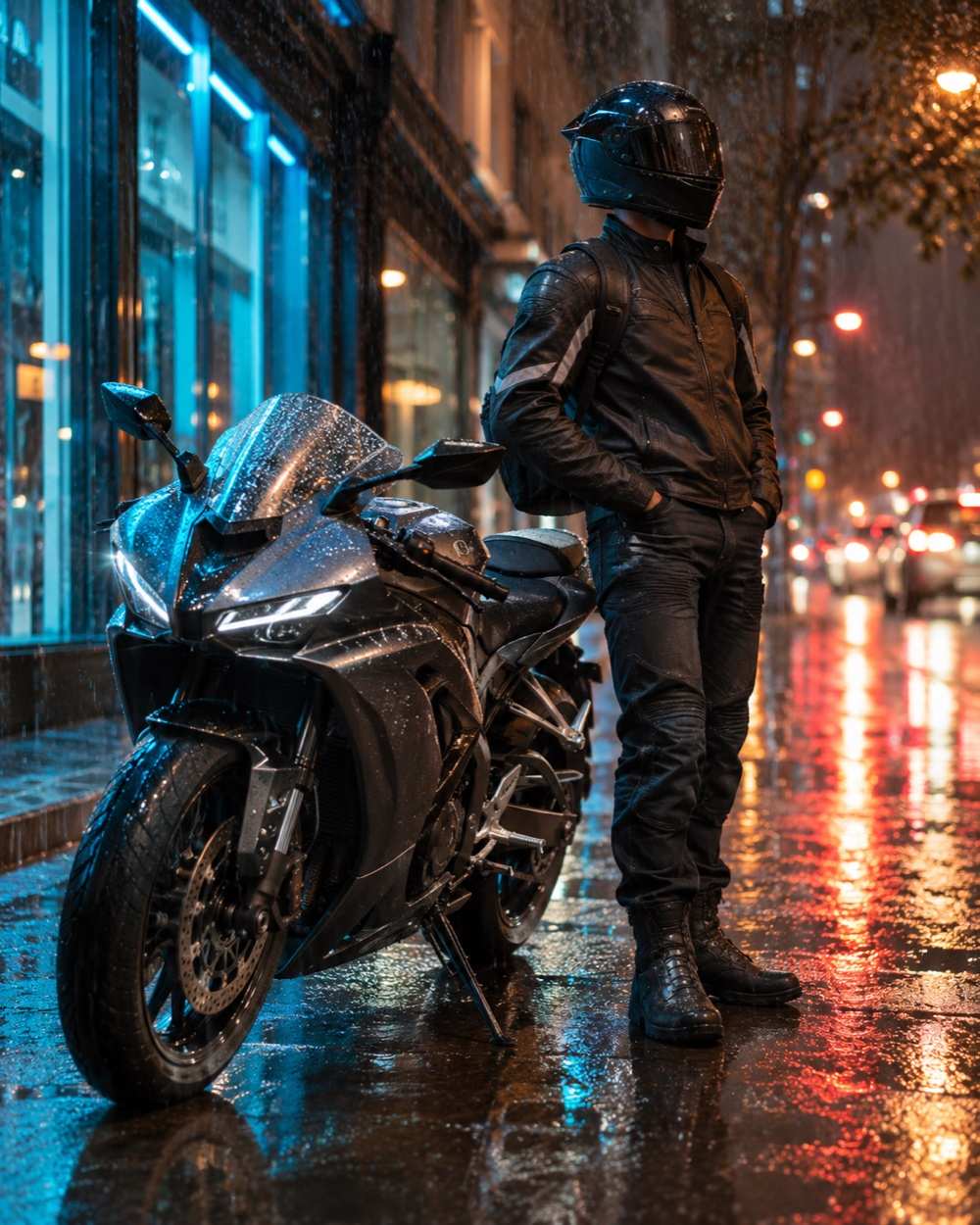
Create an editorial portrait of a helmeted rider standing beside a graphite sportbike on a rain-soaked city street. Blue storefront light and warm traffic reflections stretch across the pavement. Frame the rider and motorcycle from a low three-quarter angle, with natural proportions, believable reflections, and a softly blurred background.
2. Desert Road Trip
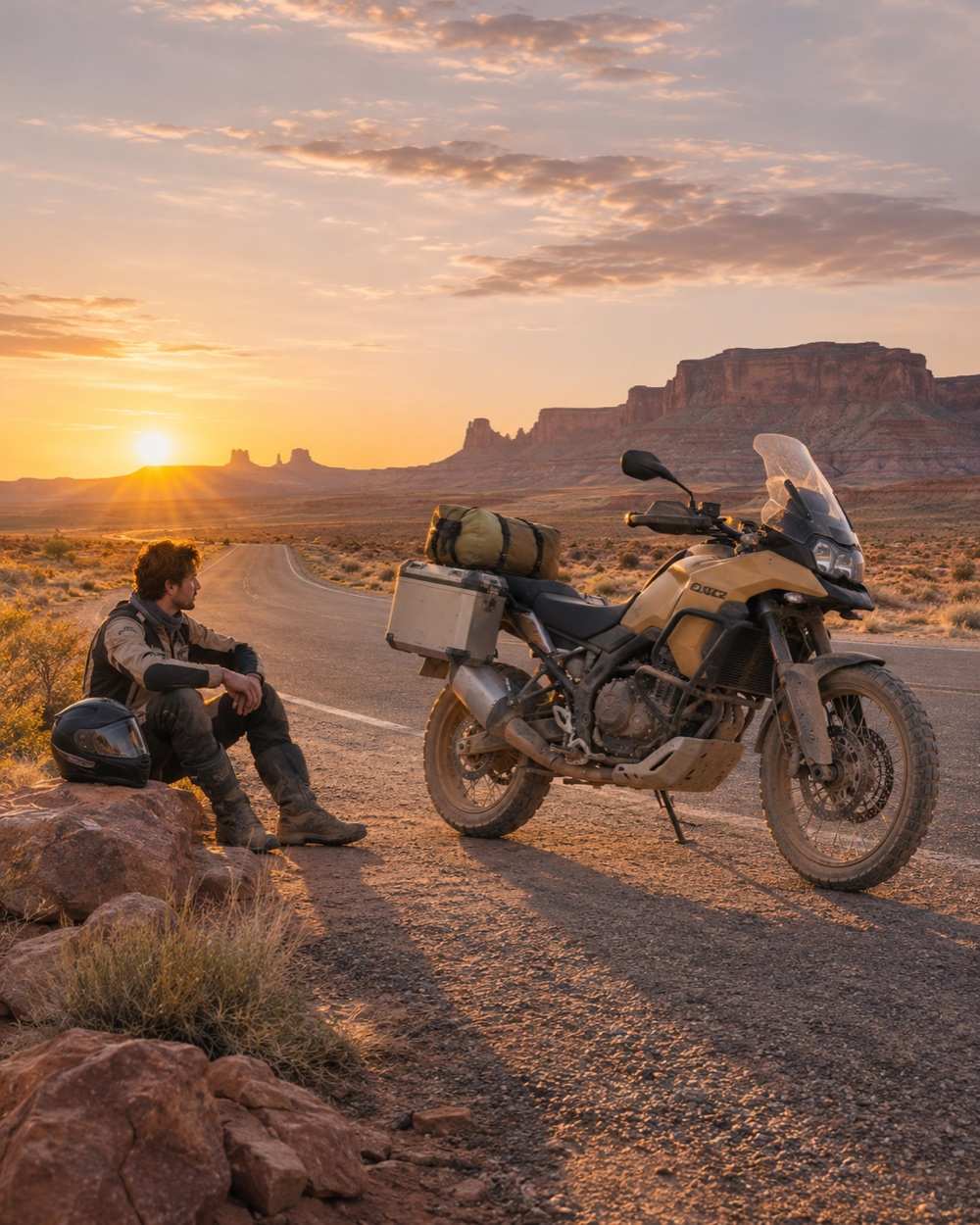
Photograph a rider resting beside a sand-colored adventure motorcycle on an empty desert road at sunrise. Include distant mesas, a little dust on the tires, long shadows, and a soft golden rim light. Use a wide environmental composition with the whole motorcycle visible.
3. Mountain Pass
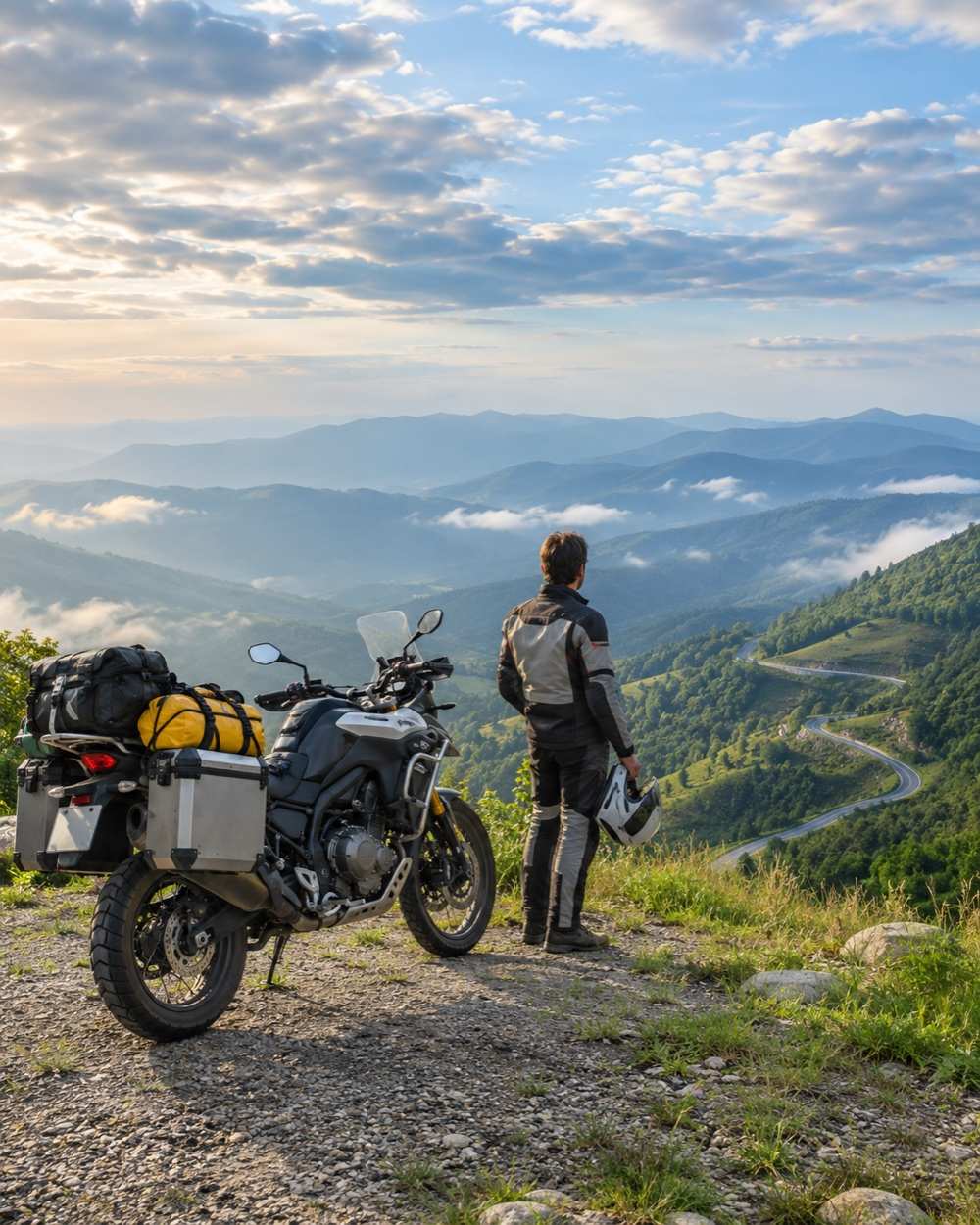
Show a touring rider beside a loaded motorcycle at a mountain overlook. A winding road disappears into cool blue hills under broken cloud. Use soft morning light, realistic riding gear, and a wide landscape composition that gives the scenery room to breathe.
4. Retro Café Racer
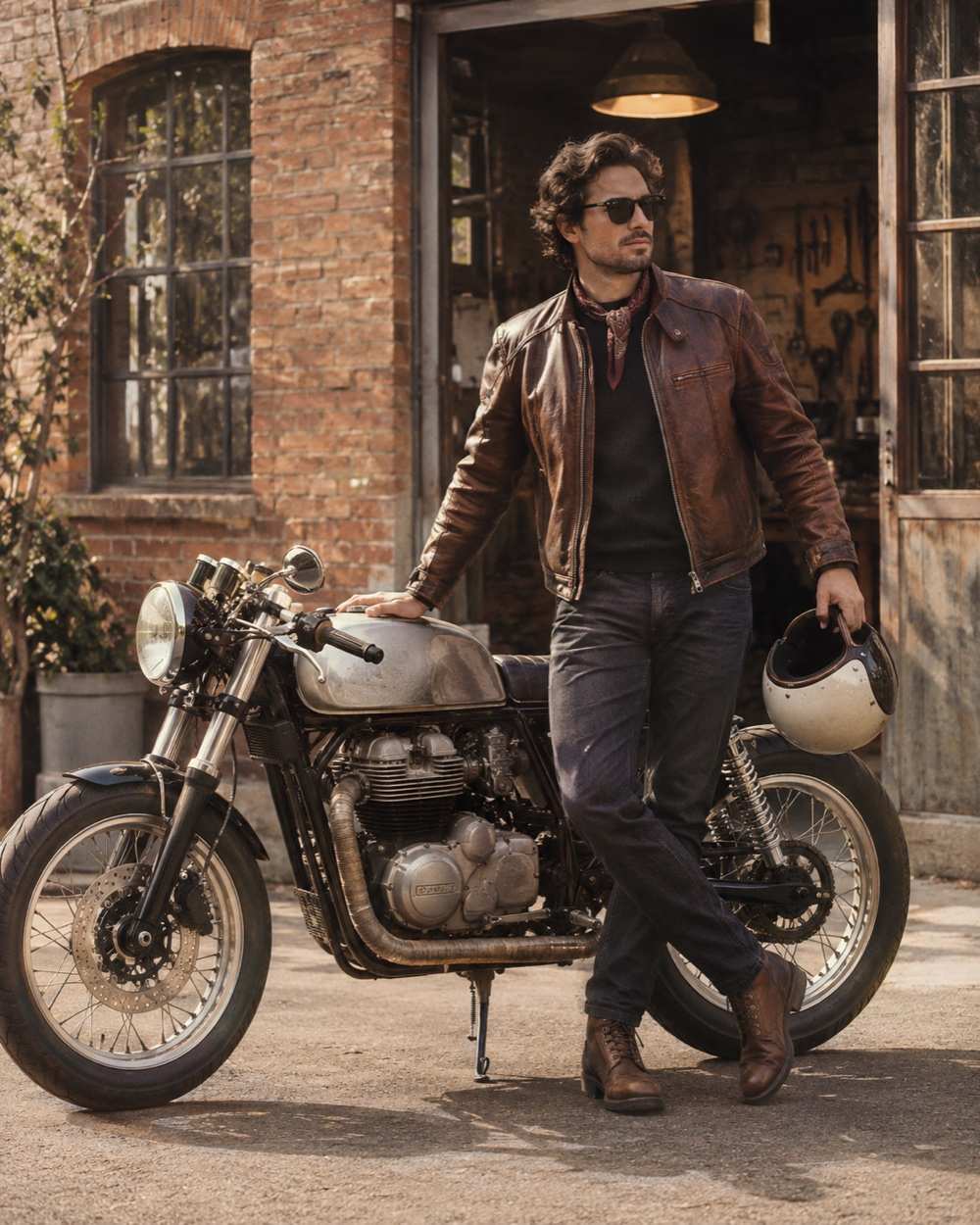
Create a vintage-inspired portrait of a rider in a brown leather jacket beside a classic café racer outside a brick workshop. Use warm afternoon light, muted colors, subtle film grain, and a natural standing pose. Keep the motorcycle's wheels and frame clearly defined.
5. Minimal Studio Editorial
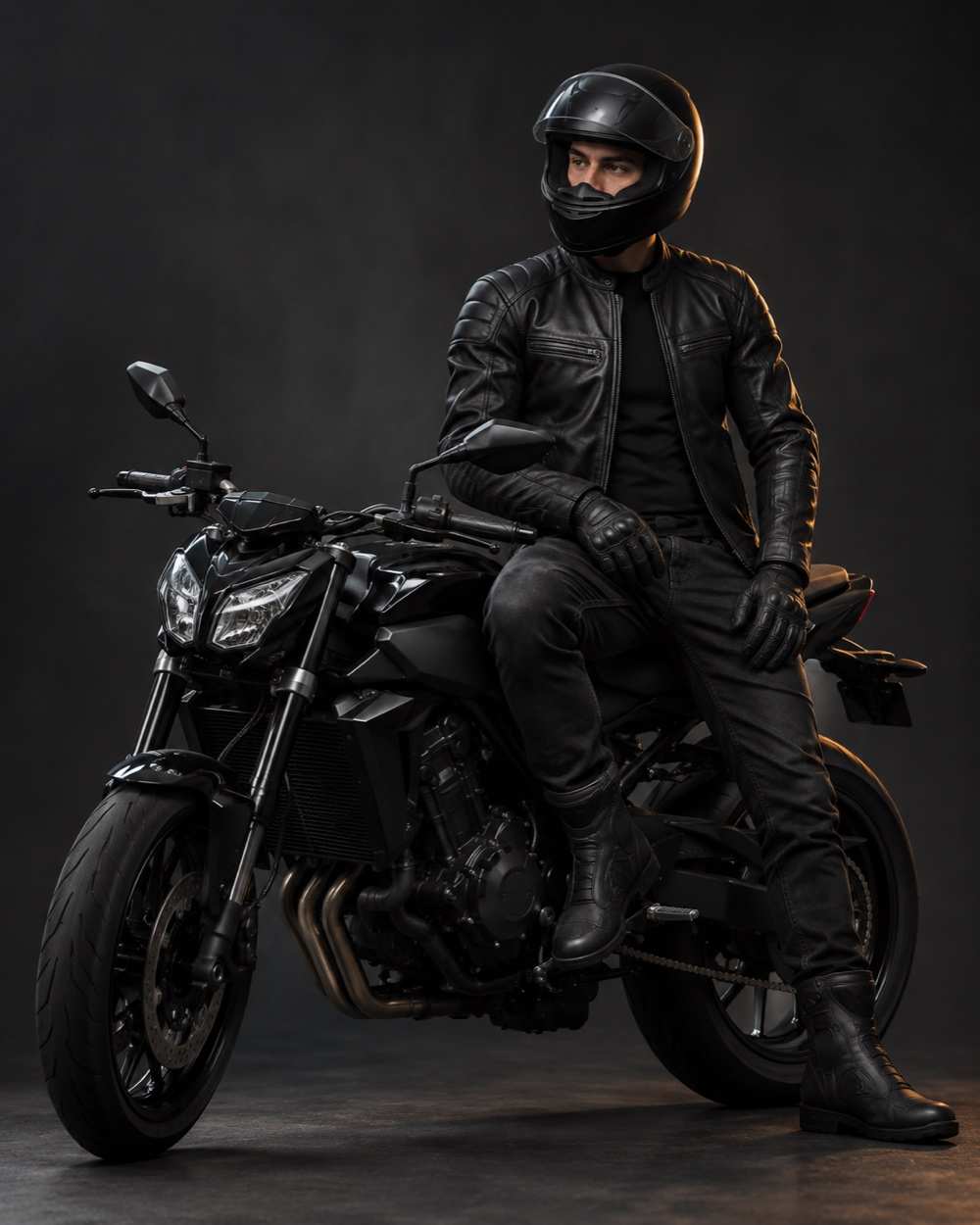
Photograph a rider and a black motorcycle against a charcoal studio background. Use one broad soft light and a narrow rim light to reveal the helmet, jacket, and contours of the bike. Make the image clean, balanced, and suitable for an editorial cover.
6. Coastal Sunset
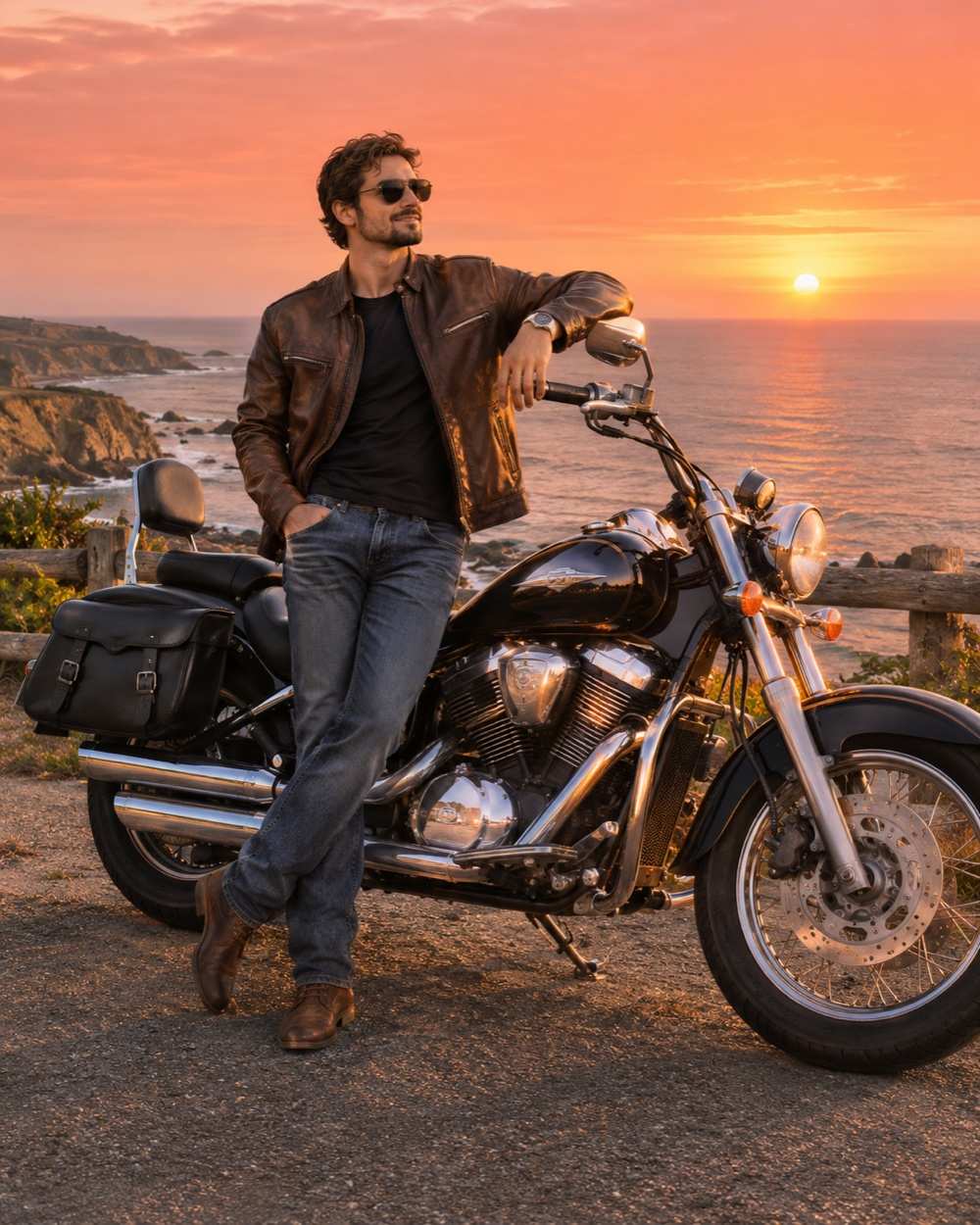
Show a rider leaning comfortably against a cruiser at a coastal viewpoint. The ocean sits behind them beneath a peach-colored sunset, with warm light on the chrome. Compose a relaxed full-body travel portrait with the bike parked securely.
7. Foggy Forest Road
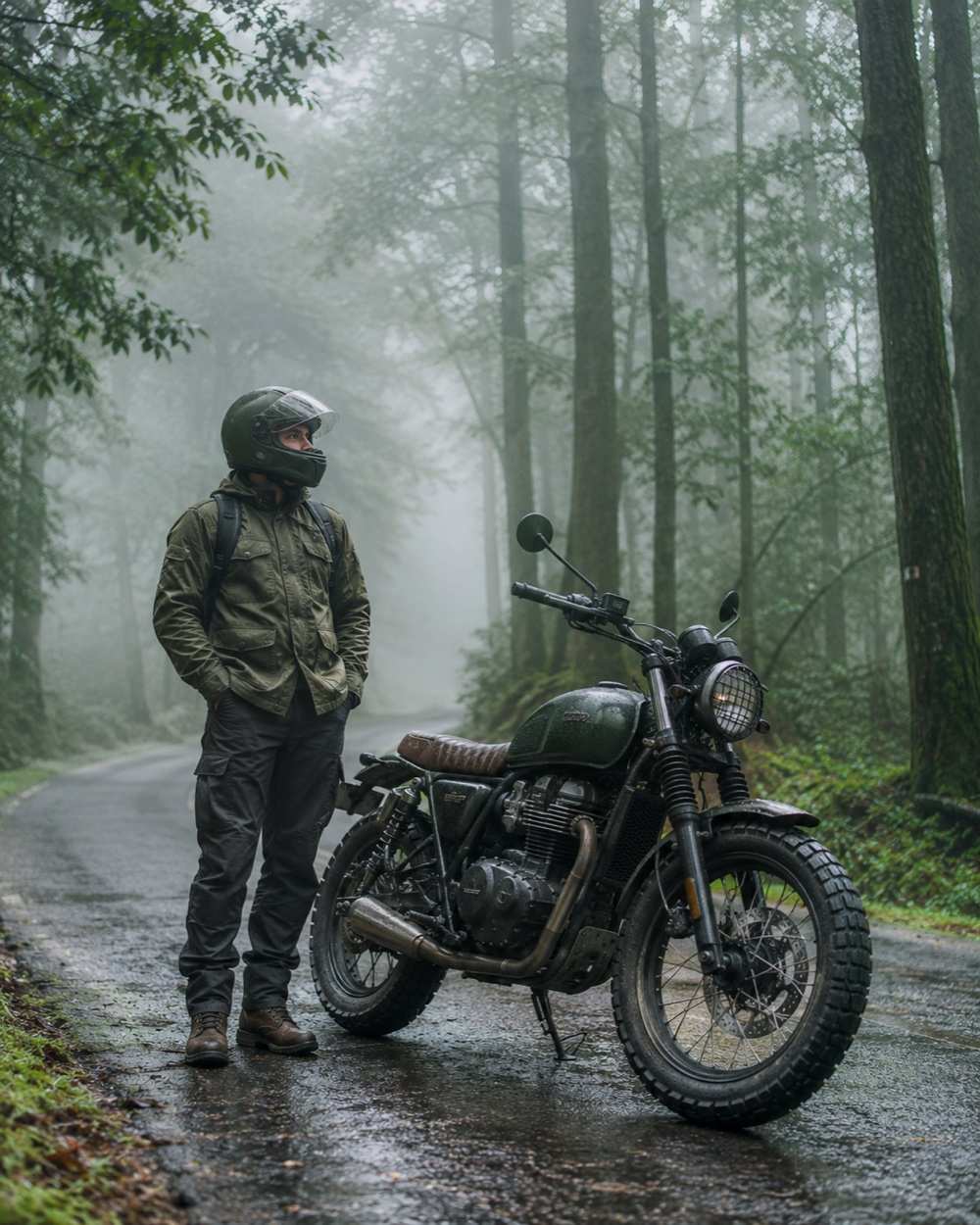
Create a quiet motorcycle portrait on a forest road in morning mist. A helmeted rider stands next to a dark green scrambler, with tall trees fading into the background. Use diffused light, realistic damp surfaces, and an understated green-gray palette.
8. Garage Builder
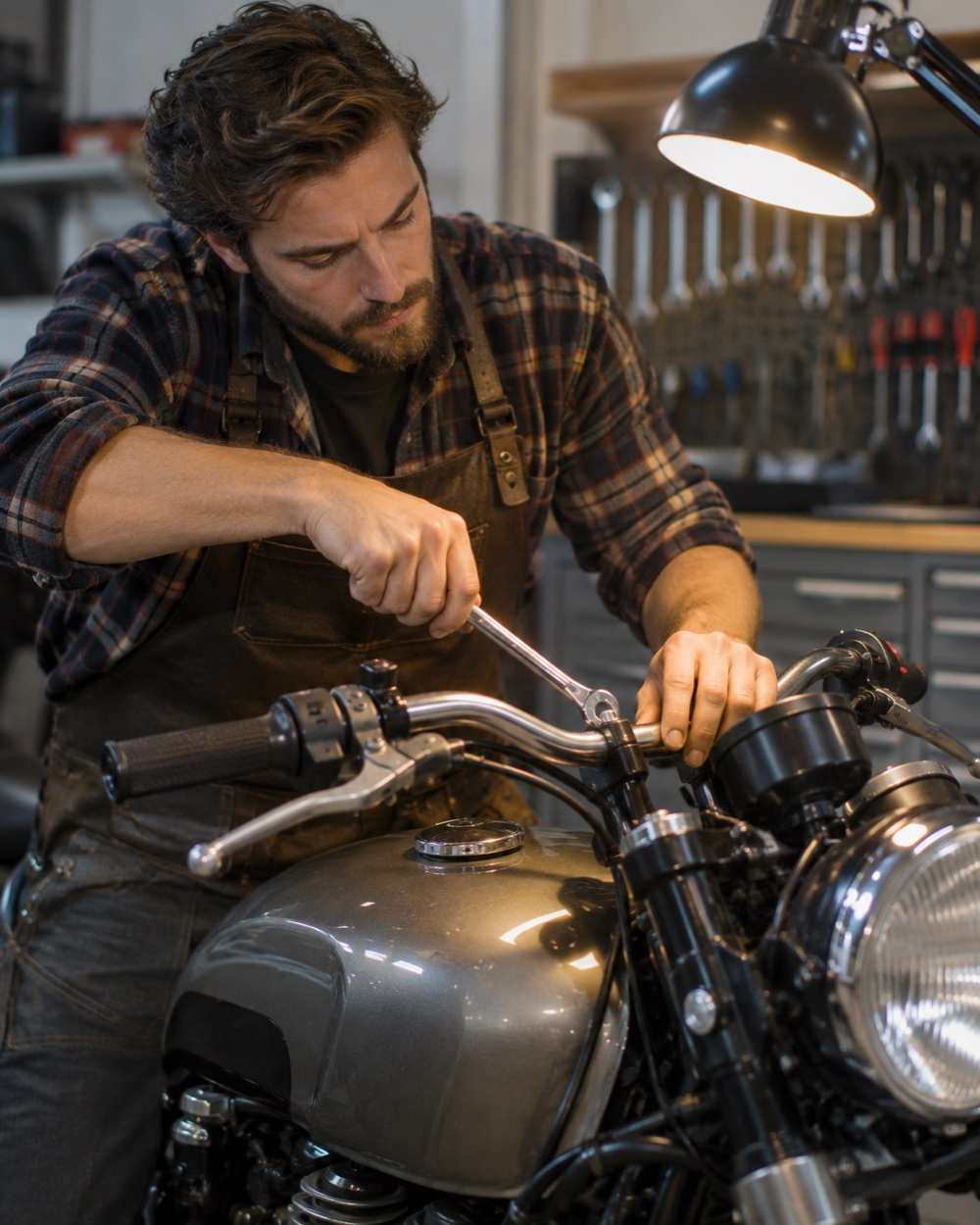
Capture a candid scene of a motorcycle owner adjusting a handlebar in a tidy workshop. A work lamp illuminates the hands and fuel tank; tools in the background fall gently out of focus. Use documentary-style framing and believable metal textures.
9. Urban Streetwear
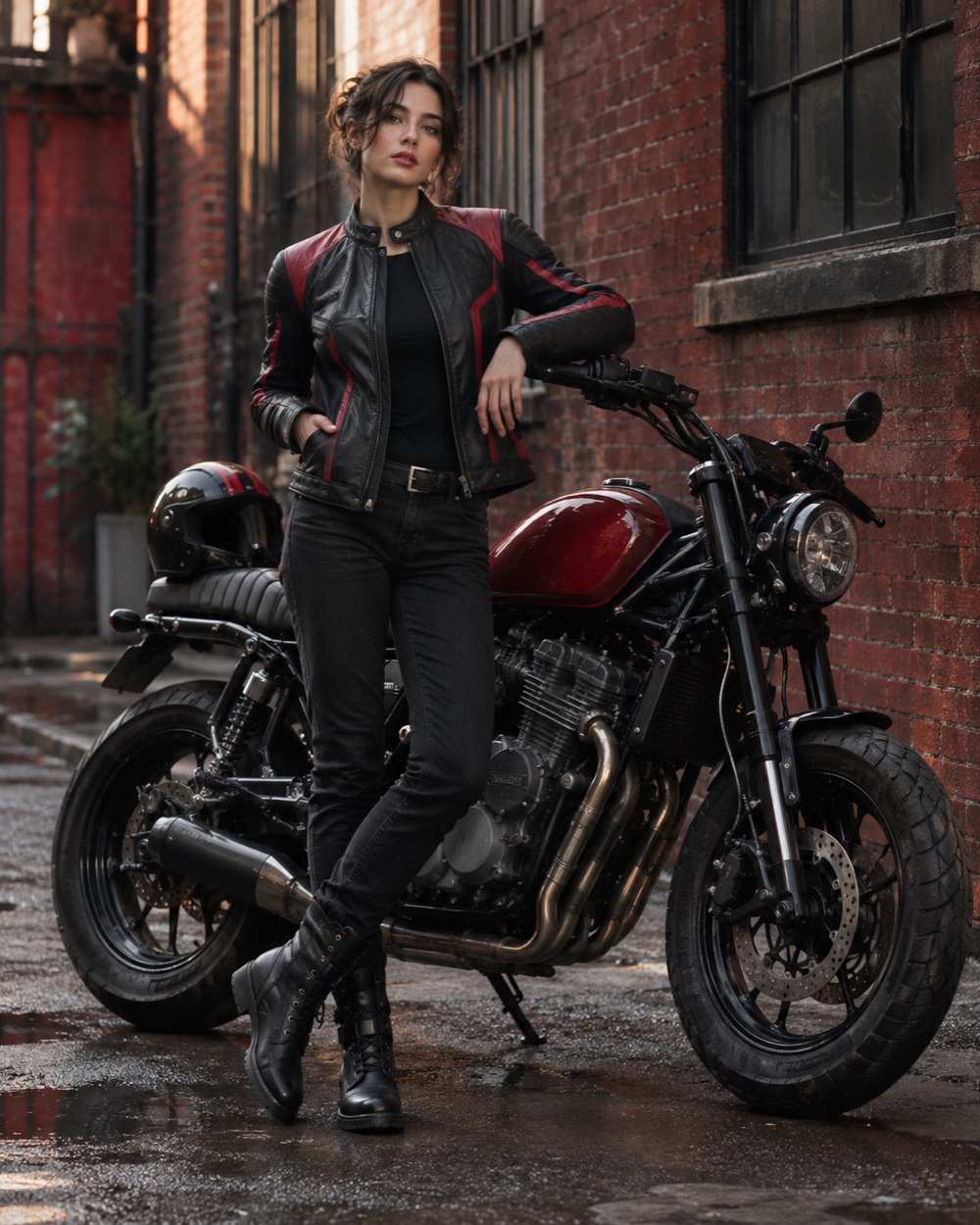
Make a fashion portrait of a rider in a protective jacket and boots beside a custom motorcycle in an urban alley. Use soft side light, a restrained black-and-red palette, and a full-body composition. Keep the pose casual and the bike's geometry realistic.
10. Helmet Reflection
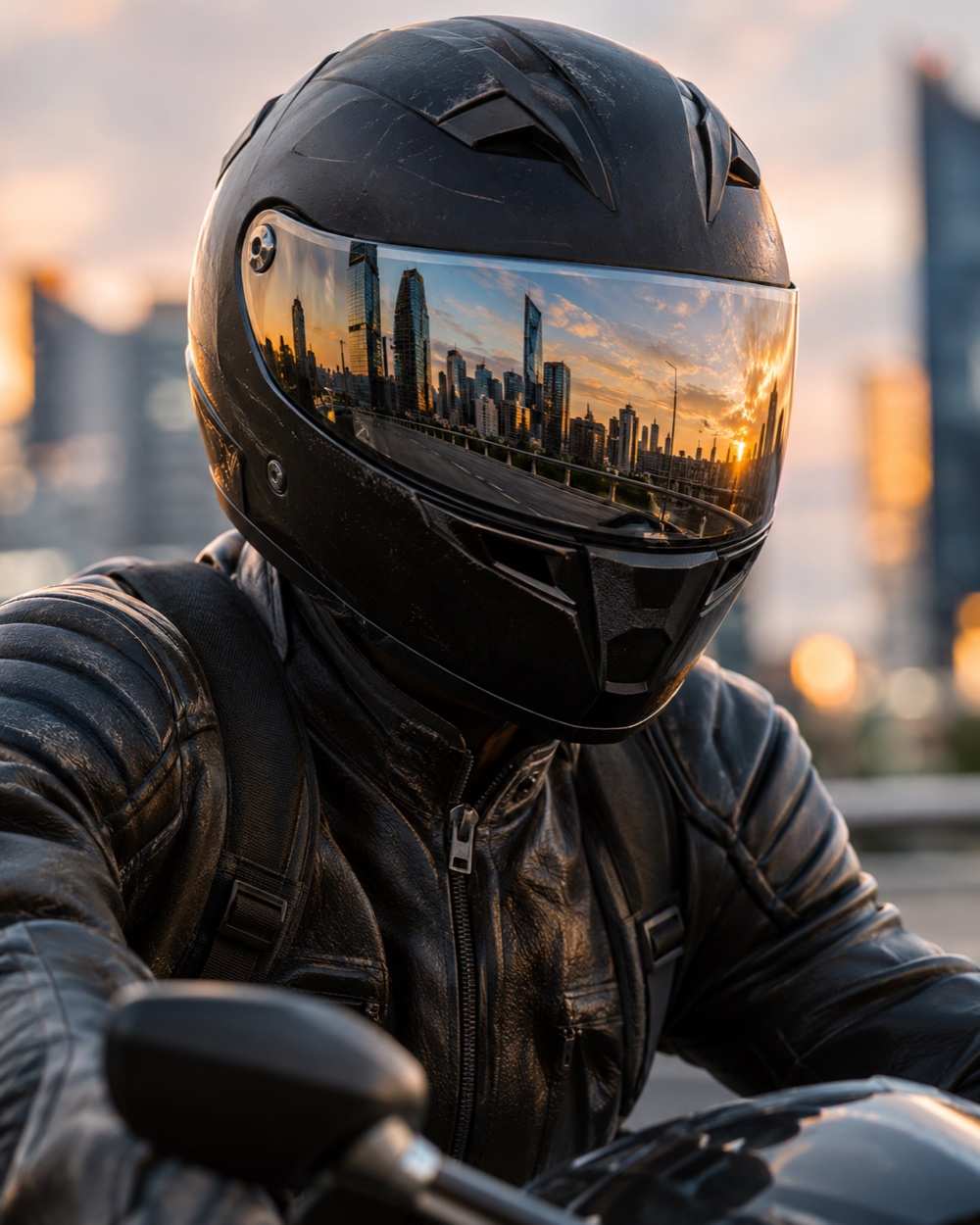
Create a close-up of a full-face motorcycle helmet with a city skyline reflected in its visor. Keep the reflection coherent with the light in the scene, show subtle wear in the helmet finish, and blur the background for a polished portrait.
11. Track-Day Action
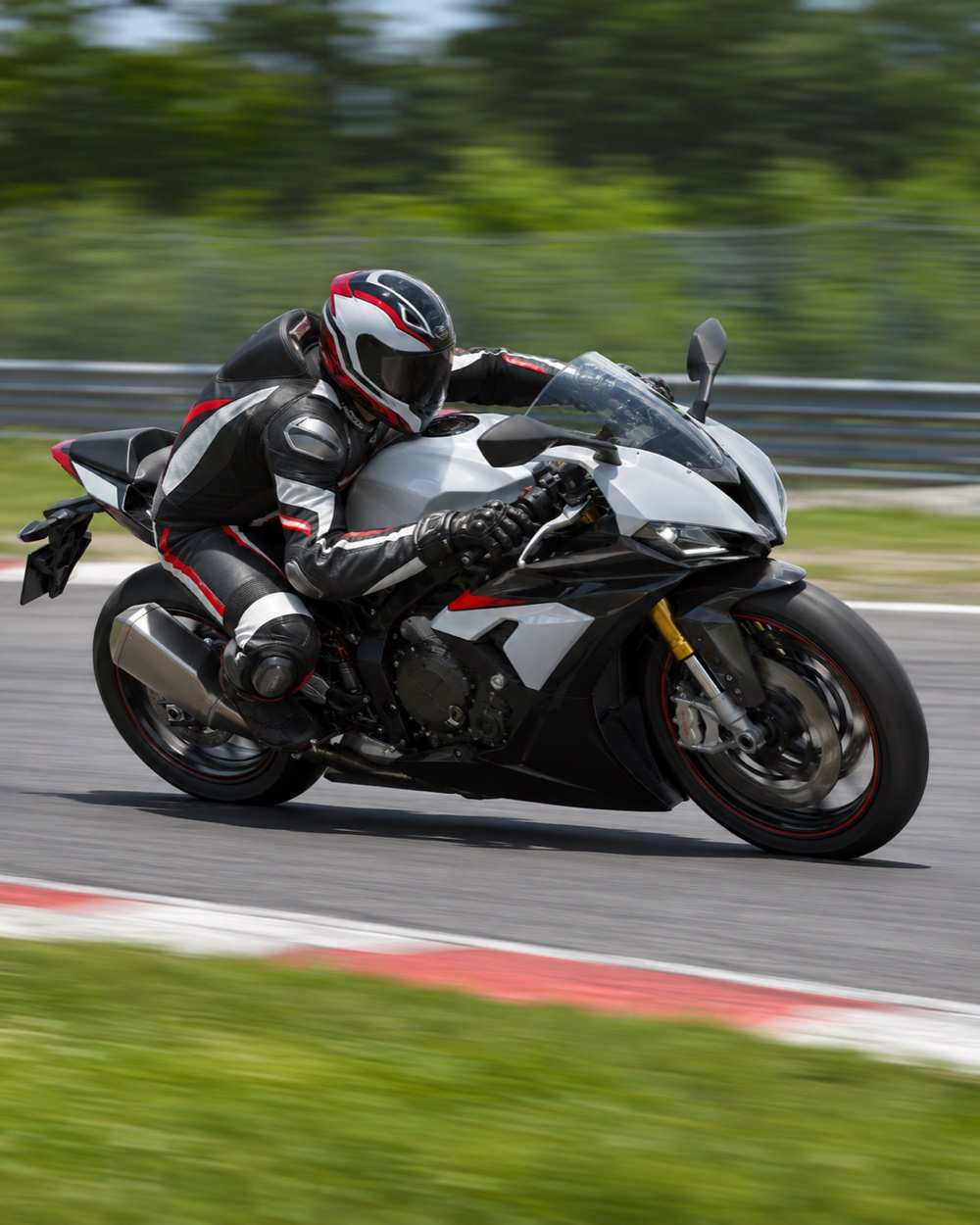
Depict a rider in full protective gear leaning through a corner on a closed racetrack. Keep the rider and motorcycle sharp while the background shows a controlled panning blur. Use daylight, realistic tire contact, and a dynamic side-on composition.
12. Off-Road Adventure
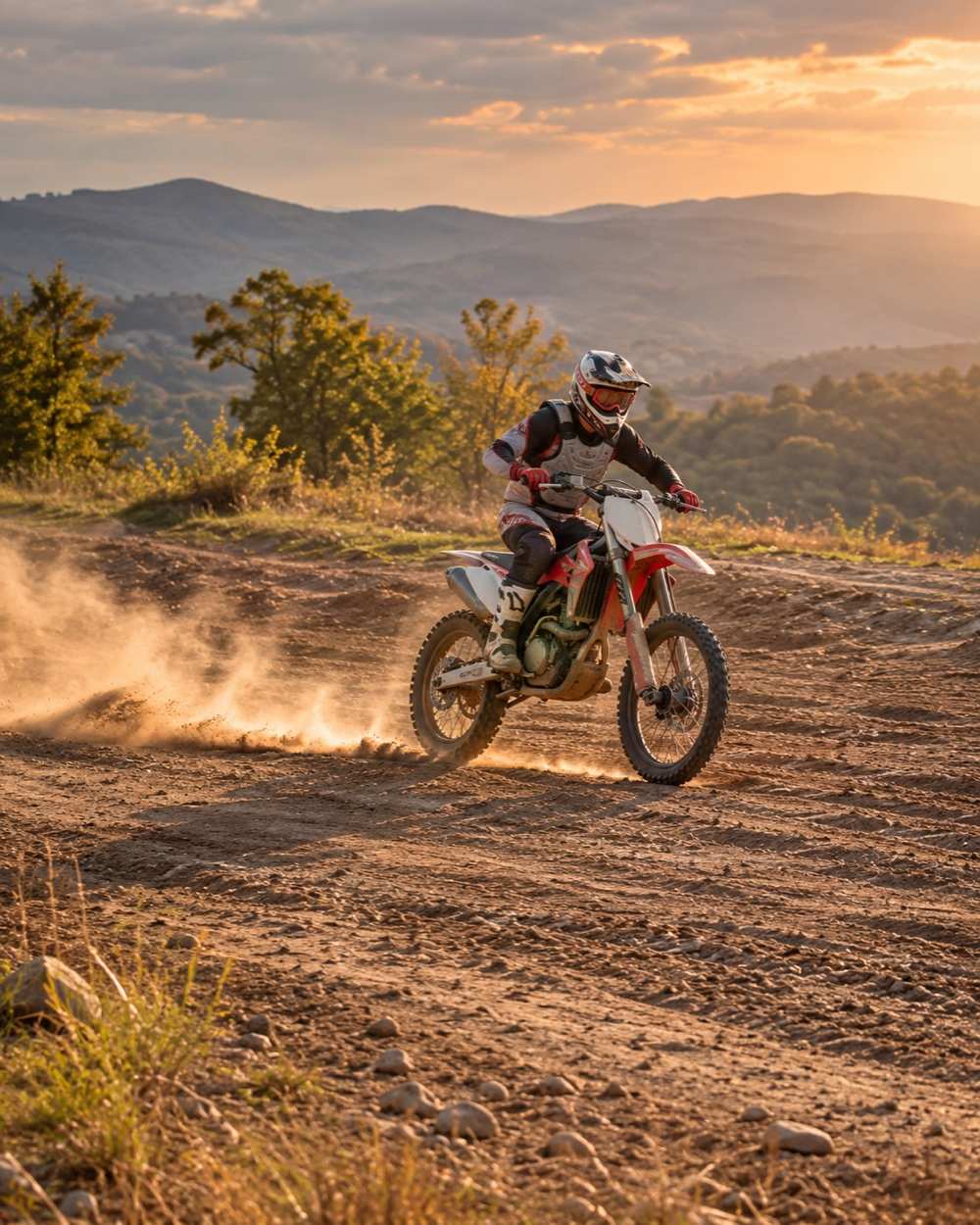
Show a motocross rider on a dirt bike crossing a dusty trail, photographed from a safe distance. Capture a small cloud of dust behind the wheels, textured protective gear, and late-afternoon light. Use a wide sports-photo composition.
13. Black-and-White Portrait
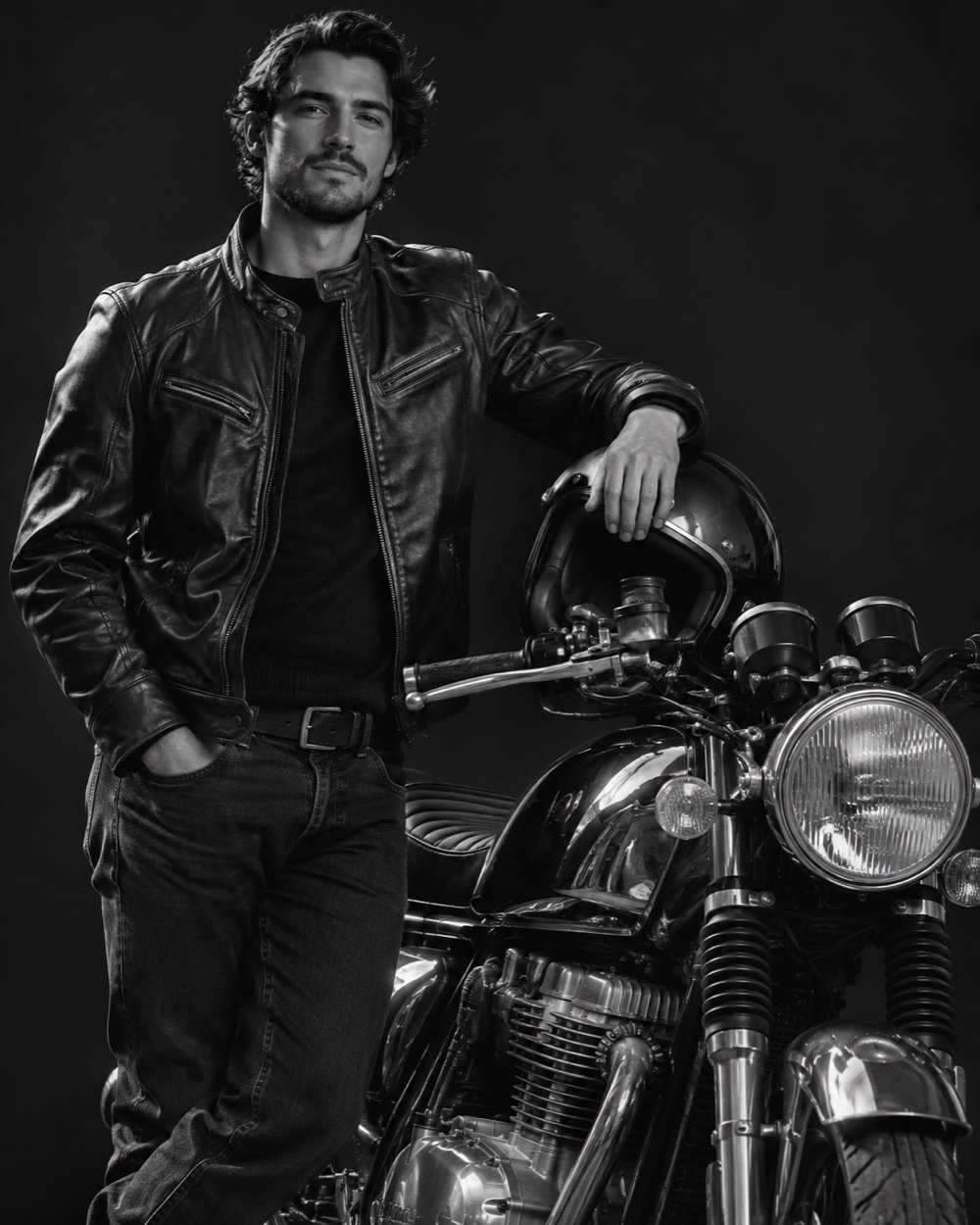
Create a monochrome portrait of a rider beside a classic motorcycle. Side lighting reveals the leather jacket, helmet, and polished metal while the background stays dark and simple. Use natural contrast, detailed shadows, and a calm, confident pose.
14. Night Diner Stop
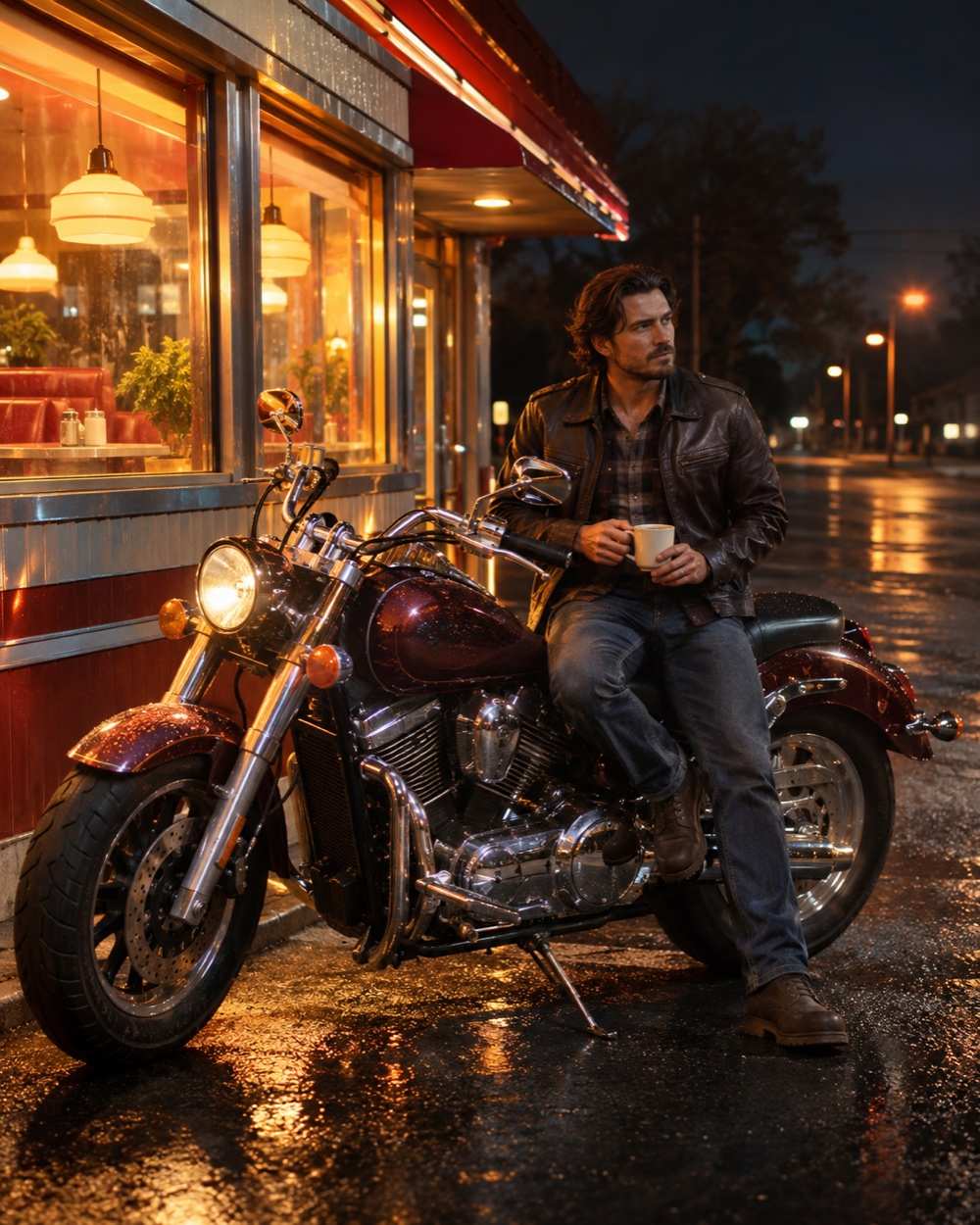
Photograph a rider and cruiser outside a roadside diner after dark. Warm window light falls across the motorcycle while the rest of the street remains softly lit. Include a little moisture on the pavement and an inviting, cinematic atmosphere.
15. Rider and Passenger
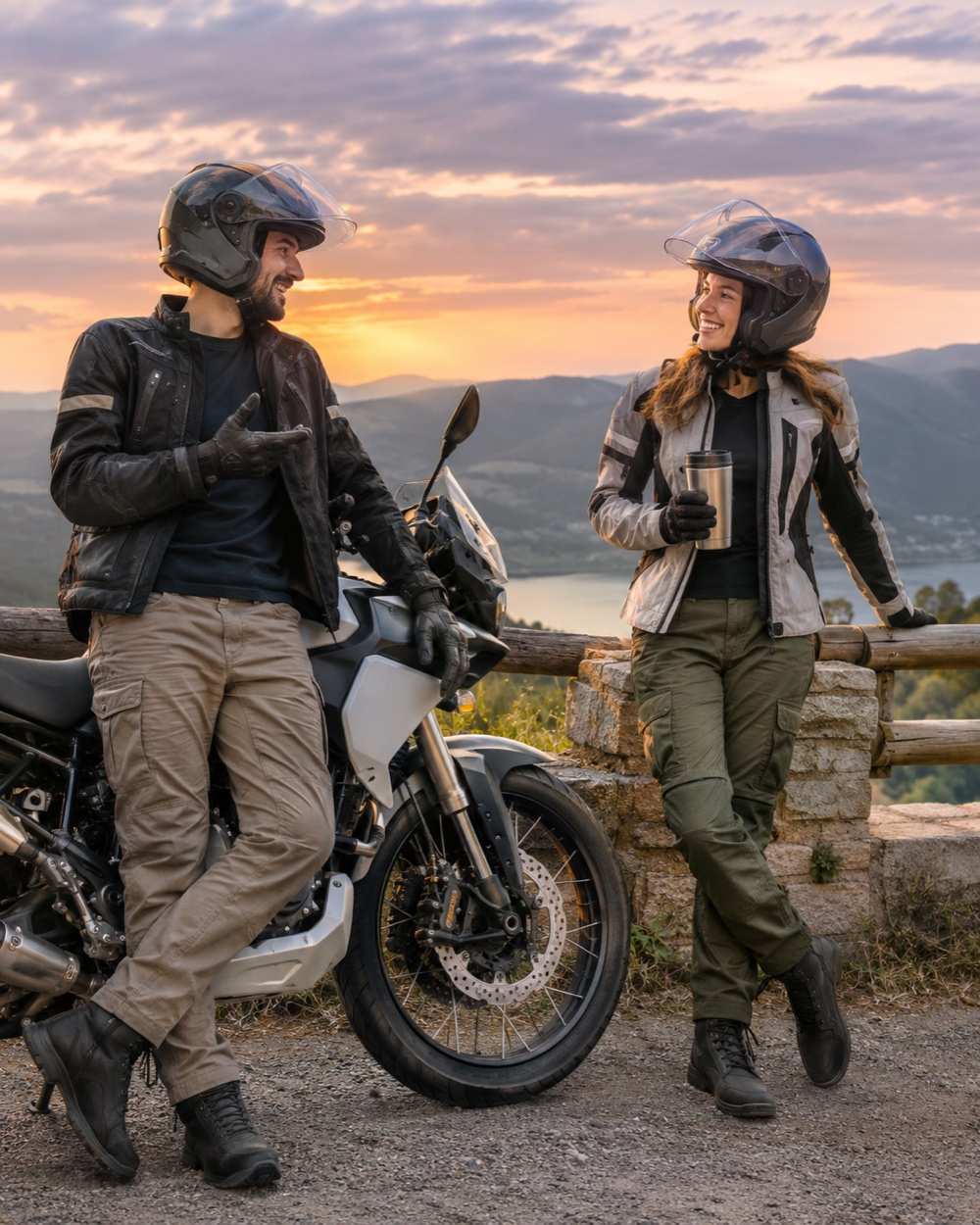
Create a relaxed travel portrait of two helmeted friends standing beside a parked motorcycle at a scenic overlook. Show comfortable riding clothes, a candid exchange, and soft evening light. Keep both people and the motorcycle anatomically plausible.
16. Gloved Hands Detail
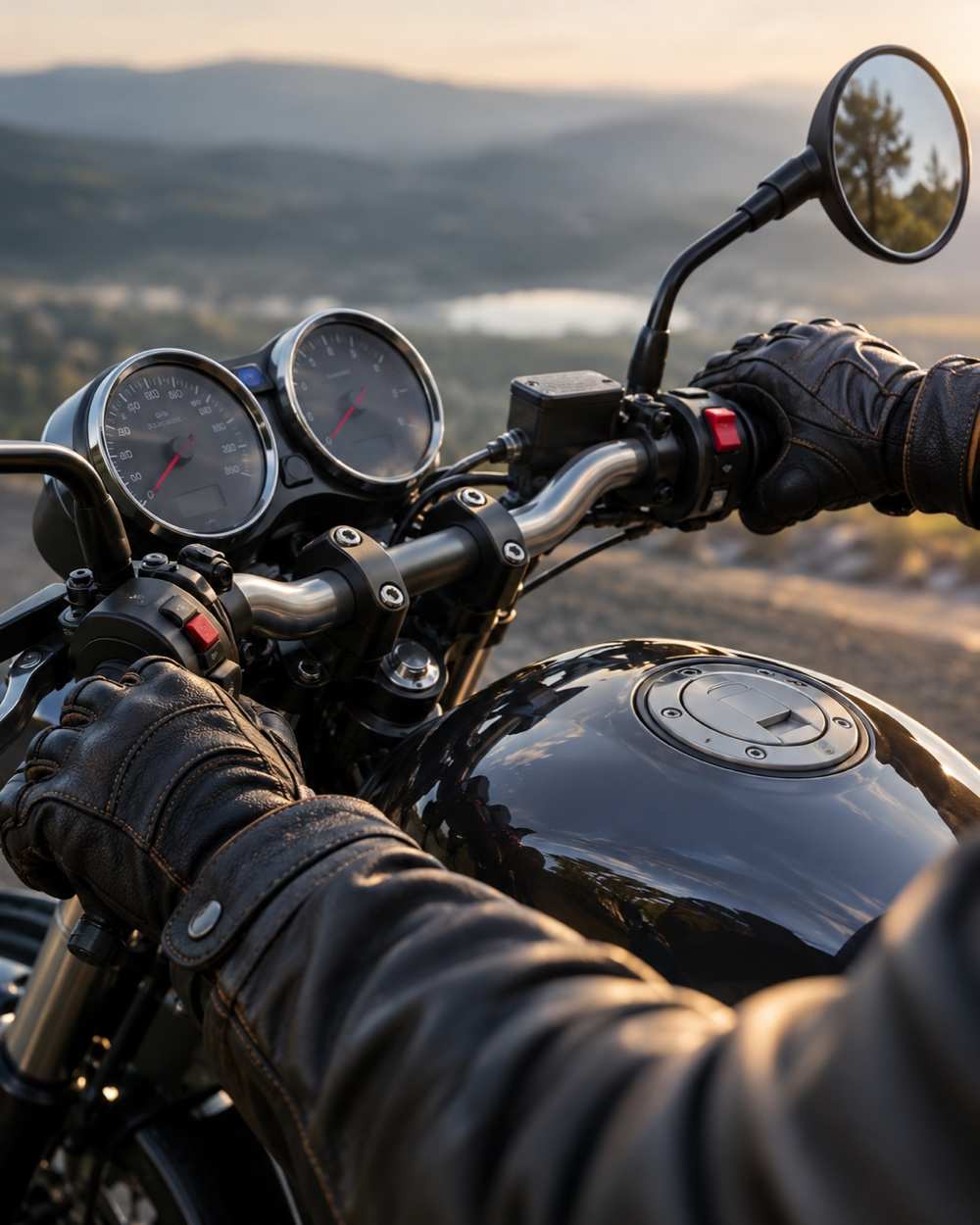
Produce a close-up of gloved hands resting on motorcycle handlebars, with the instrument panel and fuel tank visible. Use gentle morning light, shallow depth of field, and realistic stitching, controls, and reflections. Give the image a premium product-photography feel.
17. Winter Roadside
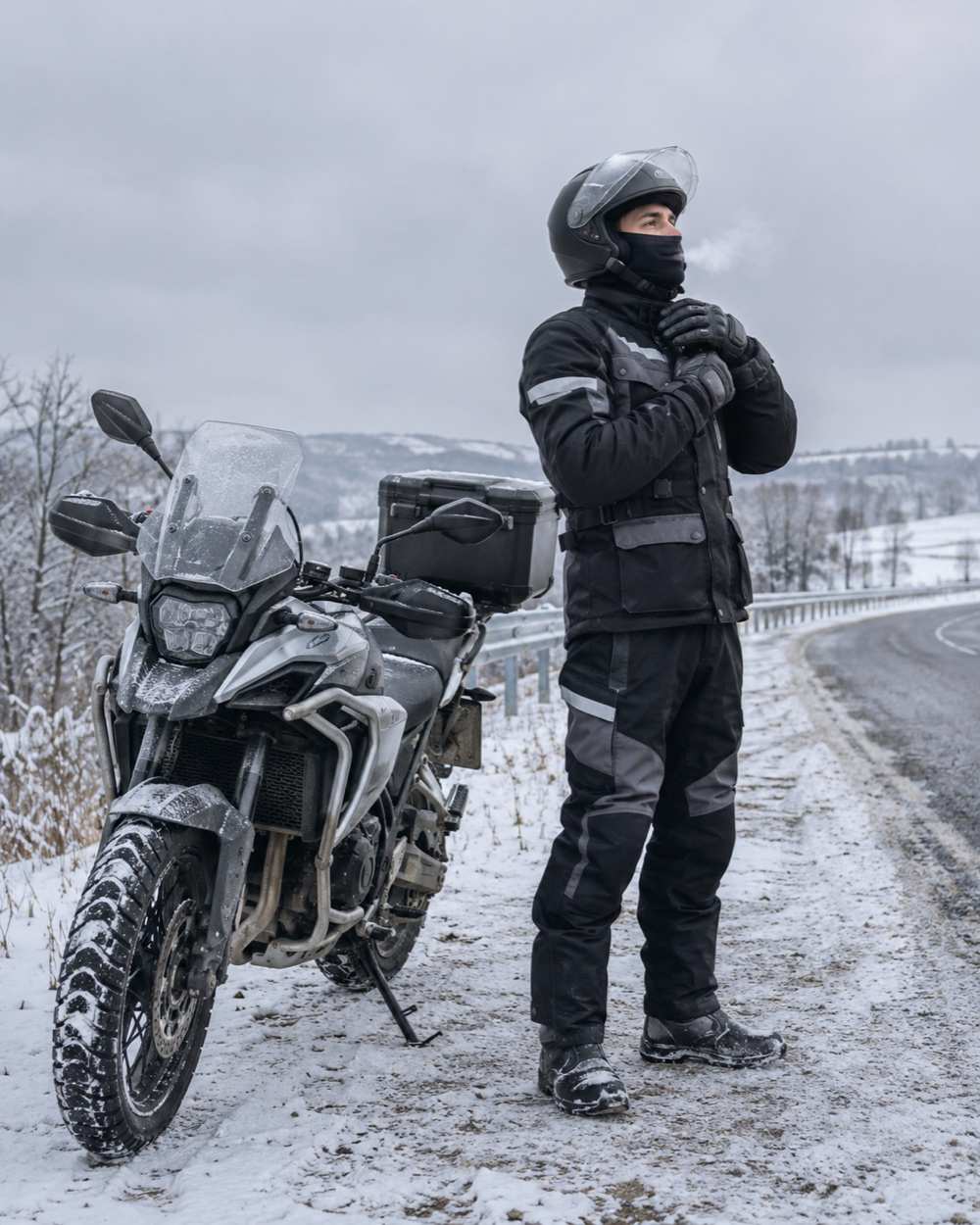
Show a rider in insulated protective gear beside a parked motorcycle on a quiet snowy roadside. Use an overcast sky, subtle visible breath, soft shadows, and a cool restrained palette. Keep the motorcycle and person clear against the pale background.
18. Sunrise Silhouette
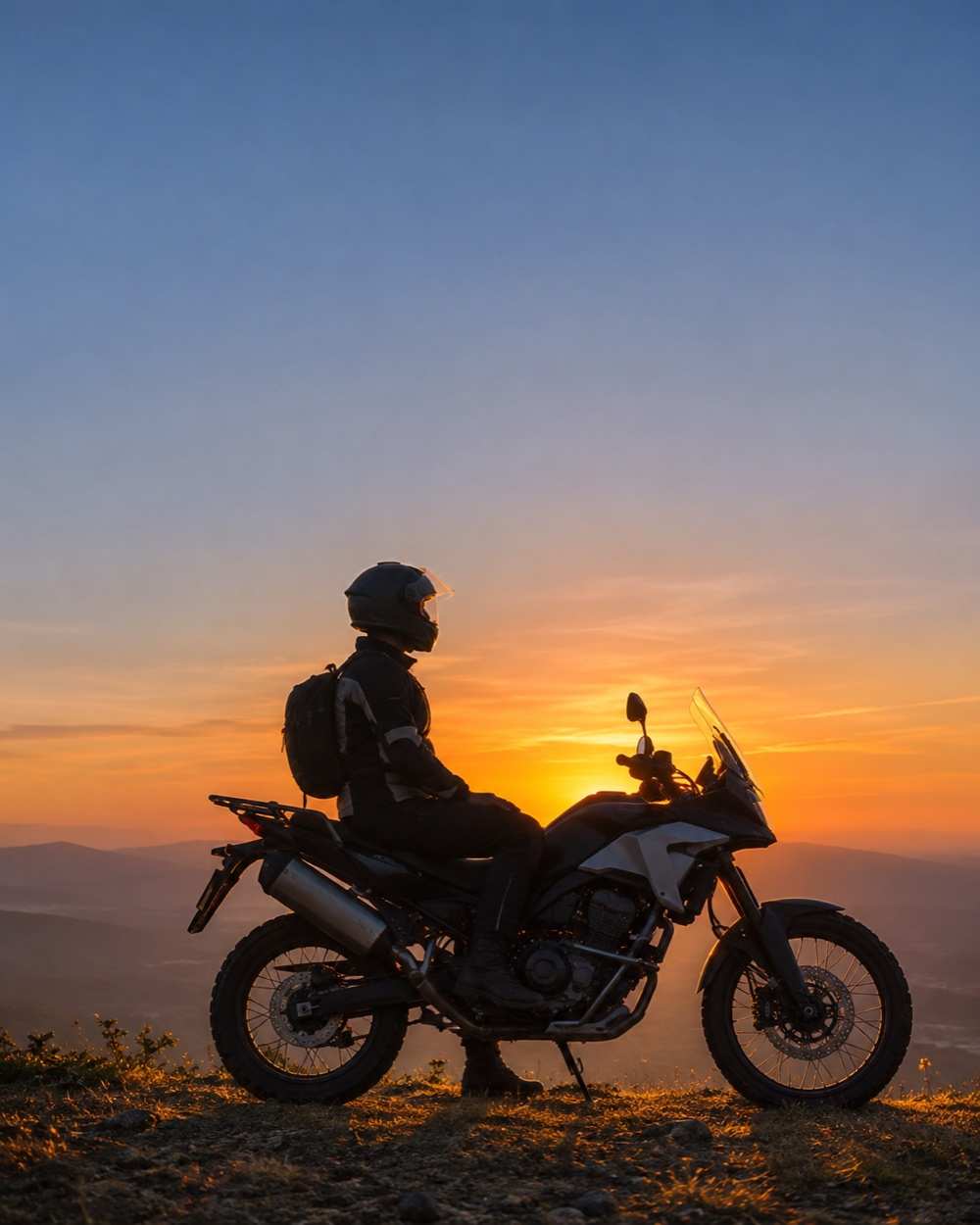
Create a wide side-profile image of a rider and motorcycle parked on a ridge at sunrise. Let the horizon glow behind them while a gentle rim of light defines the helmet and bike. Keep the silhouette legible and leave open sky around the subjects.
19. Motorcycle Meet
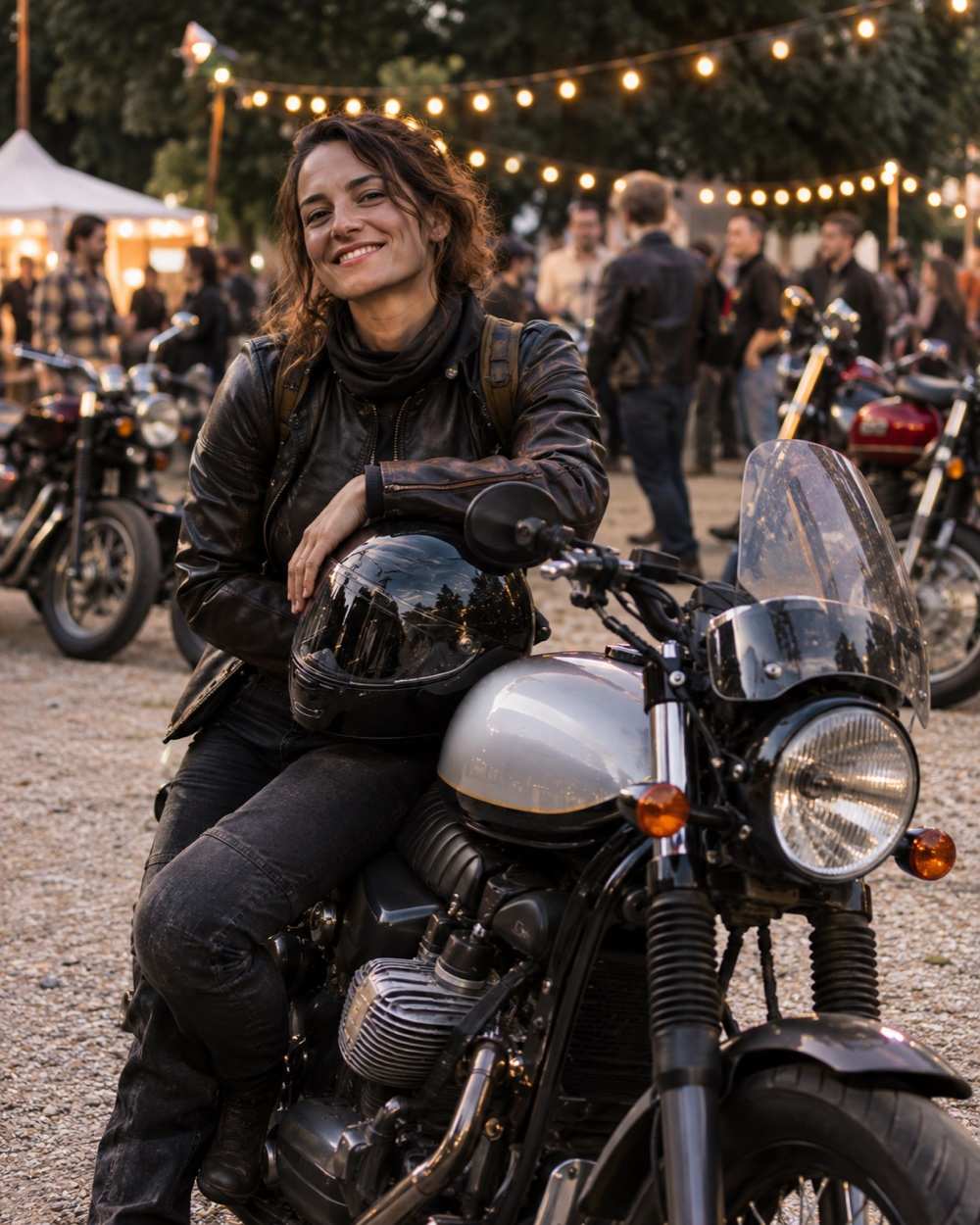
Photograph a rider in the foreground at an evening motorcycle gathering, with a few parked bikes and softly blurred people behind. Use string lights, natural expressions, and a documentary feel. Keep the foreground motorcycle distinct and accurately shaped.
20. Clean Motorcycle Campaign
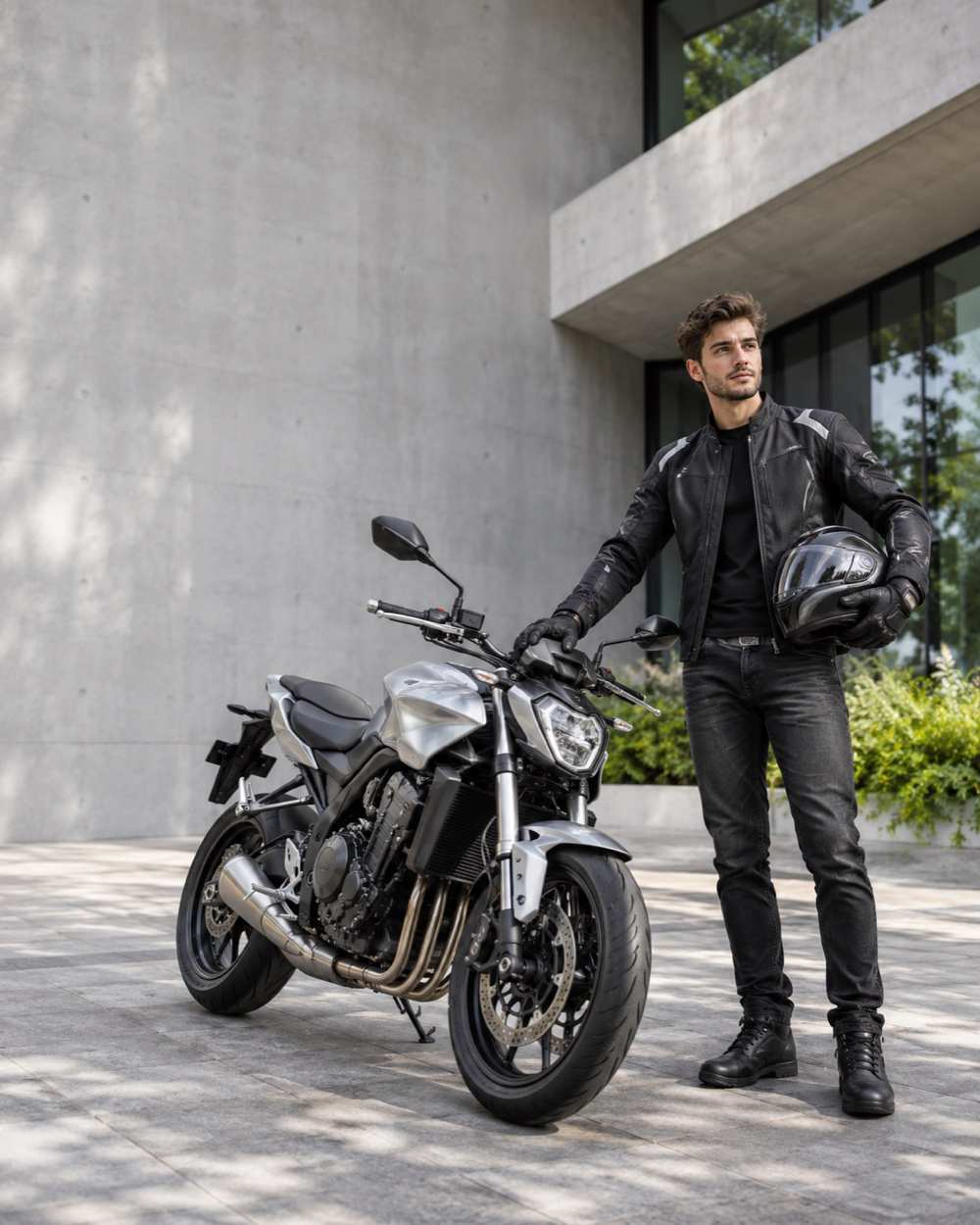
Create a polished commercial-style image of a rider standing next to a silver motorcycle outside a modern concrete building. Use bright diffused daylight, controlled reflections, and a three-quarter view. Leave clear space on one side for a headline, without adding any text.
How to Write Better Motorcycle Photo Prompts
Build your own prompt with five ingredients: rider + motorcycle + setting + lighting + composition. For example, start with “a rider in a black helmet beside a red café racer,” then add a location, a time of day, and a framing choice. Describe one or two visual details that matter most, such as brushed metal, road dust, or a reflection in the visor.
If you upload a photo, add a sentence such as: “Keep the rider's face, helmet design, bike color, and overall motorcycle shape consistent with the reference.” Change one element at a time when comparing versions. This makes it easier to see whether a new lighting cue or background helped.
For realistic results, check the details that image generators can get wrong: tire contact, spokes, hand placement, mirror positions, shadows, and reflections. Ask for a specific correction in the next iteration rather than adding a long list of conflicting instructions. Use only photos you have permission to edit.
Frequently Asked Questions
Can I Use My Own Motorcycle Photo?
Yes. Upload a clear reference image in a tool that supports image-to-image editing, such as SuperMaker's image-to-image editor, and describe the scene or lighting you want to change. Identity and mechanical details may vary, so inspect the result carefully.
What Makes an AI Motorcycle Photo Look Realistic?
Consistent lighting and believable physical details help. Describe where the light comes from, choose a practical camera angle, and check that the rider's hands, wheels, shadows, and reflections make sense together.
What Aspect Ratio Should I Choose?
Try 4:5 for a vertical feed image, 9:16 for a story, and 16:9 for a wide banner. The best choice depends on where you plan to use the image and how much of the motorcycle and background you want to show.
Can I Keep the Same Rider and Bike Across Images?
A clear reference photo and a short list of features to preserve can improve consistency, but they do not guarantee an exact match. Compare each output and refine one scene or lighting detail at a time.
Choose a prompt that matches the mood you want, customize the rider and motorcycle details, and experiment with small changes until the image feels right.