Luna-Lisa-Alpha: What We Know About the Mysterious AI Image Model
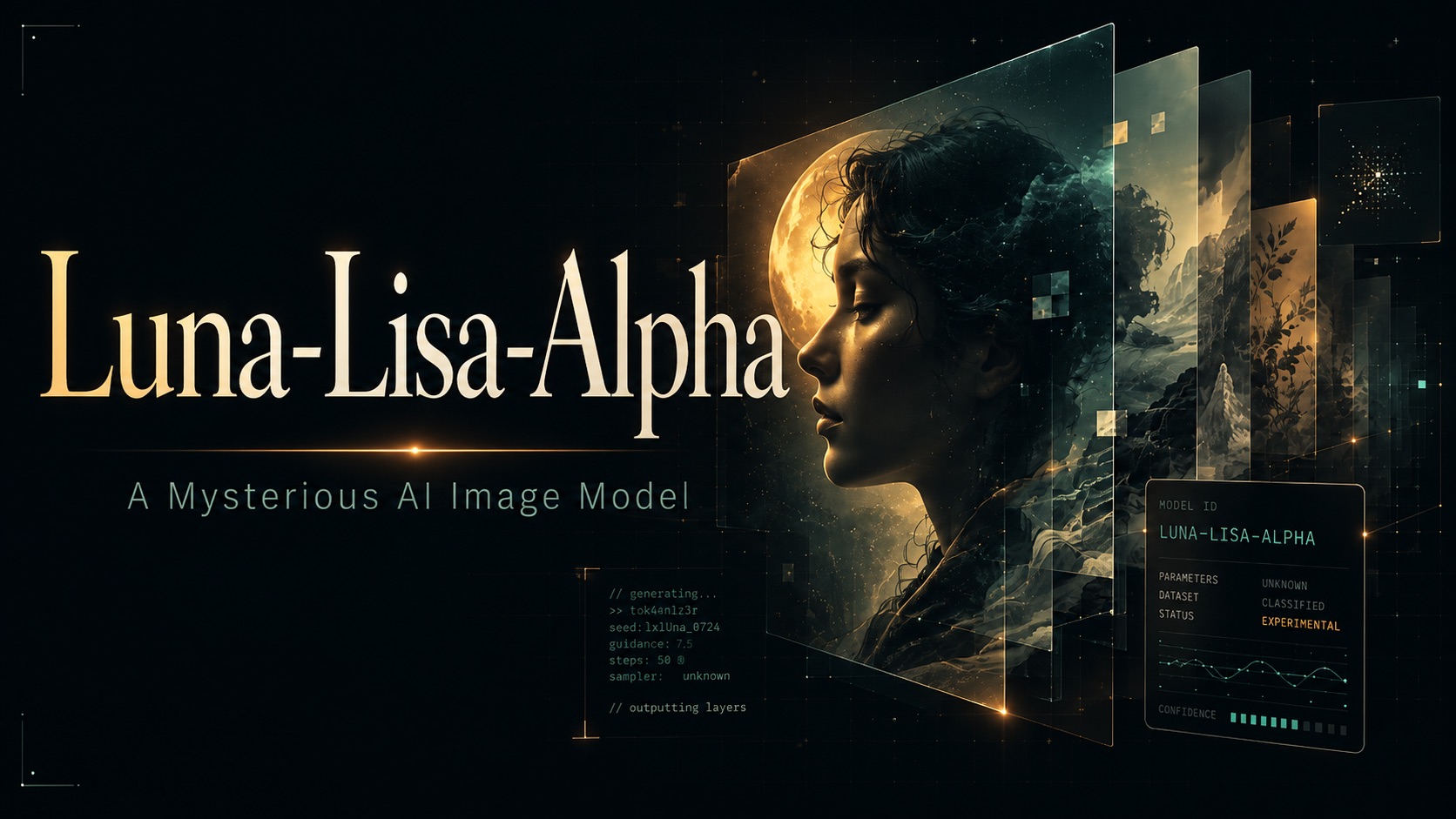
Luna-Lisa-Alpha is a mysterious new AI image checkpoint drawing attention for its possible connection to GPT Image. This guide looks at what we know so far, how it may relate to Mona-Lisa-1, what early tests reveal, and why some testers think it could point toward the next GPT Image upgrade.
Want to try Seedance 2.5 yourself? You can use Seedance 2.5 on SuperMaker to generate AI videos from your own prompts and images.
We are also running a limited-time Seedance reward through August 31: credits spent on Seedance 2 during the promotion period can be returned 1:1 for use with Seedance 2.5.
A new AI image model name has started attracting attention: luna-lisa-alpha. Unlike a conventional model launch, it did not arrive with a product page, model card, or formal announcement. Instead, the name surfaced through public testing discussions and early image comparisons, quickly raising questions about where the model came from and what it might represent.
The strongest theory at the moment is that luna-lisa-alpha may be connected to OpenAI’s GPT Image family. That possibility became especially interesting because another mysterious image model, mona-lisa-1, appeared shortly before it. If those clues are pointing in the right direction, luna-lisa-alpha could offer an early look at a newer stage of GPT Image development rather than an entirely separate image model.
What Is Luna-Lisa-Alpha?
Luna-lisa-alpha appears to be an experimental AI image-generation checkpoint rather than a finished public product. The most plausible interpretation is that it belongs to a newer round of GPT Image testing and may represent a checkpoint being evaluated after GPT Image 2.
The name itself may not be particularly meaningful. Experimental models are often evaluated under temporary labels before a public release, and those labels can disappear completely as development moves forward. In that sense, “luna-lisa-alpha” may simply describe one stage of testing rather than the name users will eventually see in a finished product.
What makes the checkpoint more interesting is the type of improvements it appears to be targeting. Early testing and discussion have focused particularly on:
- more natural photorealism;
- stronger text rendering and visual layouts;
- better handling of detailed prompts and scene relationships.
Rather than representing a completely new direction, luna-lisa-alpha may be an attempt to make an already capable image-generation system more reliable in the areas that matter most in practical use.
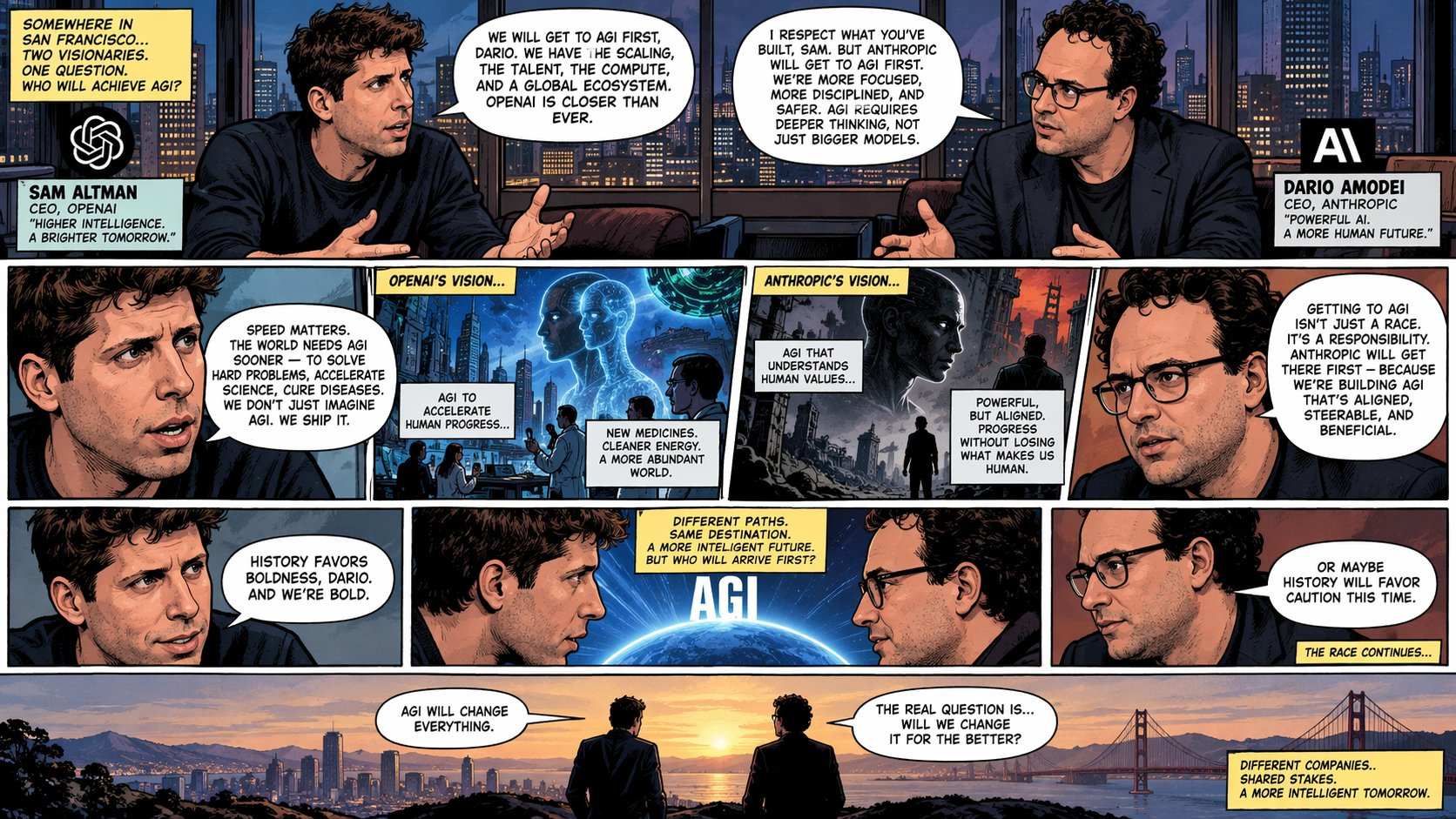
An early luna-lisa-alpha test showing complex multi-panel composition and text rendering.
Image source: Chetaslua (@chetaslua) on X.
Why Is Luna-Lisa-Alpha Getting Attention?
The interest around luna-lisa-alpha is not driven by its unusual name alone. The timing of its appearance, the way early testers have described it, and the models it is already being compared with have all contributed to the speculation surrounding it.
It Appeared Soon After Mona-Lisa-1
Earlier in August 2026, mona-lisa-1 began attracting attention in image-model testing. The model quickly became associated with speculation about a possible OpenAI connection, especially after reports suggested that some of its outputs showed OpenAI-related provenance signals.
Luna-lisa-alpha appeared shortly afterward. More importantly, testers have used language suggesting that it could be a newer checkpoint following the earlier “monalisa” model. That does not prove that the two belong to exactly the same development sequence, but it gives the possible relationship more weight than their similar names alone would provide.
It Is Already Being Compared With Leading Models
Another reason luna-lisa-alpha has drawn attention is the level of competition testers are placing it against. Early comparisons have already included models such as GPT Image 2 and Nano Banana Pro, suggesting that testers see luna-lisa-alpha as more than a minor experiment.
A limited set of comparison images cannot establish which model is objectively better. What those tests can do is show the performance level luna-lisa-alpha appears to be targeting. The more useful question is whether it can maintain strong results across difficult tasks rather than produce a few especially impressive examples.
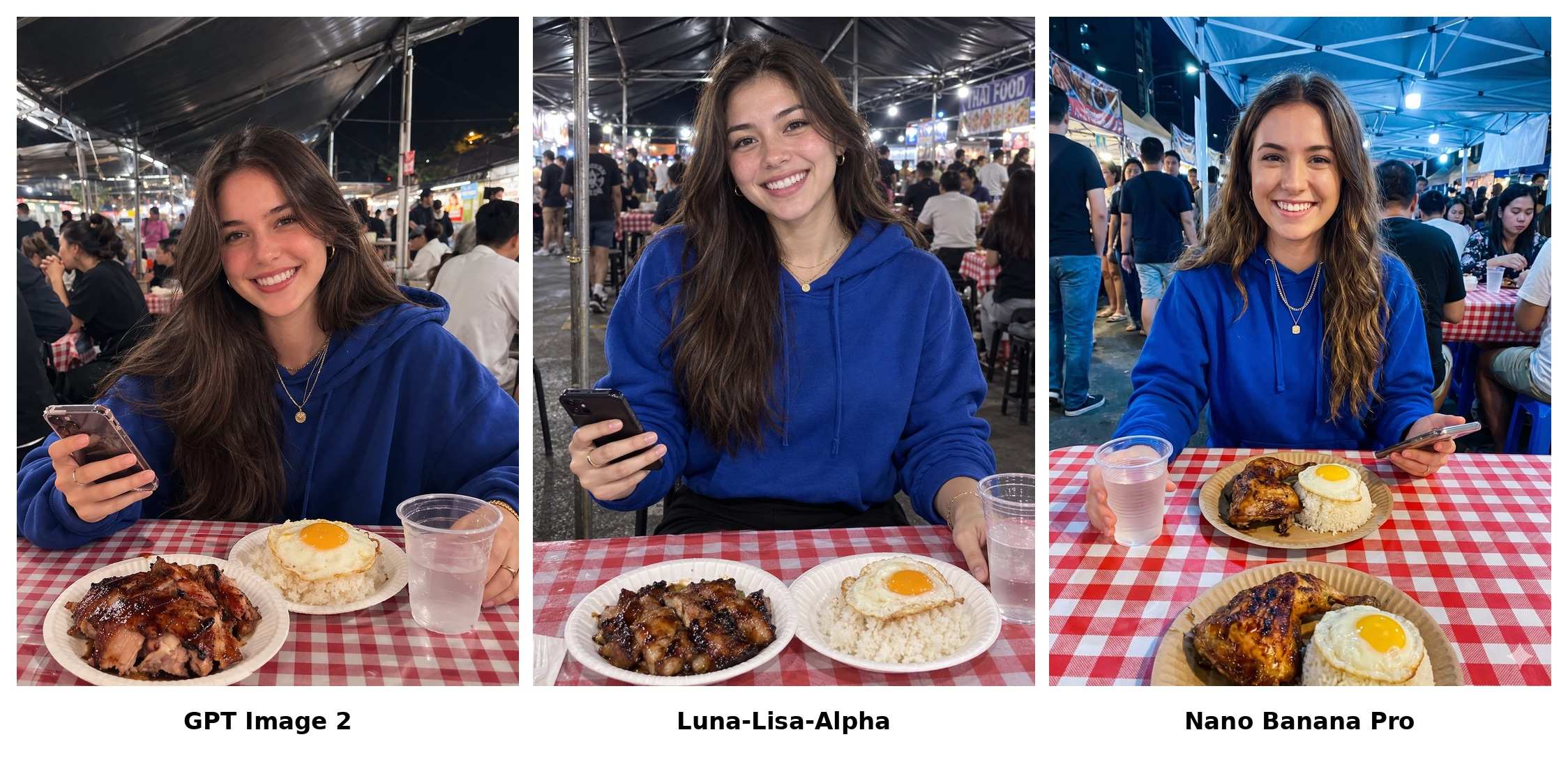
An early comparison placing luna-lisa-alpha alongside GPT Image 2 and Nano Banana Pro.
Image source: Harshith (@HarshithLucky3) on X.
How Could Luna-Lisa-Alpha Relate to Mona-Lisa-1?
It may be misleading to think of mona-lisa-1 and luna-lisa-alpha as two separate products. A more useful interpretation is that they could be different checkpoints within the same broader development process.
Model teams commonly evaluate multiple checkpoints before deciding which version should move forward. Those checkpoints may differ in training progress, fine-tuning methods, post-training settings, data mixtures, or other system-level choices. Under this interpretation, mona-lisa-1 could have been an earlier candidate, while luna-lisa-alpha could represent a later version or an alternative branch being tested alongside it.
There are currently several reasonable ways to interpret their relationship:
- Sequential checkpoints: luna-lisa-alpha may follow an earlier mona-lisa-1 test.
- Parallel experiments: both could be different candidates being evaluated at the same time.
- Temporary test identities: neither name may survive into the eventual public model.
This would explain why two similarly themed names appeared within such a short period without requiring them to represent two separate commercial products. For now, the most useful way to view them is as potentially related development checkpoints rather than clearly defined product generations.
What Do Early Luna-Lisa-Alpha Tests Suggest?
A new image model should not be judged simply by whether its pictures look more attractive. Most leading systems can already create polished portraits, cinematic scenes, illustrations, and product visuals from relatively simple prompts.
The more meaningful question is whether luna-lisa-alpha improves the areas where even strong current models can still fail.
More Natural Photorealism
Photorealism is no longer just about generating a convincing face. The harder challenge is making the entire image remain believable under closer inspection. Skin texture, hair boundaries, hands, fabric behavior, lighting, and the physical interaction between people and objects can all reveal whether an image still carries an obvious synthetic quality.
Early luna-lisa-alpha samples have attracted attention for their realistic appearance, but consistency matters much more than a few selected results. A genuinely stronger model should maintain believable outputs across unusual poses, crowded scenes, difficult lighting conditions, and prompts with many specific requirements.
The difference is subtle but important. The goal is no longer simply to produce something polished; it is to create an image that feels physically convincing.
Better Text and Visual Layout
Text rendering may be one of the more important areas to watch. Image generators are increasingly used for visual tasks where typography is an essential part of the image rather than a small decorative element.
Useful tests include:
- posters and advertisements;
- packaging and menus;
- magazine covers and editorial layouts;
- infographics and multi-panel designs;
- interface and social-media graphics.
These tasks demand far more than correctly spelling a short phrase. A strong model also needs to understand visual hierarchy, spacing, placement, and the relationship between typography and the rest of the composition.
Because GPT Image 2 is already capable in text-heavy image generation, any consistent improvement from luna-lisa-alpha would be meaningful. Complex layouts therefore reveal much more than a simple sign containing one or two words.
Stronger Prompt Following and Scene Logic
Complex instruction following is another area where leading models can still reveal weaknesses. A prompt may specify several people, multiple objects, exact clothing details, a camera angle, background elements, and text in a particular position. The final image can still look impressive while quietly ignoring some of those requirements.
A stronger model should preserve more of the requested relationships instead of merely capturing the general mood. Scene logic matters just as much: reflections should match the environment, objects should make proper contact with surfaces, hands should actually hold what they appear to be holding, and architecture should remain structurally coherent.
If luna-lisa-alpha improves these relationships while maintaining strong visual quality, that would represent a more useful advance than simply producing sharper or more stylized images.
Is Luna-Lisa-Alpha GPT Image 2.5?
Possibly, and some early testers have already raised that possibility.
In an August 20 post, Harshith described luna-lisa-alpha as a “new GPT image model check point” and added “maybe GPT image 2.5.” That is one of the clearest examples of the GPT Image 2.5 theory appearing in early public discussion around the model.
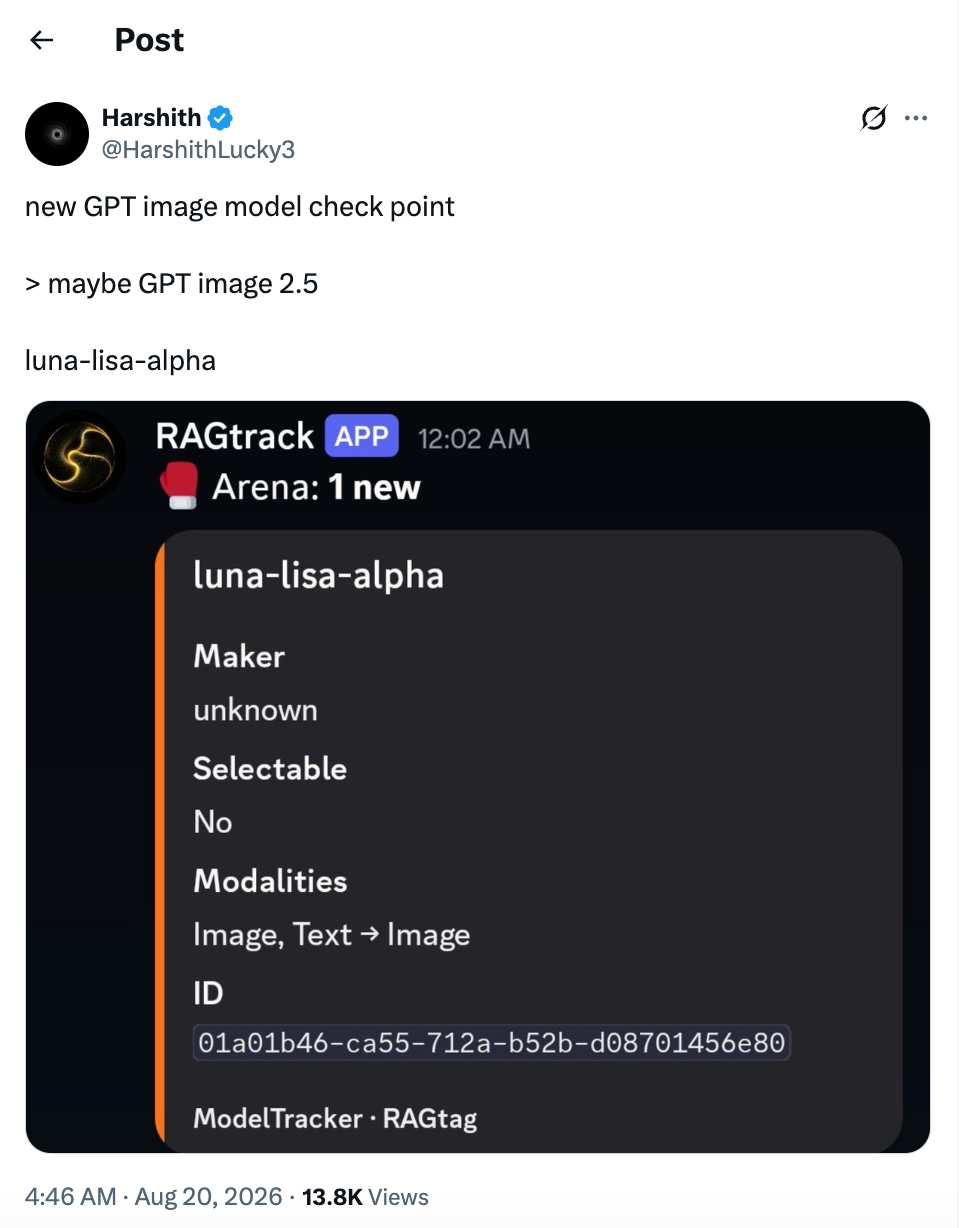
Harshith describes luna-lisa-alpha as a new GPT Image checkpoint and speculates that it may be GPT Image 2.5.
Source: Harshith (@HarshithLucky3) on X, Aug. 20, 2026.
The theory itself is reasonable. Luna-lisa-alpha appeared shortly after mona-lisa-1, testers have referred to it using GPT Image checkpoint language, and it is already being compared directly with GPT Image 2. Taken together, those clues suggest that luna-lisa-alpha could belong to a newer GPT Image development cycle.
A Checkpoint Does Not Guarantee a Final Model Name
Technical lineage and final product naming are not necessarily the same thing. An experimental checkpoint can be refined further, combined with improvements from another version, renamed completely, or replaced by a stronger candidate before it reaches users.
For that reason, GPT Image 2.5 is best understood as an early community theory rather than a confirmed final model name. Luna-lisa-alpha may still turn out to be a newer GPT Image checkpoint even if the eventual public release uses a completely different name.
One Clue Worth Watching: More Recent World Knowledge
One of the more unusual claims surrounding luna-lisa-alpha is that it may understand newer real-world information better than the earlier mona-lisa checkpoint. This could matter more than it first appears because modern image models increasingly need to understand not only visual concepts but also things that change over time.
That can include recently released products, newer software interfaces, current design conventions, contemporary objects, and recent visual references. A model with more up-to-date knowledge could handle those prompts more accurately even if its raw image quality changed only slightly.
For example, asking an image model to depict a recently launched device or a newer interface becomes much harder if its understanding of the world stops several years earlier. More recent knowledge could therefore improve practical image generation in ways that are difficult to notice in a conventional portrait comparison.
This claim still needs broader testing. If it holds up consistently, however, it would suggest that luna-lisa-alpha is more than an aesthetic fine-tune and may represent a broader update to what the model understands about the world it is being asked to depict.
Why Luna-Lisa-Alpha Matters Before Any Public Release
The broader significance of luna-lisa-alpha is not really about its temporary name. It is about how competition between leading image models is changing.
From Better-Looking Images to More Reliable Generation
A few years ago, model progress was relatively easy to demonstrate visually. Better systems produced sharper faces, richer lighting, cleaner compositions, and more impressive styles. Today, that gap has narrowed considerably because many leading models can already generate visually strong images from simple prompts.
The harder challenge now is reliability. A model becomes more useful when users can predict what it will do, request precise changes without damaging unrelated details, preserve important identities and objects across edits, and trust that a complicated prompt will not lose half of its requirements.
That changes how progress should be measured. Instead of asking only whether one output looks prettier than another, future comparisons increasingly need to ask whether a model can consistently:
- preserve all important prompt requirements;
- make precise edits without unwanted changes;
- maintain believable spatial relationships;
- keep characters, objects, and visual details consistent.
The next meaningful improvement in AI image generation may therefore not always look dramatic in a single side-by-side comparison. It may become obvious through how often the model gets the entire request right.
If luna-lisa-alpha is part of that shift, its real value will not come from producing prettier images alone. It will come from making image generation more controllable, predictable, and dependable.
Final Thoughts
Luna-lisa-alpha currently looks less like a finished model launch and more like an early glimpse into an ongoing image-model development process. Its connection to the GPT Image family appears plausible, while its appearance shortly after mona-lisa-1 makes the idea of a newer checkpoint especially interesting.
The temporary model name may ultimately matter very little. What matters is whether broader testing shows genuine gains in photorealism, text handling, prompt following, scene logic, and overall reliability rather than improvements visible only in a handful of selected samples.
If those gains hold up, luna-lisa-alpha could turn out to be an early signal of the next meaningful stage of GPT Image development: not simply a model that creates better-looking pictures, but one that understands and executes creative intent more consistently.