AI Video Prompt Mistakes: A Cross-Model Troubleshooting Guide
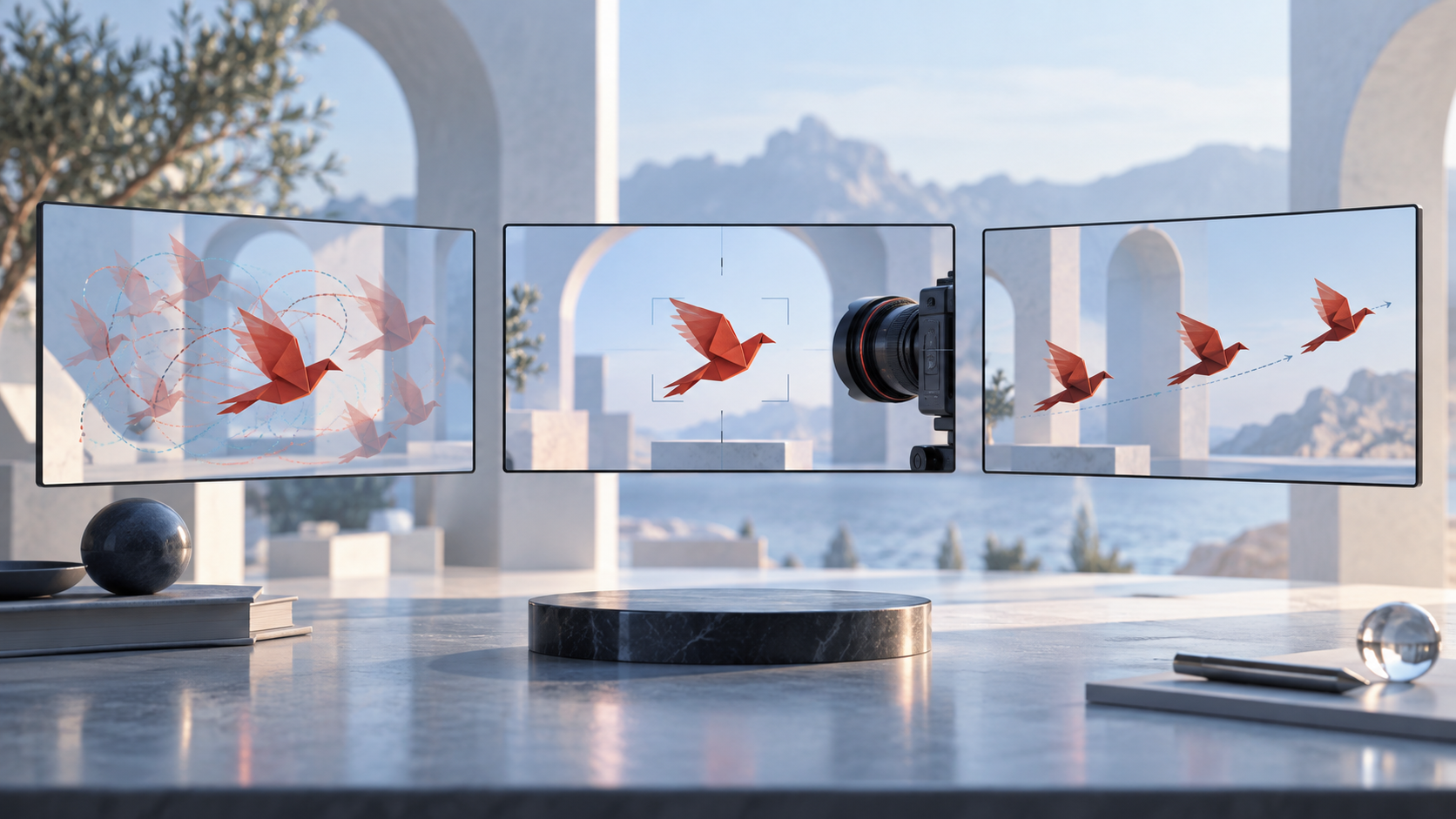
Find out why your AI video skips actions, moves the camera incorrectly, mixes references, or loses visual consistency. This practical guide pairs five common failure patterns with focused prompt rewrites and controlled tests, helping you choose what to change before generating another clip.
AI video prompt mistakes often show up as skipped actions, wandering cameras, mixed references, or characters that change halfway through a clip. The useful question is: which instruction, input, or setting should you test first?
This cross-model troubleshooting guide covers five failure patterns. The rewrites below are illustrative starting points, not measured results or guarantees. For model-specific setup and examples, use our Seedance 2.5 guide.
Diagnose AI video prompt mistakes by symptom
Watch the opening, midpoint, and final frame before rewriting anything. Record the first moment the output departs from your intention.
| Symptom | First hypothesis to test | Smallest useful change |
|---|---|---|
| Actions disappear or happen together | Action overload | Keep one main action |
| Camera circles instead of approaching | Conflicting camera language | Specify one movement and endpoint |
| Face, outfit, or style comes from the wrong image | Reference assignment | Check input roles and remove competing references |
| Adjacent shots disagree | Continuity planning | Carry forward explicit visual anchors |
| One clip gradually changes appearance | Clip drift | Reduce transformations and inspect the input |
These are diagnostic hypotheses, not proof of a cause. Repeat a small comparison before drawing conclusions; one successful generation does not establish reliability.
1. Action overload: asking one clip to tell the whole story
Symptom: A person reaches the destination without completing the requested intermediate actions.
Likely cause: The brief bundles several beats into a duration that leaves little room for each. Runway's Gen-4 guidance recommends simple motion prompts and warns that multiple scene changes, actions, and style shifts can produce unintended results.
Overloaded: “A courier enters, opens a package, reads the note, looks shocked, runs outside, and rides away while the camera circles.”
Rewrite: “Medium shot. The courier lifts the package lid and pauses, looking inside. The camera remains stationary.”
Test: Generate the package-opening beat alone. Add the reaction only after that action works; put the escape in another shot. If the sequence genuinely needs more time, choose a supported longer duration rather than squeezing in more instructions.
2. Camera language: confusing viewpoint, movement, and focus
Symptom: A supposed push-in becomes an orbit, or framing changes unpredictably.
Likely cause: “Cinematic,” “dynamic,” and “dramatic” describe an impression without specifying a path. A prompt may also combine incompatible directions.
Conflicting: “Static close-up, sweeping orbit, fast zoom, slow dolly toward the face.”
Rewrite: “Eye-level medium shot. The camera slowly moves straight toward the subject, ending in a close-up of the face.”
Separate three decisions: the starting frame, the movement, and the final frame. Google's Veo prompting guide distinguishes a dolly, which moves the camera, from a zoom, which changes focal length. A pan rotates the camera from a fixed position.
Test: Keep the subject still and test only the camera move. Check any camera preset for conflicting instructions. Reintroduce subject motion after the path is usable.
3. Reference assignment: treating every image as interchangeable
Symptom: The right character appears in the wrong clothing, or a style reference changes the subject.
Likely cause: The uploaded material has unclear or unsupported roles. A first frame, subject reference, style reference, and end frame serve different purposes.
Before generating, make a simple assignment sheet: which asset defines identity, which defines composition, and which supplies an endpoint? Use only the roles the selected model and interface actually support. Google's reference-image documentation makes reference support model-dependent; typing “reference A” alone does not create an input binding.
Ambiguous: “Use these images and make her walk through the room in that style.”
Rewrite for a prepared first frame: “The woman on the left takes two steps toward the window. The camera remains stationary.”
Test: Start with one clean image containing the intended subject and composition. Add other supported references individually. Inspect cropped faces, conflicting outfits, and image order before changing the prose.
4. Continuity: rebuilding each shot without shared anchors
Symptom: Two acceptable clips cut together badly: the bag switches hands, lighting reverses, or the character changes sides.
Likely cause: Each shot describes its own action without carrying forward the previous shot's state.
Create a short continuity note: same coat, bag in left hand, window light from screen right, movement left to right. Attach it to the shot plan and compare both sides of each cut.
Disconnected: “Next shot: she walks away with the bag.”
Rewrite: “She continues toward screen right, holding the brown bag in her left hand. Warm window light falls from screen right.”
For supported image-to-video workflows, Runway describes continuing a sequence from an extracted final frame. Review that frame first: a distorted hand is a poor starting point.
Test: Compare the outgoing and incoming frames for identity, object placement, direction, and light. Judge the cut separately from each clip's attractiveness.
5. Clip drift: letting appearance change during a shot
Symptom: A face, prop, or background starts correctly and gradually morphs.
Possible causes: Inspect the source image, transformations, occlusion, and camera complexity. Drift can also reflect generation limitations; more descriptive words are not a guaranteed repair.
Runway's image-to-video guidance notes that input artifacts may intensify during animation and that implied motion in an image can conflict with the requested action.
Demanding: “She spins, crosses behind a pillar, changes clothes, and returns to the camera.”
Rewrite: “She turns slightly toward the window and holds the pose. The camera remains stationary.”
Test: Use a clean input, remove the occlusion, and compare a simpler or shorter supported shot. If drift persists across repeated controlled attempts, try another supported workflow or model. Avoid extending an already degraded frame.
A repeatable repair workflow
Save the failed prompt, input assets, model version, duration, and settings. Change one variable, generate a small comparison set, and score the intended action, camera path, identity, and ending frame. Preserve the clearest version before adding complexity.
Check model-specific syntax too: Runway Gen-4 advises positive phrasing, while Veo documents a separate negative-prompt approach. There is no universal exclusion string.
When fixing AI video prompt mistakes in SuperMaker, begin with one shot and one testable hypothesis. Diagnose the failure first, adapt the fix to the selected model, and expand only when the essential shot works.