GPT Image 2 vs Grok Imagine Image 2.0: 6 Real Image Tests
This hands-on comparison tests GPT Image 2 and Grok Imagine Image 2.0 across prompt accuracy, photorealistic portraits, product photography, text rendering, visual storytelling, character consistency, poster design, and outpainting. Using real images generated from the same prompts, we examine each model’s strengths, weaknesses, and ideal use cases to help you choose the right AI image generator for your creative workflow.
GPT Image 2 and Grok Imagine Image 2.0 promise more than attractive AI artwork. Both models are designed to follow detailed prompts, render readable text, produce realistic commercial visuals, and maintain important details across complex compositions. The question is whether these capabilities hold up when the models receive exactly the same instructions.
We compared the models using six prompts covering photorealistic portraits, product photography, typography, object counting, bilingual infographic design, and character consistency. The results revealed a much closer contest than public rankings alone might suggest. GPT Image 2 was more reliable when strict object counts mattered, while Grok Imagine Image 2.0 performed particularly well with portraits and character continuity.
GPT Image 2 vs Grok Imagine Image 2.0: Quick Verdict
The six tests produced no decisive overall winner.
| Test | Winner | Main reason |
|---|---|---|
| Photorealistic portrait | Grok Imagine Image 2.0 | Better small-detail prompt adherence |
| Product advertising | GPT Image 2 | More closely followed the specified product arrangement |
| Typography and poster | Tie | Both reproduced every required line correctly |
| Complex spatial instructions | GPT Image 2 | Correctly generated exactly three lemons |
| Bilingual infographic | Tie | Both rendered all English and Chinese text correctly |
| Character consistency | Grok Imagine Image 2.0 | Slightly more stable character identity across four panels |
| Final result | Tie | GPT: 2 wins; Grok: 2 wins; 2 ties |
GPT Image 2 is the better starting point when a prompt contains strict counts, positions, and multiple constraints that must all be satisfied. Grok Imagine Image 2.0 is especially competitive for natural portraits, illustrated characters, and polished layouts.
This comparison is based on one supplied output from each model for each prompt. It represents these particular results, not a permanent benchmark for every image style.
How We Compared the Models
Both models received the same six English prompts. We examined:
- Prompt adherence
- Object counts and positions
- Text and number accuracy
- English and Chinese rendering
- Hands and facial details
- Product geometry and materials
- Character identity across multiple panels
- Overall composition and visual quality
We did not compare speed because generation times were not recorded. Aspect ratio was also excluded from scoring because both platforms returned landscape images for several prompts that requested portrait formats, suggesting that interface settings may have overridden the written instructions.
Local editing and outpainting were excluded because the supplied results did not use a clearly identified shared source image. A fair editing test requires both models to edit the exact same original.
Test 1: Photorealistic Portrait
The first prompt requested a 32-year-old East Asian ceramic artist in a sunlit pottery studio. She needed shoulder-length wavy black hair, natural skin texture, a small beauty mark beneath her left eye, a cream linen shirt, a brown apron, and a blue-speckled ceramic cup held with both hands.
| GPT Image 2 | Grok Imagine Image 2.0 |
|---|---|
 |  |
Both results are convincing photographs. The lighting enters from the left, the studio backgrounds contain pottery, the hands interact naturally with the cup, and the requested clothing is present.
GPT Image 2 created a warmer portrait with stronger directional sunlight and more visible texture in the linen shirt and apron. The face, hands, cup, and studio shelves are coherent, without obvious anatomical errors.
Grok Imagine Image 2.0 produced a slightly cleaner and more balanced portrait. Most importantly, it placed the beauty mark beneath the subject’s left eye more accurately. Its hands also wrap around the cup naturally, and the facial texture remains realistic without looking excessively retouched.
Winner: Grok Imagine Image 2.0
Grok won narrowly because it followed the small facial-detail instruction more precisely. GPT Image 2 remained highly competitive and arguably produced the more atmospheric studio photograph.
Test 2: Product Advertising Image
The product test requested one cylindrical amber-glass pump bottle labeled with exactly three lines:
SOLVA OAT CLEANSER 250 ML
The scene also required three oat stems, a bowl of oat grains, a sage-green linen cloth, a limestone pedestal, and warm light from the upper left.
| GPT Image 2 | Grok Imagine Image 2.0 |
|---|---|
 |  |
Both models reproduced all three label lines correctly. The pump mechanisms, amber glass, internal liquid, fabric, grain bowl, and limestone surfaces are also realistic.
GPT Image 2 came closer to the requested three-stem arrangement and created a clean editorial composition with clear separation between the bottle, bowl, cloth, and background. The bottle geometry is straight, and the label remains highly readable.
Grok Imagine Image 2.0 created an equally polished commercial photograph, but its oat arrangement expanded into several visible branches instead of maintaining the requested three simple stems. It also added several loose oat grains in front of the bowl. These additions are attractive, but they make the result slightly less literal.
Winner: GPT Image 2
GPT won for stricter prompt adherence. For visual quality alone, the difference between the two product images is small.
Test 3: Typography and Poster Design
This test requested a fictional jazz festival poster with five exact lines:
NIGHT OF JAZZ SEPTEMBER 18 7:30 PM RIVERSIDE HALL LIVE MUSIC • FOOD • ART
No additional words, repeated characters, or spelling errors were allowed.
| GPT Image 2 | Grok Imagine Image 2.0 |
|---|---|
 | 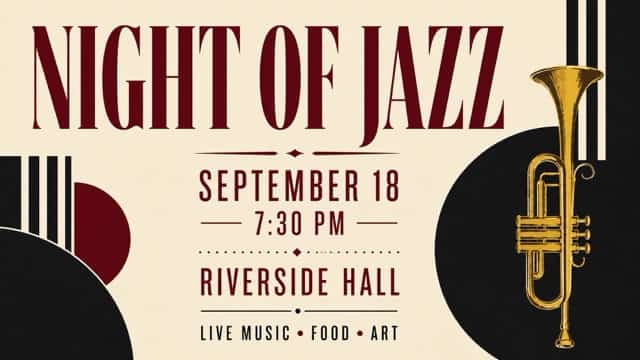 |
Both models passed the most important part of this test. Every word, number, and separator is correct. Neither model invented sponsors, ticket information, website addresses, or decorative fake text.
The GPT Image 2 poster feels more editorial. It uses a large serif headline, smaller “OF,” geometric forms, and a realistic golden trumpet. The typography is visually ambitious while remaining readable.
The Grok result uses a clearer centered hierarchy and a more graphic trumpet illustration. Its date, time, venue, and event details are particularly easy to scan.
However, both models returned landscape designs instead of the requested 3:4 portrait format. Because the same issue affected both results and may have been caused by interface settings, it was not used to select a winner.
Winner: Tie
GPT Image 2 offered the more expressive editorial design, while Grok Imagine Image 2.0 delivered the cleaner information hierarchy. Both demonstrated excellent English text rendering.
Test 4: Complex Spatial Instructions
The fourth prompt tested whether the models could follow positions, colors, and exact object counts. It requested:
- One red kettle on the far left
- One green toaster immediately to its right
- Exactly three lemons in a white bowl
- One blue cup on exactly two books
- One black cat beneath the table
- Sunlight entering from the right
| GPT Image 2 | Grok Imagine Image 2.0 |
|---|---|
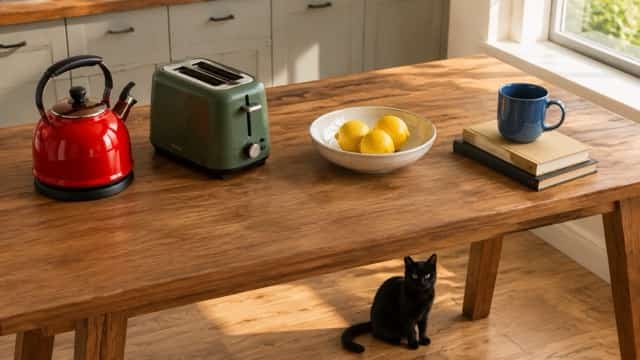 | 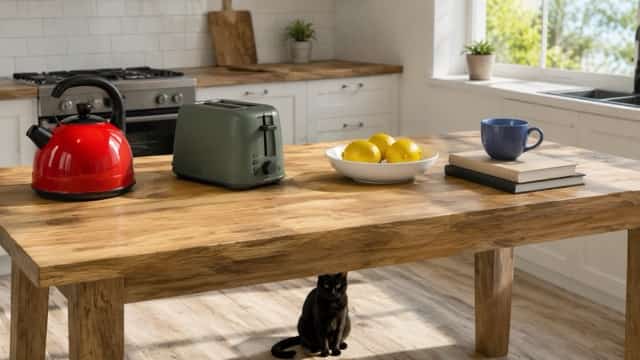 |
Both models correctly arranged the kettle, toaster, bowl, cup, books, and cat. They also maintained the requested colors and right-side lighting.
The deciding detail was the fruit count. GPT Image 2 generated exactly three lemons. Grok Imagine Image 2.0 generated four.
This may appear minor, but exact counting is important in product bundles, educational diagrams, recipe graphics, inventory displays, and other visuals where one additional object changes the meaning.
GPT also placed the blue cup on a beige upper book and black lower book as requested. Grok followed this requirement as well.
Winner: GPT Image 2
This was the clearest GPT victory. Both images look realistic, but GPT followed the complete set of constraints more accurately.
Test 5: English and Chinese Infographic
The bilingual test requested a three-day Suzhou itinerary containing the following exact English and Chinese text:
THREE DAYS IN SUZHOU 苏州三日游 DAY 1 古典园林 DAY 2 运河之旅 DAY 3 苏州博物馆 TRAVEL SLOWLY
| GPT Image 2 | Grok Imagine Image 2.0 |
|---|---|
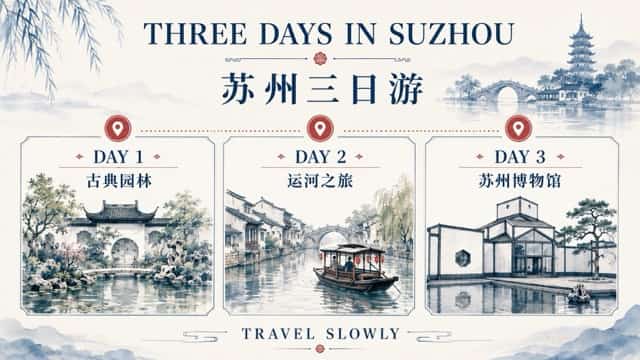 | 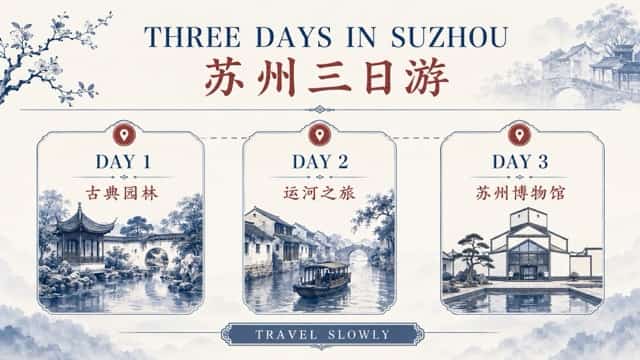 |
Both models reproduced every required English and Chinese phrase correctly. Neither introduced obvious fake characters, incorrect translations, misspelled headings, or additional map labels.
GPT Image 2 produced a detailed editorial travel spread. Its Day 1 garden, Day 2 canal boat, and Day 3 museum illustrations clearly match their respective sections. The top landscape illustration adds depth without interfering with the text.
Grok Imagine Image 2.0 created a cleaner card-based design with generous spacing and a strong blue-and-muted-red palette. Its section borders and lower “TRAVEL SLOWLY” banner make the itinerary especially easy to scan.
Winner: Tie
GPT offered richer visual storytelling, while Grok produced the cleaner information structure. Most importantly, both handled the English and Chinese text accurately, which is an impressive result for a single generation.
Test 6: Character Consistency
The final test requested the same female explorer across a four-panel story. Her identity needed to remain stable, including:
- Short black bob haircut
- Scar through the right eyebrow
- Mustard-yellow jacket
- Dark green trousers
- Brown boots
- Red backpack
The four panels showed her reading a map, crossing a bridge, discovering a doorway, and holding a blue crystal.
| GPT Image 2 | Grok Imagine Image 2.0 |
|---|---|
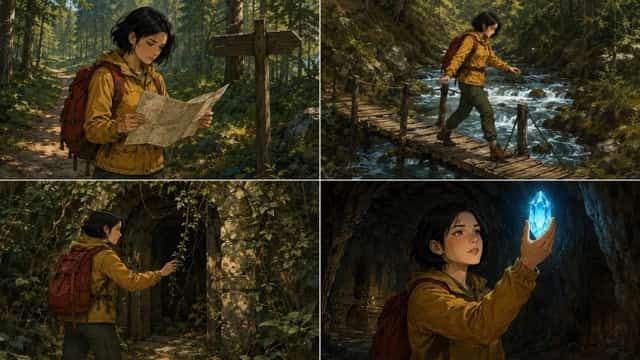 | 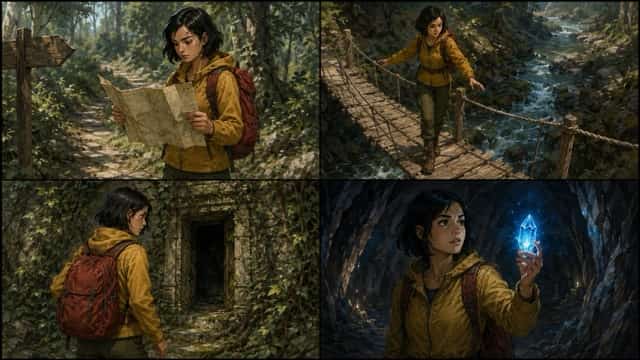 |
Both models understood the four scenes and preserved the core costume colors. The yellow jacket, green trousers, and red backpack remain recognizable throughout the story.
GPT Image 2 created detailed environments and a highly consistent painterly style. Its forest, bridge, doorway, and cave are visually distinct. However, the character’s face becomes noticeably softer and more anime-like in the final panel. The scar is also not consistently visible.
Grok Imagine Image 2.0 maintained a more stable angular face and short hairstyle across the four scenes. The red backpack remains clearly identifiable, and the overall character proportions are slightly more consistent. However, Grok also failed to preserve the scar correctly: it appears more like a mark on the forehead in the first panel and disappears later.
Winner: Grok Imagine Image 2.0
Grok won by a narrow margin for facial continuity. Neither model fully satisfied the scar requirement, showing that small identity markers can still drift across multi-panel generations.
What These Results Reveal
The test produced a balanced result, but the models showed different strengths.
GPT Image 2 Was Better at Strict Constraints
GPT performed best when the prompt included exact counts and tightly defined arrangements. It correctly generated three lemons and came closer to the specified oat-stem composition.
This makes it a strong choice for:
- Product bundles
- Structured advertising images
- Educational visuals
- Recipes and ingredient layouts
- Complex prompts with multiple conditions
- Images where an extra object would be a meaningful error
Grok Imagine Image 2.0 Was Better at Visual Continuity
Grok performed better in the portrait and multi-panel character tests. It followed the requested facial detail more accurately in the portrait and maintained slightly more stable character features across the illustrated sequence.
This makes it a promising choice for:
- Portrait concepts
- Character development
- Illustrated stories
- Campaign visuals
- Sequential creative assets
- Style-consistent visual exploration
Creators who want to reproduce these tests or experiment with their own prompts can access Grok Imagine 2.0 free and compare its output against the model they currently use.
Both Models Were Excellent at Text
The biggest shared strength was text generation. Both models reproduced:
- A multi-line English event poster
- Dates and times
- Venue information
- Small event details
- English travel headings
- Chinese itinerary text
Neither produced obvious fake copy in the two text-focused tests. This makes both models practical candidates for posters, simple infographics, social graphics, covers, and concept layouts.
Final production assets should still be proofread manually, especially when they contain prices, legal details, contact information, or safety instructions.
GPT Image 2 vs Grok Imagine Image 2.0: Which Should You Choose?
| Your main requirement | Recommended model |
|---|---|
| Exact object counts | GPT Image 2 |
| Complex multi-condition prompts | GPT Image 2 |
| Product advertising concepts | GPT Image 2 |
| Natural portrait details | Grok Imagine Image 2.0 |
| Multi-panel character continuity | Grok Imagine Image 2.0 |
| English typography | Either |
| Chinese and English layouts | Either |
| Attractive commercial composition | Either |
Choose GPT Image 2 when small instruction failures could make the image unusable. Its strongest results came from tests requiring exact quantities, placements, and product details.
Choose Grok Imagine Image 2.0 when portraits, characters, and clear graphic layouts matter more. Its outputs showed strong visual polish and slightly better identity continuity in this comparison. You can try Grok Imagine 2.0 free with the same prompt before selecting a model for a larger project.
Limitations of This Test
This comparison used only one supplied output from each model per prompt. AI image generation contains randomness, so repeating the same prompt may produce a different winner.
The test also did not compare:
- Generation speed
- Subscription cost
- API latency
- Repeated edit stability
- Background removal
- Multi-reference input
- Smart Resize
- Transparent export
- Consistency across separately generated images
The editing and outpainting results were excluded because a fair comparison requires both models to work from the exact same source image.
Platform interfaces may also affect prompt processing, quality, resolution, and aspect ratio. Therefore, these results should be read as a comparison of the supplied end-to-end outputs rather than a controlled laboratory benchmark of the underlying model weights.
Final Verdict
GPT Image 2 vs Grok Imagine Image 2.0 ended in a genuine tie: two wins for GPT Image 2, two wins for Grok Imagine Image 2.0, and two tied categories.
GPT Image 2 was more dependable when the prompt demanded exact counting and strict compliance. Grok Imagine Image 2.0 was slightly stronger when facial details and character continuity mattered. Both performed exceptionally well on English typography and bilingual infographic design.
There is no universal winner. GPT Image 2 is the safer choice for constraint-heavy production tasks, while Grok Imagine Image 2.0 is highly competitive for portrait, character, and design-oriented workflows.
The most practical approach is to run the same important prompt through both. If you want to conduct your own comparison, Grok Imagine 2.0 free provides a direct way to test how the model handles your preferred subjects, text, style, and composition.
Frequently Asked Questions
Is GPT Image 2 better than Grok Imagine Image 2.0?
Neither model won the complete comparison. GPT Image 2 performed better in strict product and object-counting tasks. Grok Imagine Image 2.0 performed better in portrait details and four-panel character consistency.
Which model is better at generating text?
The two models tied. Both reproduced the complete English jazz poster and all English and Chinese Suzhou itinerary text without obvious spelling errors.
Which model is better for product photography?
GPT Image 2 won the product test because it followed the requested object arrangement more closely. Both models produced realistic materials and completely correct label text.
Which model is better for character consistency?
Grok Imagine Image 2.0 performed slightly better in the supplied four-panel result. Its facial structure and hairstyle were more stable, although neither model preserved the eyebrow scar consistently.
Can Grok Imagine Image 2.0 be used for free?
You can try Grok Imagine 2.0 free online to generate images from prompts and evaluate the model for your own creative needs.
Were the image editing capabilities tested?
No. The editing and outpainting images were not included in the score because the same clearly identified source image was not available for both models.