Kling 4.0 vs Seedance 2.5: Who Wins Beyond the Demo?

Explore Kling 4.0 and Seedance 2.5 Through Their Official Showcases, Creative Controls, and Editing Workflows. Discover What Matters for Product Ads, Social Videos, and Narrative Films—and How to Choose a Model Based on the Video You Need to Finish, the Changes You Expect, and Your Budget.
A spectacular AI film makes you want to try a model. Finishing your own video makes you decide whether to keep using it. That is the real question behind Kling 4.0 vs Seedance 2.5: which deserves your next creative brief?
Kling's official account has introduced THE BEAT, a film attributed to Kling 4.0 about a drummer returning to the stage. Seedance 2.5 presents a documented workflow around longer sequences, references, and editing. Our early verdict: Seedance has the clearer documented case for controlled production; Kling's showcase makes it a compelling creative contender. A universal quality winner would require comparable tests.
This comparison uses official examples and published capabilities reviewed on September 29, 2026. It is not a hands-on benchmark. Showcase observations do not establish typical generation results.
Kling 4.0 vs Seedance 2.5 at a Glance
| Your Priority | What the Available Evidence Supports |
|---|---|
| Cinematic inspiration | Kling's THE BEAT offers a finished narrative example to judge against your preferred style. |
| Longer connected scenes | Seedance documents up to 30 seconds per generation and extension options. |
| Directing from existing assets | Seedance documents image, video, and audio references. |
| Revising an otherwise successful clip | Seedance documents timestamp-based targeted editing. |
| Lowest finished-video cost | No verified, like-for-like cost winner in this review. |
These are differences in the evidence available, not proof that Kling lacks a corresponding feature. See the Kling official film and Seedance model overview.
Round One: Which Video Would You Actually Want to Make?
Start with the official films. Look beyond sharpness: does the subject hold your attention, does the framing support the scene, and does the world feel believable?
Kling 4.0: The Appeal of a Finished Film
In sampled frames from THE BEAT, a cluttered rehearsal space, close views of makeshift percussion, and foreground objects crossing a street scene give the images a deliberately photographed feel. Selective focus separates subjects from their surroundings; props make the setting feel inhabited. These are useful visual references for creators pursuing a narrative or music-video aesthetic.

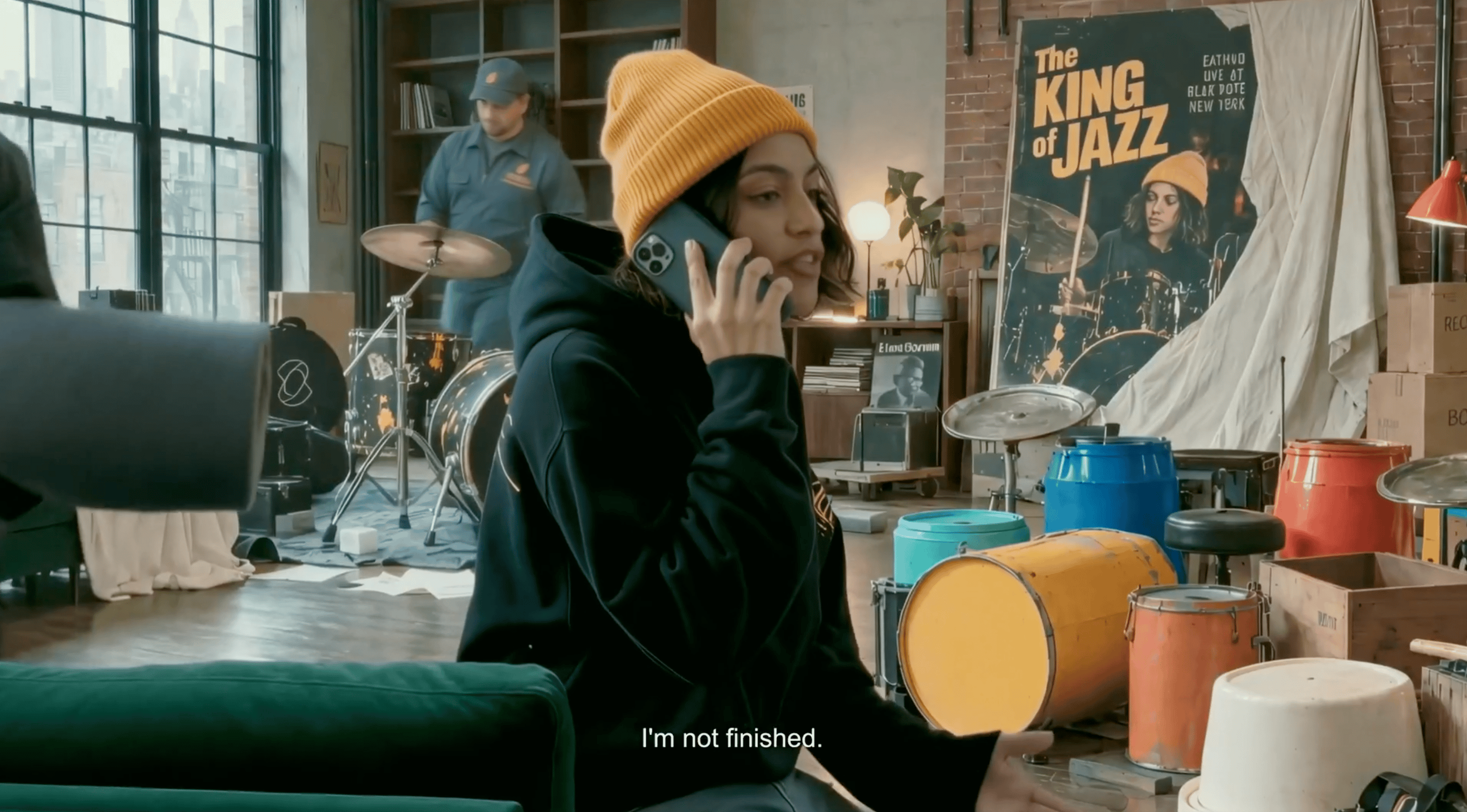 ▶ Watch THE BEAT on Kling AI’s Official X Account
Video: Kling AI, “THE BEAT.” Source: official X post. Publisher showcase; not generated by SuperMaker.
However, the post does not disclose the number of attempts, editing process, or single-generation duration. Treat the finished film as creative evidence, not a promise that one prompt reproduces its production value.
Seedance 2.5: From an Idea to a Connected Sequence
The embedded Seedance film offers a different visual reference: overcast city views, restrained office lighting, and a camera perspective from inside a washing-machine drum. Its sampled frames favor everyday realism and unusual framing. Compared with Kling’s percussion imagery, this is a difference in creative treatment, not a model-wide quality ranking.
Seedance's official launch article includes a creative film and examples connecting several story beats. Its described backstage sequence follows a singer from preparation toward a performance. That is a useful ambition for creators who need a beginning, development, and payoff within one piece.
Video: ByteDance Seed, Seedance 2.5 launch creative film. Source: official announcement. Publisher showcase; not generated by SuperMaker.
Round-one verdict: choose your aesthetic favorite, but leave the overall realism contest open. Different scripts, styles, and selection processes cannot establish which model produces natural movement more reliably. Watch hands touching objects, faces during turns, and continuity across cuts—not just the most attractive frame.
Round Two: Can You Direct It—and Fix It?
For a product ad, a beautiful bottle is only useful if it remains your bottle. For a character story, the face, outfit, and voice must survive changes in framing.
Seedance's launch documentation specifies references of up to 30 images, 10 videos, and 10 audio clips in one request, plus targeted changes using timestamps. Its model page also highlights reference interpretation, camera direction, and professional editing tools.
The practical attraction is control: supplying the product, character, and desired movement gives the model more concrete direction. Targeted editing could also rescue a promising clip when only one action needs changing. These are workflow benefits to evaluate, not guarantees of perfect consistency.
Kling's film establishes a creative example, but its announcement alone cannot answer equivalent questions about reference limits or editing controls. Missing documentation should not become an invented disadvantage.
Round-two verdict: Seedance is the more defensible first evaluation for a brief with specific assets and expected revisions. Kling needs the same brief and an actual revision attempt before we can judge the tradeoff.
Round Three: Which Model Fits Your Project?
| Project | Our Starting Recommendation | The Deciding Check |
|---|---|---|
| Product advertising | Evaluate Seedance's reference and editing workflow first. | Does packaging remain accurate through movement and revision? |
| Narrative or music video | Include Kling if THE BEAT matches your visual ambition; compare Seedance on connected scenes. | Can your character and intended story survive shot changes? |
| Social campaign variants | Test the available models against one reusable brief. | Which delivers more usable variations within your time and budget? |
For dialogue, separately check pronunciation, lip synchronization, and whether changing a line preserves the performance. An impressive soundtrack in a showcase does not reveal how easily you can direct your own.
Kling 4.0 vs Seedance 2.5 Pricing: Count Usable Results
As of this review, we have not verified comparable prices for identical output settings. Naming a cheaper model would be premature.
Use this calculation instead: cost per accepted clip = total generation spending divided by accepted clips. Track editing time separately. A lower generation price can lose its advantage if you repeatedly replace failed takes.
For SuperMaker users, check the exact model version, exposed controls, and credit charge in the generation interface before committing to a workflow. Developer capabilities do not automatically mean every feature is available through every platform.
So, Who Wins?
Seedance 2.5 earns the provisional recommendation for creators prioritizing documented control and revision. Kling 4.0 earns a place in a creative shortlist through its official film. Neither conclusion proves superior average output quality.
The winner of Kling 4.0 vs Seedance 2.5 should be the model that preserves your subject, follows your direction, and gets your video over the finish line. Let the demos inspire the brief; let the finished result decide where your budget goes.