Mona-Lisa-1: What We Know About the Rumored AI Model
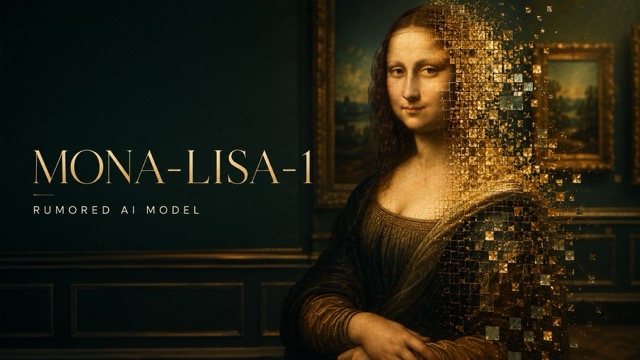
Mona-Lisa-1 remains an unconfirmed AI model. Explore what is known and follow SuperMaker AI for future updates.
Concept illustration: Mona-Lisa-1 has attracted attention as a mysterious AI codename, but its origin has not been officially confirmed.
The name Mona-Lisa-1 has recently appeared in discussions about experimental artificial intelligence models. Some observers suspect that it could be connected to OpenAI, possibly as an internal codename or an unreleased system. However, OpenAI has not announced, documented or publicly claimed a model under this name.
For now, Mona-Lisa-1 should be treated as an unconfirmed AI codename, not an official OpenAI product. Readers interested in emerging creative models can follow SuperMaker AI for model and platform updates while keeping rumors separate from verified releases.
What Is Actually Known About Mona-Lisa-1?
As of August 13, 2026, Mona-Lisa-1 does not appear in OpenAI’s public model catalog. No official model page, technical report or announcement identifying Mona-Lisa-1 as an OpenAI system has been found.
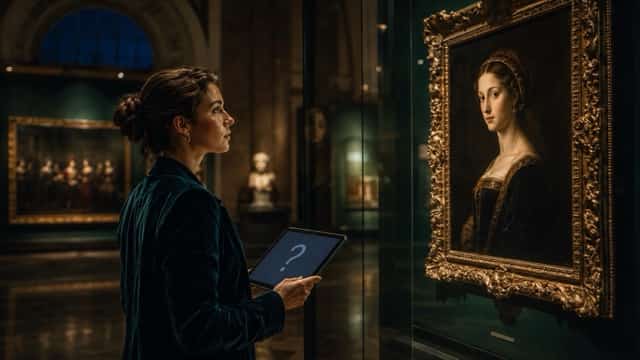
Concept illustration: Checking an official model directory is more reliable than identifying a model from its codename alone. This image is not an actual OpenAI product screenshot.
Only a few statements can currently be made with confidence:
- Mona-Lisa-1 is a name associated with an alleged AI model.
- Its developer has not been publicly verified.
- Its possible connection to OpenAI remains speculation.
- Its features, availability and intended purpose are unknown.
- No confirmed release date or pricing information is available.
There is also no reliable basis for assigning Mona-Lisa-1 benchmark scores, generation speeds or specific creative abilities. Any post claiming to know these details should provide traceable evidence.
Does the Name Suggest an Image Model?
The “Mona Lisa” reference naturally creates an association with visual art. This has led to speculation that Mona-Lisa-1 could be an image generator, image-editing model or multimodal creative system.
That interpretation is understandable, but a codename is not evidence of a model’s capabilities. Technology companies frequently use internal testing names that have little connection to a product’s final identity. The “1” at the end does not necessarily mean that it is the first version of a new model family either.
For creators, the important question is not what the codename appears to suggest, but whether the model eventually receives a verified public release. The SuperMaker AI creative platform currently brings AI image, video, music and voice tools together, but any future Mona-Lisa-1 support would depend on the model becoming officially available for integration.
Why Do Unconfirmed Model Names Attract Attention?
AI models are sometimes tested before their developers publicly reveal them. An experimental system might appear under a temporary name in an evaluation, private preview or online comparison.
When users encounter an unfamiliar model that appears to produce impressive results, they naturally try to identify its developer. A memorable name such as Mona-Lisa-1 makes the mystery easier to discuss and share, even when reliable information is limited.
<!-- Insert Image 3: mystery box and verification folder here -->Concept illustration: An unidentified model may inspire theories, but verification requires a traceable announcement or technical record.
Several explanations remain possible. Mona-Lisa-1 could be:
- An internal research label
- A temporary testing identity
- A third-party AI model
- A renamed version of an existing system
- A community-created nickname
- An unreleased project that may never launch publicly
None of these possibilities establishes who created it.
What Would Count as Official Confirmation?
The clearest confirmation would be a public announcement from the model’s developer. A dedicated model page, API documentation, model card or technical report could also establish its identity.
Anonymous posts and screenshots require more caution. A screenshot may show that a particular name appeared somewhere, but it rarely proves that the name is authentic, permanent or connected to a specific company. Labels in testing environments can also be assigned by platform operators rather than model developers.
When evaluating new claims about Mona-Lisa-1, check:
- Who originally published the information?
- Does the source represent the alleged developer?
- Is there an official product or documentation page?
- Can independent users reproduce the reported results?
- Does the evidence clearly identify the model being tested?
These checks help separate a genuinely emerging model from speculation built around an interesting name.
A Model Worth Watching Carefully
 Mona-Lisa-1 is attracting attention precisely because so little has been confirmed. It may eventually be connected to a known developer and released as a real creative model, or the codename may disappear without ever becoming a public product.
Creators who want to follow what happens next can keep an eye on SuperMaker AI. If Mona-Lisa-1 receives an official release and becomes available for third-party use, SuperMaker AI plans to evaluate the model and work toward integrating it promptly so creators can explore its verified capabilities in a practical creative workflow.
Until that happens, the most accurate description remains simple: Mona-Lisa-1 is an unconfirmed AI codename whose developer, capabilities and release plans are currently unknown.