ChatGPT Empty Room: Let AI Fill a Room with Your Personality
A Playful Guide to Turning Your Interests into an Overstuffed Imaginary Room, with a Copyable ChatGPT Empty Room Prompt, Three Creative Variations, and a Simple Way to Bring Your Personalized Scene to Life with SuperMaker. Start with a Few Personal Details, Then Make Them Larger Than Life.
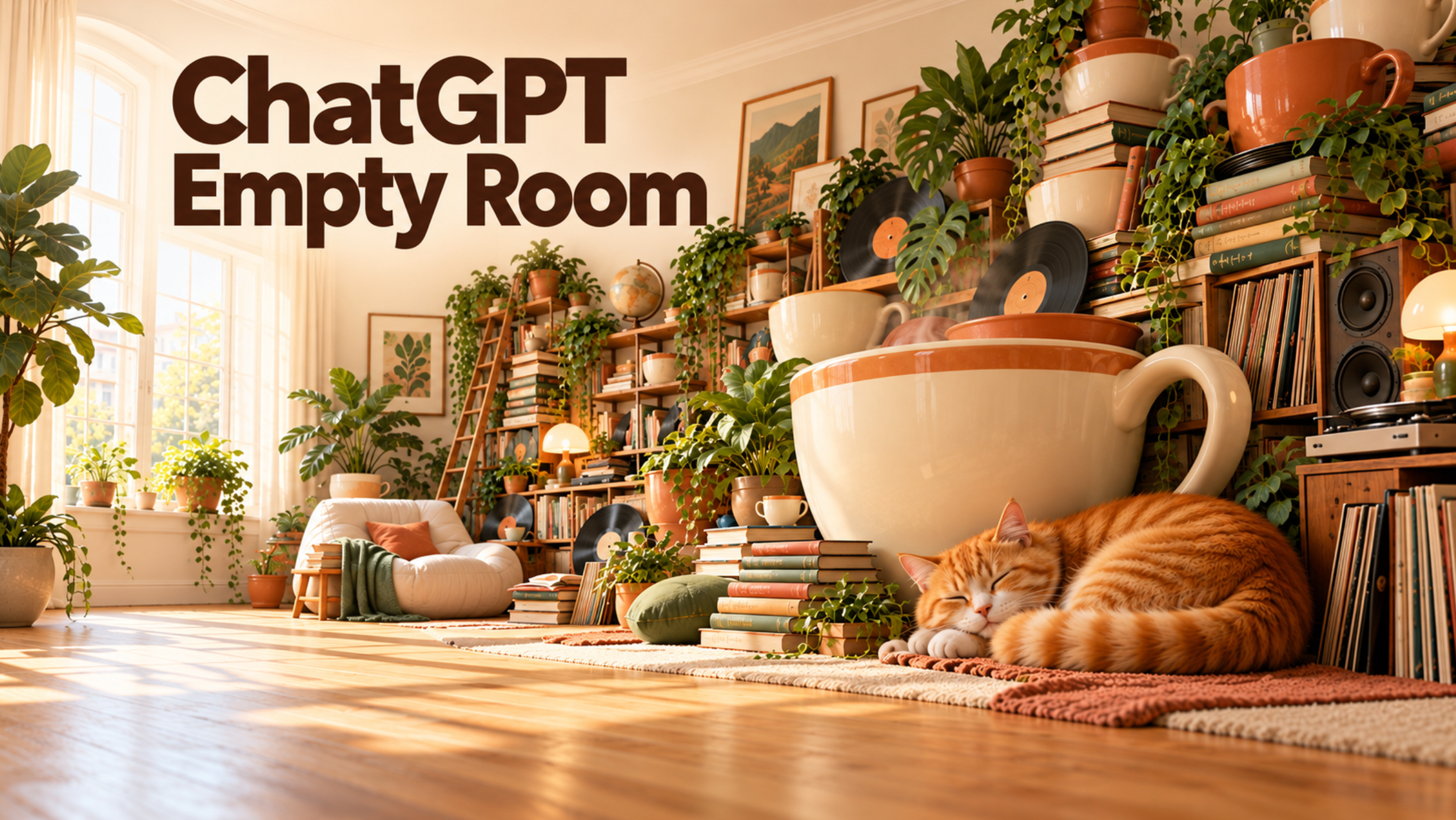
Imagine opening a door and finding your personality piled from floor to ceiling. Your coffee habit becomes a cup the size of a bathtub. Your reading list turns into a staircase of books. Your cat gets a throne, while your unfinished hobbies take over an entire wall.
That is the appeal of ChatGPT Empty Room: ask AI to fill an empty room with exaggerated versions of what it knows about you. The result is a visual self-portrait told through objects, obsessions, and a little affectionate chaos. Here is how to turn that idea into a room worth sharing.
What Is the ChatGPT Empty Room Idea?
Think of it as a prompt game: start with a blank room, then let your interests supply everything inside it. Instead of asking for tasteful furniture, ask for a space that makes your personality impossible to miss.
A hiking enthusiast might get mountains of boots and an indoor trail. Someone who loves baking could end up surrounded by enormous croissants and ceiling-high mixing bowls. The funny part is the connection between the objects and the person, so specificity matters more than luxury.
You can ask ChatGPT to develop the concept and generate an image, or use its written scene as a prompt in another image generator.
Start with What AI Actually Knows About You
The phrase “based on what you know about me” needs context. OpenAI explains that ChatGPT memory can use relevant preferences and details, depending on your settings and available features. It does not retain every detail from every conversation.
For a more deliberate result, provide a short personal brief in the conversation. Include three interests, one everyday habit, a favorite color, and the mood you want. For example: “I love fantasy novels, espresso, and houseplants. I always start too many projects. Make the room warm, funny, and slightly ridiculous.”
You do not need a long chat history to play. A few carefully chosen details give the image a stronger direction than a vague request to make something personal.
Copy This ChatGPT Empty Room Prompt
Use this as a starting point, then add your own details:
Create an image of an empty room filled with exaggerated visual representations of my personality, interests, and habits. Use what I have shared in this conversation and any relevant context available to you. Turn recognizable preferences into oversized objects and playful scenes. Make it funny, specific, and visually coherent. Keep the walls, window, and some floor visible so it still reads as one room. Use warm natural light, a wide camera angle, and no written labels. If you need more context, ask me three short questions first.
OpenAI's ChatGPT Images guide confirms that you can request an image in a conversation and describe further changes afterward. Once you have a first version, ask for one clear revision, such as making the main object larger or simplifying the background.
Three Ways to Make AI Fill Empty Rooms
The Hobby Avalanche
Choose a few hobbies and amplify them until they nearly take over the architecture. A music lover's room could contain a giant record player, stacks of vinyl forming an armchair, and a reading nook built inside an acoustic guitar.
Try this prompt:
Fill a bright empty room with oversized objects representing my love of vinyl records, guitar, and rainy-day reading. Make the record player the main focal point.
The Affectionate Roast
Ask for the version your friends would recognize immediately. Focus on harmless habits: collecting notebooks, leaving mugs everywhere, or researching a hobby longer than actually doing it.
Try this prompt:
Turn my habit of starting projects and drinking endless coffee into a playful room. Include a mountain of blank notebooks and one enormous mug. Keep it affectionate and absurd.
The Dream-Life Room
Use aspirations instead of everyday routines. A person dreaming of travel, gardening, and writing might get a room with a miniature greenhouse, a desk on a floating island, and luggage opening onto imaginary landscapes.
Try this prompt:
Fill an empty room with my dream life: writing novels, growing plants, and exploring new places. Make the space surreal but keep the room's walls and window recognizable.
Bring the Room to Life with SuperMaker
If you want to turn the concept into another visual version, ask ChatGPT to rewrite your room idea as a standalone image prompt. It should name the objects, their scale, their placement, the lighting, and the camera angle. Replace references such as “my hobbies” with the actual hobbies so the next generator has enough information.
Then open SuperMaker AI Image Maker, use Text to Image, and paste the scene description. The generation page provides aspect-ratio options; a wide frame can help show how the objects occupy the room.
For example:
A sunlit cream room with an oak floor, filled with a bathtub-sized espresso cup, towering fantasy books, trailing houseplants, and an orange cat on a tiny velvet throne. Warm editorial illustration, wide composition, coherent perspective, visible walls and window, no text.
Include every personal detail you want reflected in the image. A standalone prompt gives SuperMaker the creative brief directly, without relying on the context of your ChatGPT conversation.
Keep the Chaos Readable
An overloaded room still needs a visual hierarchy. Pick one main object, two supporting themes, and a clear area of floor. That gives the eye somewhere to start and makes the joke easier to understand.
If everything looks generic, replace broad interests with distinctive objects. “I like music” becomes “a record player surrounded by jazz sleeves.” If the picture is cluttered, reduce the number of categories before asking for more detail. If it feels too restrained, enlarge one object rather than adding twenty unrelated ones.
When making a second version, keep the same room and personal brief, then change only the mood or level of exaggeration. Comparing a cozy version with a ridiculous one can be more entertaining than starting over completely.
Make the Room Recognizably Yours
The strongest ChatGPT Empty Room image is the one you can explain object by object: that giant cup is your coffee habit; those towering books are your reading plans; that plant jungle is your windowsill getting out of hand.
Start with a handful of details, push the scale, and keep the scene readable. Let AI fill the empty room, then decide which version feels most like you.